I've had three clients add master suites to San Francisco homes. One finished on budget and on schedule. One divorced mid-renovation. One sold the house two years later and told me the addition was the reason they got six offers over asking. The question isn't "should you add a master suite?" It's "what are you actually getting for the most expensive square footage you'll ever build?"
San Francisco master suite costs currently run $400–$800 per square foot for a ground-up addition, depending on finishes, foundation work, and how much the planning department hates your lot. That means a modest 300-square-foot suite — bedroom, closet, bathroom — starts around $120,000 and climbs fast. Here's what I've learned about when it's worth it.
The Real Costs No One Talks About
Permits Will Test Your Soul
San Francisco's planning process is famously slow. Expect 12–18 months for permits on a residential addition, longer if you're in a historic district or your neighbors object. One client waited 22 months for approval to add 250 square feet. She'd moved out, moved back in, and had a second child by the time the first shovel hit dirt. Hiring an architect or design-build firm that knows the SF planning department is not optional. Budget $15,000–$30,000 for architectural and engineering fees before construction starts.
Construction Chaos Is a Lifestyle Cost
You're either living in a construction zone or paying for temporary housing. I've seen both. The clients who stayed put described it as "camping in their own home" — dust on every surface, a microwave in the living room, the dog permanently confused. The clients who rented a studio apartment during the build spent an extra $20,000 they hadn't budgeted for. There's no good option, only the one you can tolerate.
When It's Worth It
You're Adding Square Footage the House Genuinely Lacks
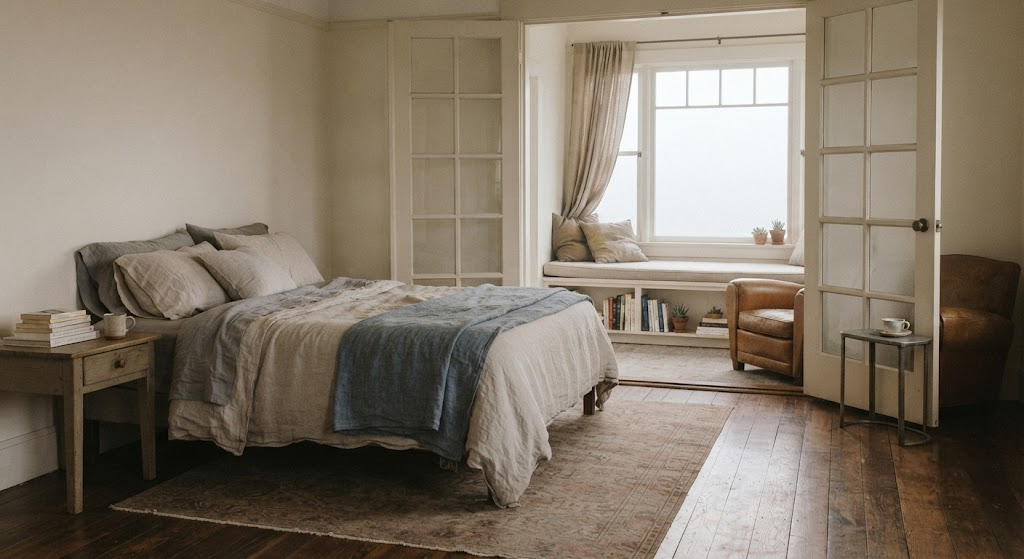
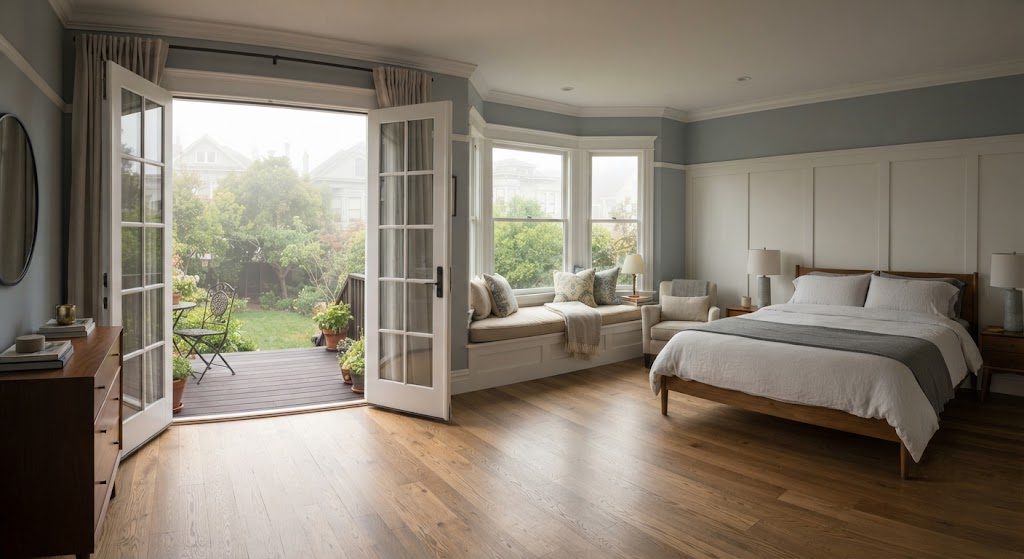
If your current primary bedroom is under 150 square feet with no closet and a bathroom down the hall, an addition transforms how you live. The gain isn't luxury — it's a functional space where two adults can get dressed at the same time without bumping elbows. A master bedroom addition worth it is one that solves a daily pain point, not one that chases a real estate trend.
You're Planning to Stay Five-Plus Years
The equity math only works if you're sticking around. In San Francisco, a well-done addition can add $500–$800 per square foot to your home's value, but transaction costs eat that gain if you sell within two years. Every client who was happy they added a suite planned to stay for at least five years. The one who sold quickly broke even and called it "the most stressful financial decision I've ever made."
When It's Not Worth It
You're Chasing Hotel Vibes
I've seen people add sitting rooms, wet bars, and fireplaces to primary suites in houses where the kitchen was still from 1985. A primary suite expansion that prioritizes luxury over function is a bad bet. The clients who loved their additions added a closet and a real bathroom. The clients who regretted theirs added square footage they never used. No one sits in a bedroom sitting room. They sit in the living room, like everyone else.
You're at the Top of the Neighborhood Already
If comparable homes on your block sell for $1.5 million and your house is already worth $1.4 million, a $200,000 addition won't return dollar-for-dollar. Check comps honestly before you start. Your contractor won't do this for you. Your architect might, but only if you ask.
The Questions to Ask Before You Commit
Can you get the same outcome with a remodel instead? A master bedroom renovation that reconfigures existing space costs a fraction of an addition. If you can steal square footage from an adjacent room or convert an underused dining room, try that first.
Do you have a realistic budget with a 20% contingency? Additions uncover problems — old wiring, bad foundations, asbestos. Your $150,000 project will be $180,000. Plan for it.
Can your relationship survive a year of dust and decisions? I'm not joking. Major renovations are stressful. The client who divorced wasn't the first, just the one I knew personally enough to notice.
My Honest Take
If you need more bedroom space and plan to stay put, an addition is worth it — eventually. The process is terrible, the permits are slow, and the cost will exceed your initial estimate. But the outcome — a bedroom that actually fits your life, in a city where space is scarce — is something you can't get by rearranging furniture. Just go in with your eyes open, your contingency funded, and your marriage more solid than your foundation.