

The first time I put an 80 inch sofa for bedroom seating into a primary bedroom, my husband asked whether we were building a second living room. A week later, he was reading there every night, and I was folding laundry without balancing it on the bed. That is the real appeal: the right sofa gives a bedroom another useful zone without demanding a full renovation.
An 80-inch sofa is large enough for two adults to sit comfortably but usually compact enough for a bedroom wall, apartment, guest room, or oversized kids' room. The trick is treating it as part of the room's layout, not as a leftover piece of living room furniture.
Start with the room, not the sofa
Before shopping, measure the wall where the sofa will go and mark the footprint on the floor with painter's tape. Include the sofa's full depth, which is often 34 to 40 inches, plus at least 24 inches of walking space in front. If the sofa faces the bed, leave enough room to open drawers, make the bed, and move around the room without turning sideways.
An 80 inch sofa for bedroom seating works especially well at the foot of a long bedroom, beneath a wide window, or along the wall opposite the bed. It is less successful squeezed beside a queen bed with only a narrow passage between the arm and nightstand. In that situation, a 60- to 72-inch loveseat or a pair of lounge chairs will feel more intentional.
Do not forget delivery measurements. Measure the bedroom door, hallway corners, stairwell, and elevator. A sofa that fits the room can still fail at the front door. For older homes, I measure the tightest turn and photograph it before ordering. That five-minute habit has saved me from more than one expensive return.

Choose the right depth and seat height
A standard sofa may look comfortable online but feel bulky in a bedroom. For a relaxed reading corner, look for a seat depth around 21 to 24 inches and a seat height near 18 to 20 inches. Deeper cushions are wonderful for lounging, but they can make a smaller room feel crowded and encourage the sofa to become a bed-shaped pile of clothing.
For an 80 inch sofa for bedroom seating, I prefer a medium-depth frame with supportive cushions. A sofa with a 36-inch overall depth gives you comfort without consuming the entire circulation path. If children will use the room, firmer cushions and removable covers are practical choices. Sophie once used our bedroom chair as a snack station, and washable fabric became much more important than the pale boucle I had originally admired.
Think about posture, too. A low, deep sofa creates a casual lounge, while a slightly higher seat makes reading, putting on shoes, or helping with homework easier. If the sofa is for a guest room, choose a supportive seat rather than an overly soft style that looks attractive but is difficult to stand from.
Match the sofa to bedroom traffic
The best placement depends on what happens in the room every day. In a primary bedroom, put the sofa near natural light if you want a morning coffee spot. Add a small drink table and a swing-arm lamp so the surface does not become a nightstand substitute. The Anton side table from West Elm is a useful scale reference, although a simple 16-inch round table from Target can do the same job for much less.
At the foot of the bed, keep the sofa visually lighter. Exposed legs, narrow arms, and a low back help preserve the view across the room. Avoid placing a tall sofa directly in front of a window unless the back is finished attractively and does not block curtains or a radiator.
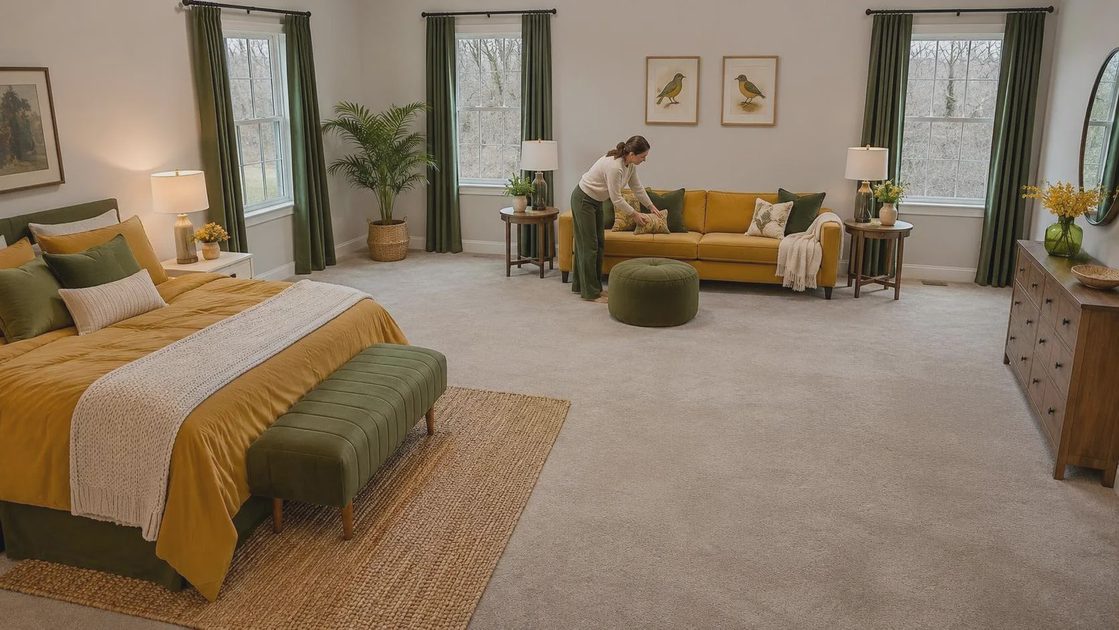
An 80 inch sofa for bedroom seating can also divide a large room into zones. Place it with its back toward the bed to create a subtle dressing or reading area. A slim console behind it can hold a lamp, books, or baskets, but leave several inches between the console and the walking path.
Pick a fabric that can handle real life
Bedrooms are calmer than family rooms, but they are not sterile showrooms. Look for performance upholstery, tightly woven cotton blends, linen-look polyester, or durable velvet when the sofa will receive regular use. A removable cushion cover is helpful, though removable does not always mean machine washable, so read the care instructions before assuming anything.
Neutral colors are easy to live with, but “neutral” does not have to mean cream. Warm taupe, olive gray, muted blue, and cinnamon can add depth without competing with bedding. If your duvet already has a pattern, choose a solid sofa and bring in personality through a lumbar pillow or folded throw.
For an 80 inch sofa for bedroom seating in a child's room or guest room, I would skip very pale fabric unless you are comfortable with frequent cleaning. A medium gray, camel, or soft green hides everyday marks better while still feeling restful. Keep a fabric sample next to your floor, curtains, and headboard before committing. Colors shift dramatically in morning and evening light.
Build a useful seating corner
A sofa alone can look stranded. Give it a job and three supporting elements: light, a surface, and something soft. A plug-in sconce or floor lamp provides focused reading light without taking up table space. A nesting table handles glasses and phones. One 20-inch pillow and one smaller lumbar cushion are usually enough; a pile of decorative pillows makes a bedroom sofa less usable.
If you want the space to support working, add a narrow lap desk rather than a full office setup. For bedtime reading, use a warm LED bulb around 2700K to create a gentler glow than a bright overhead fixture. A washable throw is especially useful in a guest room, where visitors may adjust the temperature differently from the rest of the house.
When considering an 80 inch sofa for bedroom seating, keep the visual weight balanced. A large rug can connect the sofa and bed, but the sofa does not need to sit fully on it. Letting the front legs rest on a 5-by-8-foot rug is often enough in a compact room.
Shopping checklist before you order
Confirm the exact width, depth, height, arm width, cushion construction, and leg height. Ask whether the listed width includes the arms, because that number determines whether the sofa actually fits your taped outline. Check the return policy, delivery method, warranty, and fabric cleaning code. White-glove delivery can cost an additional $100 to $300, but it may be worthwhile for a tight staircase or a heavy hardwood frame.
Budget options from retailers such as IKEA, Wayfair, and Target often fall between $500 and $1,000. Mid-range choices from Article, West Elm, or Crate & Barrel commonly land around $1,200 to $2,500, depending on upholstery and construction. You do not need the most expensive frame; you do need dimensions that work and cushions you will enjoy using.
My weekend assignment is simple: tape the sofa footprint on your floor, walk around it carrying a laundry basket, and sit in a chair at the planned location. If the route still feels easy, an 80 inch sofa for bedroom seating could be exactly the missing layer your room needs. Your bedroom does not have to be perfect. It just has to be yours.