
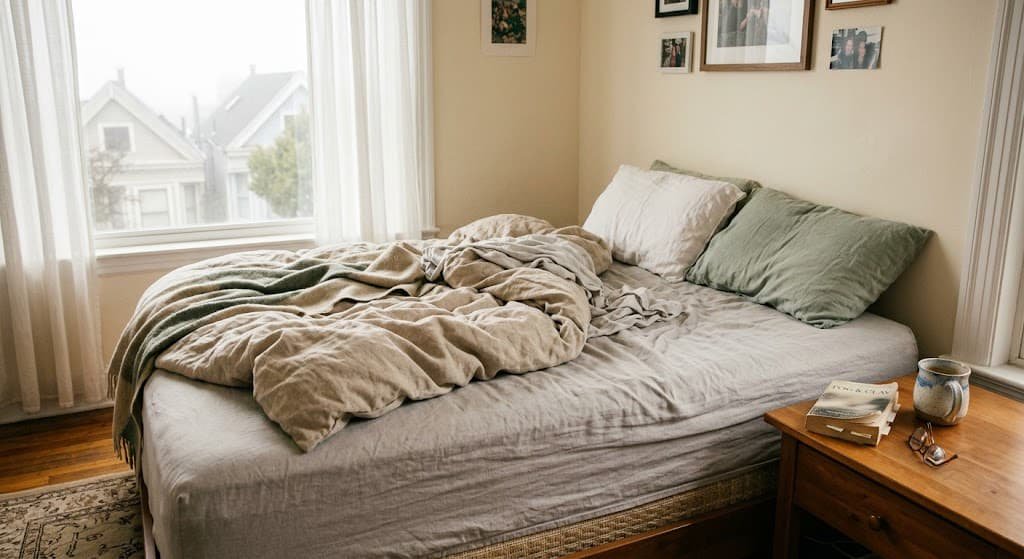
In my previous life as an interior designer, I thought I knew mattresses. I'd specify them for primary suites, guest rooms, even the occasional pull-out sofa that needed to not feel like a medieval torture device. I could talk coil gauge, latex vs. memory foam, and the real difference between a $1,200 mattress and a $4,000 one. Then our own mattress — a hand-me-down from Tom's pre-us apartment — started resembling a hammock with a permanent body-shaped trench in the middle. I was suddenly a client again, staring at a hundred browser tabs and fighting the urge to just order whatever had the most five-star reviews.
I eventually bought a mattress. One. And I've slept on it for three years, through Sophie's 4 a.m. nosebleeds, Tom's restless-leg phase, and a hundred foggy San Francisco mornings that made me want to stay horizontal forever. Here's what I chose, why, and how to find your own best mattress without losing your mind.
Why I Stopped Overthinking Mattresses
When you design bedrooms for a living, people assume you have a secret mattress source. Some underground lab where craftsmen stitch coils by candlelight. The truth is messier: I've specified 15 different models across various projects, and at least half of those clients have since swapped theirs out. Not because I picked badly — but because a mattress is the most personal piece of furniture you'll ever own, and no amount of spec sheets can predict how you'll feel after seven nights on it.
Tom sleeps on his stomach with one arm flung off the edge. I'm a side sleeper who steals the duvet. Sophie still occasionally crawls in at dawn and positions herself diagonally like a tiny, tyrannical starfish. We needed a mattress for couples that could handle all of that without waking us up every time someone twitched. The showroom experience — lying on a bed for 90 seconds in a brightly lit store while a salesperson hovers — told me nothing useful. So I did what I used to tell my clients never to do: I ordered one online after reading too many reviews, and crossed my fingers.
The Mattress I Actually Sleep On (And Why)
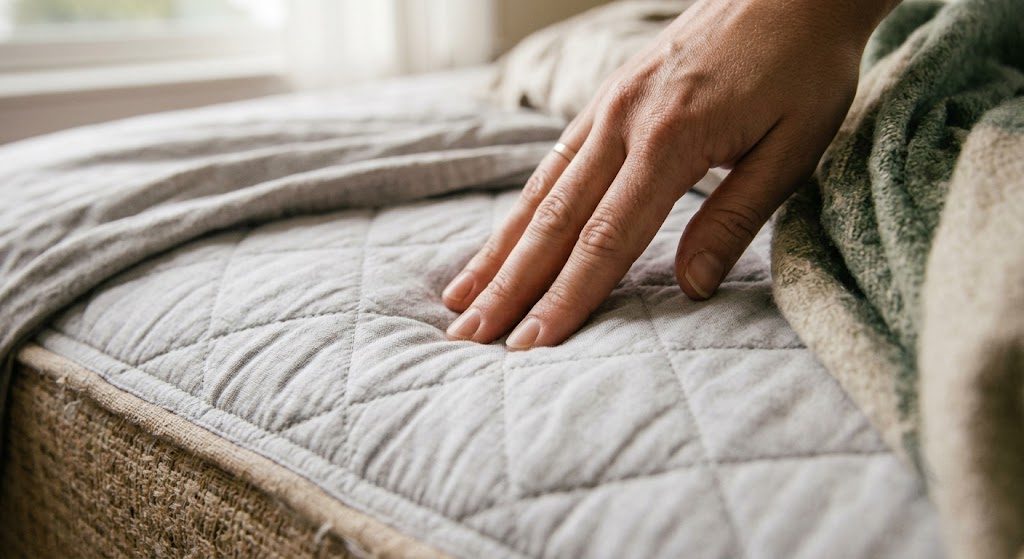
The one that made the cut is a hybrid mattress — pocketed coils on the bottom, a layer of responsive foam on top, wrapped in a breathable organic cotton cover. It's medium-firm, which is the Goldilocks zone for two people with different sleep styles. Too soft and Tom's lower back complains; too firm and my hip goes numb by 3 a.m. This one gives just enough under pressure points while still feeling supportive when you lie flat.
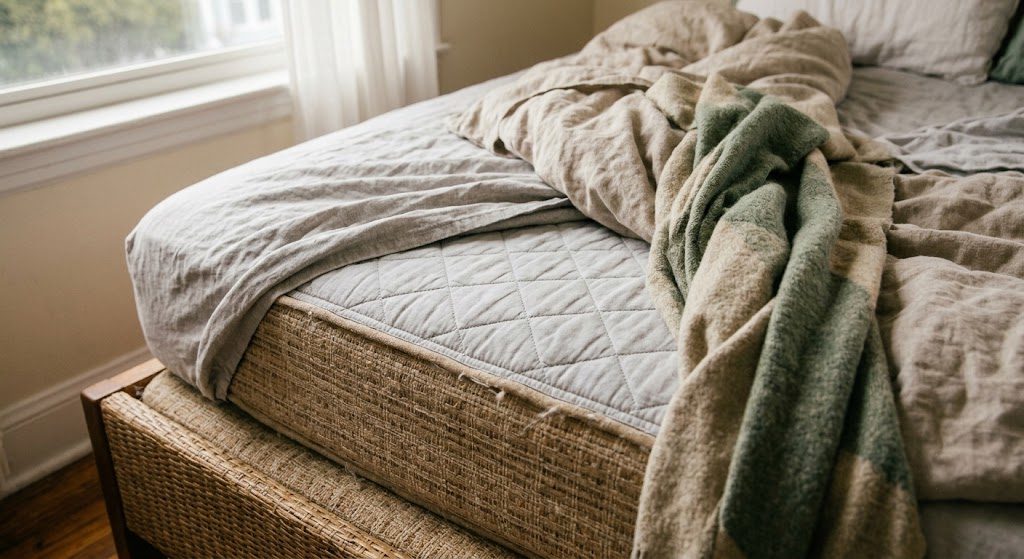
I won't pretend it's the cheapest option. It cost about $1,600 for a queen — significantly less than the luxury models I used to specify, but not a bargain-bin impulse buy. What sold me was the combination of motion isolation and edge support. When Tom gets up at 5:30 to catch up on email, I don't feel the mattress ripple. And the reinforced edges mean Sophie can perch on my side to tell me about her dream without me sliding off into the abyss. If you're hunting for the best mattress for side sleepers, hybrid designs with a cushioned top layer tend to relieve shoulder and hip pressure better than all-foam beds that slowly swallow you over time.
The specific model I own isn't the point — there are a handful of good ones in this category — but the criteria I used are what matter. If you're shopping, look for a hybrid with at least 800 individually wrapped coils, a foam layer that's responsive rather than sinking, and a cover you can unzip and wash. Most of all, look for a trial period that lets you sleep on it for weeks, not minutes.
What to Look for in a Real-Life Mattress
I've distilled everything I learned across 15 client installs and my own obsessive research into four non-negotiables. Ignore the marketing jargon about "cooling gel infused with moon dust" and focus on these.
The Firmness Sweet Spot
For the majority of people, medium-firm is the safest bet. It supports back sleepers while offering enough give for side sleepers. If you and your partner are at opposite ends of the firmness spectrum, don't compromise — a medium-firm mattress with a separate topper on one side can bridge the gap without starting a marital cold war. When I recommended mattress recommendations for couples to clients, I always suggested buying a split king if the bed size allowed it, but for most of us in normal-sized rooms, a unified surface with the right firmness does the job.
Motion Isolation Matters
This is the one feature I won't budge on. Poor motion isolation means you feel every toss, turn, and 2 a.m. bathroom trip. Pocketed coils are excellent at containing movement to one side of the bed. All-foam mattresses isolate even better but can sleep hot, which brings me to the next point.
Temperature Regulation
San Francisco nights hover in the mid-50s, and our bedroom gets the full force of the Sunset district fog. I used to think I wanted a mattress that "slept warm." Turns out I wanted one that breathed. Memory foam without ventilation traps body heat; latex and hybrid designs with airflow channels stay cooler. A mattress for hot sleepers isn't just for desert climates — it's for anyone who's ever woken up sweaty while their partner shivers. I now look for breathable natural covers and coils that let air circulate through the core.
The Trial Period Is Not Optional
If you can't sleep on a mattress for at least 30 nights before committing, walk away. I once had a client buy an expensive floor model on clearance — no returns — and she spent two years pretending to like it because she was too embarrassed to admit the mistake. Nearly every reputable direct-to-consumer brand now offers 100 nights or more. Use them. Sleep on the mattress in your actual bedroom, with your actual pillow, and your actual partner who occasionally steals the blankets. That's the only test that counts.
A Mattress Is Not a Miracle
Here's what I've learned after three years on the same surface: even the best mattress won't fix a bedroom that doesn't feel safe, quiet, or yours. It won't stop Sophie from having bad dreams or Tom from answering Slack at midnight. But a well-chosen mattress gives you a baseline — a place your body can actually rest, so you have the energy to deal with everything else life throws at you.
Start with the trial period. Be honest about how you sleep, not how you wish you slept. And don't overthink it — you're not marrying the mattress. If it doesn't work, send it back. The right one is out there, and it probably costs less than you think.