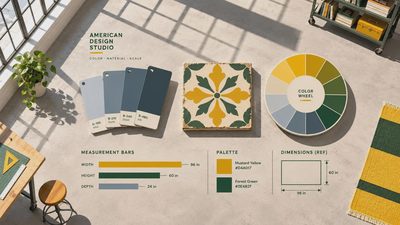

The first time I tried to mix patterns in my own bedroom, I made one very confident mistake: I treated every pattern as if it deserved equal attention. The floral duvet, striped curtains, geometric rug, and tiny-print accent chair all competed from across the room. Tom called it “visually loud,” which was kind. If you are wondering how to mix patterns in bedroom decor, start with this reassurance: you do not need a perfect designer eye. You need a hierarchy.
A bedroom should feel restful before it feels clever. The goal is not to collect every print you love, but to let a few patterns work together while solid colors, wood, woven materials, and negative space give the eye somewhere to rest. Here is the method I use for client bedrooms and the version I finally used in ours.
Start with one pattern you genuinely love
Choose the pattern that will anchor the room. This might be a botanical duvet cover, a vintage-style rug, a plaid headboard, or curtains with a broad geometric design. Pick the item first because it usually has the strongest colors and the largest visual footprint.
For our bedroom, I started with a faded blue-and-cream block-print quilt from The Company Store. It was not expensive, but it had enough personality to guide everything else. Once the quilt was chosen, I stopped asking whether every new item was beautiful on its own. I asked whether it supported the quilt.
That distinction makes how to mix patterns in bedroom decor much easier. A room can contain several attractive pieces and still feel chaotic if they are all trying to be the anchor. Let one item lead. The rest should provide rhythm, contrast, or quiet texture.
If your starting point is a patterned rug, repeat one of its colors in the bedding or artwork. If your starting point is striped wallpaper, choose simpler window coverings and let the wallpaper carry the drama. A strong starting point prevents random shopping trips from becoming a design plan.
Use the three-part pattern formula
The most reliable formula is one large-scale pattern, one medium-scale pattern, and one small-scale pattern. Scale means the size of the shapes, not the size of the item. A duvet with oversized leaves is large scale. A pillow with medium checks is medium scale. A tiny pinstripe or dotted fabric is small scale.
This approach works because patterns that are too similar can blur together, while patterns with different scales feel intentional. On a queen bed, an oversized floral duvet might pair with a medium stripe on lumbar pillows and a small diamond weave on a throw. The designs do not need to match. They need to be different enough to read separately.
Here is how to mix patterns in bedroom decor when you are working with a small room: make the largest pattern appear only once. Use the medium pattern on two smaller pieces, such as shams and a bench cushion, then keep the smallest pattern subtle. In a compact apartment bedroom, this might mean a floral duvet, striped pillowcases, and a tiny-check lampshade rather than patterned walls, curtains, bedding, and rug all at once.

Let color do the connecting work
Patterns do not need identical colors, but they should share a visual connection. I usually choose two main colors and one accent color. In my room, dusty blue and warm ivory form the base, while muted rust appears in a small pillow and a framed print.
Repeat a color at least twice so it feels deliberate. A green leaf in the duvet can reappear in a ceramic lamp or curtain trim. A terracotta stripe can show up in a small lumbar pillow. Repetition tells the eye that the pieces belong together, even when their motifs are unrelated.
When learning how to mix patterns in bedroom decor, avoid choosing five patterns from five unrelated color families. That usually creates a shopping-cart problem rather than a cohesive room. If you already own a bright patterned quilt, pull colors from it instead of introducing new ones. Paint, bedding, artwork, and accessories should support that palette rather than compete with it.
Muted colors are especially forgiving. Dusty rose, olive, navy, ocher, denim, and warm white can handle several patterns without feeling aggressive. If you prefer bold color, keep the pattern count lower and use solid-colored sheets or a plain upholstered headboard to create breathing room.
Balance bedding, walls, and window treatments
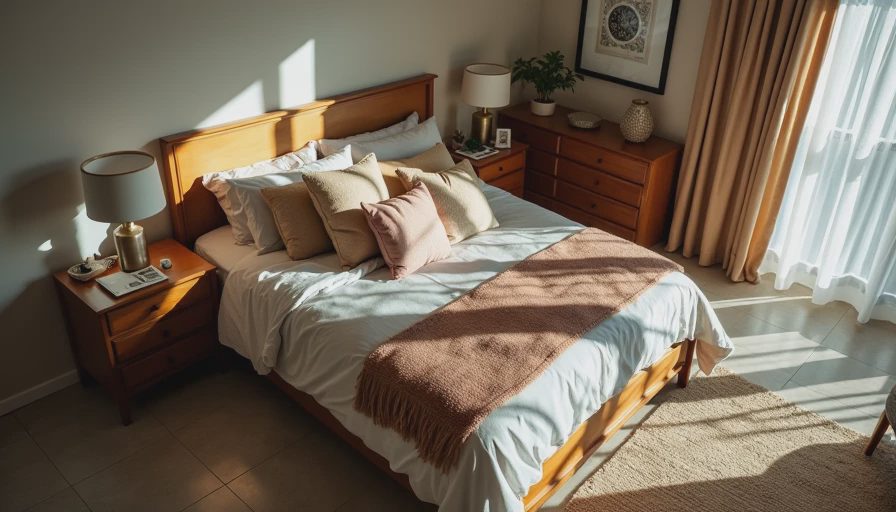
Most bedrooms have four large visual zones: the bed, walls, windows, and floor. Pattern becomes overwhelming when all four zones are equally active. A patterned bed usually needs calmer curtains and a quieter rug. Patterned wallpaper can work beautifully with solid bedding and a small-print accent pillow.
For a primary bedroom, I often make the bed the focal point because it is the largest functional piece. In a child’s room, however, a patterned rug may be the smarter anchor because it can stay in place as bedding changes with age. Sophie’s hot pink curtain phase taught me that removable layers are valuable. We kept the walls neutral, used a washable rug, and allowed her bedding to change without repainting the room every year.
How to mix patterns in bedroom decor also depends on what you see from the doorway. Stand outside the room and look in before buying another print. If your eye jumps between the curtains, bed, and rug, remove or simplify one layer. Good design is often less about adding the perfect item and more about giving the best item room to be noticed.
Add solids and texture between prints
A solid is not a boring choice; it is a pause. Use solid sheets, a plain bed skirt, a linen headboard, or a single-color throw to separate busy patterns. Textured solids are particularly useful because they add interest without introducing another motif. Think waffle-knit blankets, nubby linen, velvet pillows, rattan, cane, or a chunky wool rug.
This is where affordable pieces can make an expensive-looking difference. A $35 cotton pillowcase in a useful color can calm a $150 patterned duvet. A $70 woven basket can connect a stripe and a floral without adding more decoration. I have used IKEA’s simple storage baskets and Target’s textured throws in client rooms because they provide function as well as visual relief.
If the room feels unfinished after you remove a pattern, add texture rather than another print. The surface of a linen curtain, the grain of an oak nightstand, and a matte ceramic lamp can create the layered feeling people often chase with too many pillows.
A practical shopping order that prevents mistakes
When clients ask how to mix patterns in bedroom decor, I recommend shopping in this order: anchor piece, solid foundation, medium-scale accent, small-scale accent, then texture. Photograph the anchor item in natural light and keep the image on your phone while shopping. Store lighting can make blue look violet and cream look yellow, so compare colors at home before removing tags.
For bedding, buy the sheets and duvet before decorative pillows. For a rug, tape its approximate dimensions on the floor with painter’s tape. A pattern that looked gentle in a 5-by-7-foot sample may feel much stronger across a larger area. Give yourself a day to view the room in morning and evening light.
A useful test is to lay every patterned item on the bed together. Step back six feet. If one pattern disappears, it may be too similar in scale or color. If your eye cannot settle anywhere, replace the smallest item first. Often the problem is one unnecessary pillow, not the entire design.
Common mistakes and the weekend fix
The biggest mistake is matching everything too closely. A striped duvet, striped pillows, and striped curtains can feel flat even when the color is attractive. The second mistake is using tiny patterns everywhere. Small prints can become visual static when there is no larger shape to organize them.
Another frequent issue is forgetting the floor. A patterned rug is not background; it participates in the composition. If the rug is busy, keep the bedding calmer. If the floor is plain wood, you have more freedom to use pattern on the bed or walls.
This weekend, photograph the bedroom from the doorway and identify the current anchor. If you cannot name one, choose the item you want to keep and temporarily remove two competing patterns. Then bring back only one large, medium, or small-scale design at a time. That simple reset is often the fastest way to understand how to mix patterns in bedroom decor in your own home.
Your bedroom does not have to be perfect. It just has to be yours. Let one pattern tell the story, let the others support it, and leave enough quiet space for the room to help you sleep.