
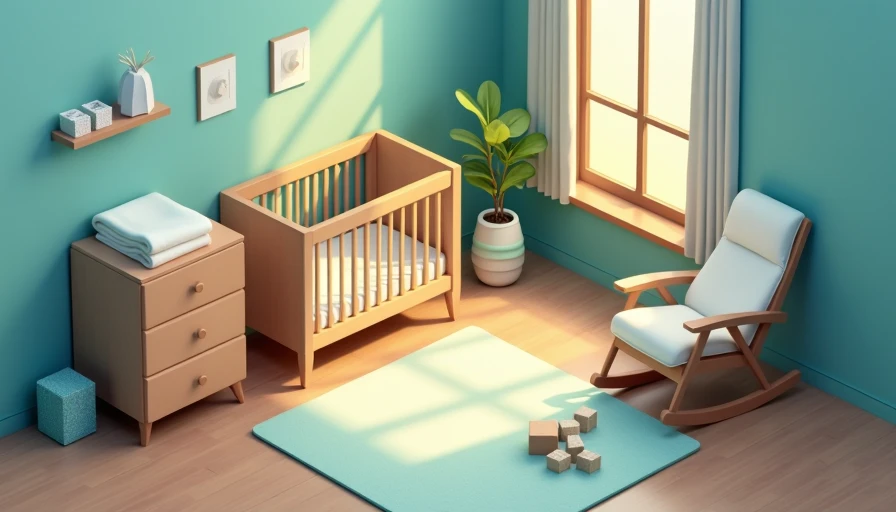
The first time Sophie came home from the hospital, the nursery looked beautiful for approximately nine minutes. Then we needed diapers, a clean onesie, a burp cloth, and somewhere to put the coffee I had forgotten to drink. That experience changed how I think about baby furniture. It is not just about creating a sweet-looking room; it is about building a safe, practical workstation for the most repetitive job you will ever love.
The best baby furniture supports nighttime feeds, quick changes, laundry overflow, and a child who will eventually outgrow the nursery aesthetic. As a former interior designer and a parent, I look for three things: safe construction, useful storage, and enough flexibility to avoid replacing everything in two years.
Start with the crib and the room’s walking path
The crib is the anchor, but it should not be the only thing you plan. Measure the room before shopping, then draw the crib, changing area, dresser, and door swings on graph paper. Leave a clear path from the door to the crib and from the crib to the changing station. At 3 a.m., you do not want to navigate around a rocking chair, floor basket, and oversized hamper while carrying a sleeping infant.
For baby furniture, choose a crib manufactured to current U.S. safety standards. Look for sturdy hardware, fixed sides, properly spaced slats, and a firm mattress that fits snugly with no visible gap around the edges. Avoid decorative pillows, thick bumpers, loose blankets, and positioners inside the crib. A convertible crib can be a sensible purchase because it may become a toddler bed later, but confirm that the conversion kit is included or available before buying.
I prefer a crib with a simple silhouette and a finish that can handle fingerprints. White, natural wood, and muted gray are easy to pair with future bedding. More importantly, a straightforward shape leaves visual room for artwork, a rug, or the hot pink curtains Sophie selected with complete confidence.

Choose a changing setup that saves your back
A changing table is useful, but a changing pad on a stable dresser often gives you more value. A six-drawer dresser typically costs about $250 to $900, while a dedicated changing table may become unnecessary once diapers are finished. If you use a dresser, select a changing pad designed to attach securely and install the included anti-tip hardware into the wall.
Keep daily supplies in the top drawer: diapers, wipes, cream, spare clothes, and a small trash-bag roll. Put less frequent items, such as seasonal clothing and extra sheets, lower down. This arrangement makes baby furniture work like a small command center instead of a collection of pretty obstacles.
The changing area also needs task lighting. A plug-in wall sconce or a dimmable lamp with a warm LED bulb is easier on tired eyes than an overhead fixture. Place cords well away from the changing surface, and avoid glass accessories or anything that can be pulled down by a curious toddler.
Buy baby furniture that can change jobs
Nurseries evolve quickly. The tiny dresser becomes a big-kid clothing station, the rocking chair moves to a reading corner, and the open bins that once held swaddles eventually hold Lego pieces. I learned this in our own room when a storage system collapsed under the weight of too many craft supplies. The fix was not another organizer; it was choosing fewer, stronger pieces with clear uses.
Look for a glider with removable, washable upholstery and enough seat depth for an adult to sit comfortably. A model in the $300 to $700 range can provide years of service if it becomes a reading chair later. A narrow bookcase, around 24 to 30 inches wide, can hold board books now and chapter books later. Secure it to the wall rather than relying on its weight.
For compact rooms, consider a dresser with a smaller footprint, a crib with built-in storage only if it does not interfere with ventilation or access, and baskets that slide fully under furniture. Avoid filling every corner on day one. Empty floor space is useful for tummy time now and play later.
Make storage easy enough to maintain
Baby furniture has to absorb an astonishing amount of fabric. Before the baby arrives, you may have sleepers in three sizes, receiving blankets, towels, burp cloths, and gifts that do not fit yet. A practical storage plan separates what is used daily from what is waiting its turn.
Use drawer dividers for small clothing, but do not create a complicated folding system you will abandon during a growth spurt. I like one drawer for current-size clothes, one for the next size, and one for accessories. Labeling the drawer fronts with removable tags can help a partner or grandparent find things without waking you to ask.
Open shelving looks attractive in photographs, yet closed drawers hide visual clutter. If you use shelves, reserve them for books, a few framed prints, and baskets. Do not place heavy objects overhead or display breakable decorations within a child’s reach. The goal is a room that can be reset in five minutes, not a nursery that requires a styling session.

Check materials, hardware, and long-term cost
Price matters, but replacement cost matters more. A $180 changing table that cannot be reused may be less economical than a $450 dresser that serves through elementary school. Compare drawer construction, hardware, warranty terms, and delivery fees. Some flat-pack baby furniture costs less upfront but can take an afternoon to assemble; solid wood pieces often cost more and weigh considerably more when you need to move them upstairs.
Inspect finishes for peeling edges, strong chemical odor, rough corners, or drawers that stick. Ask whether replacement parts are available. For used items, be especially cautious with cribs and older drop-side models. Safety rules and product designs change, and a missing screw or undocumented repair is not worth the savings.
You do not need a matching set. A natural-wood crib, painted dresser, woven hamper, and upholstered chair can look more collected than a room filled with identical pieces. Spend first on the crib and a reliable dresser, then add the decorative layer slowly.
A simple weekend plan for the nursery
Start by measuring every wall, doorway, and closet opening. Write down the crib’s outside dimensions rather than assuming standard sizing. Next, make a list of the tasks the room must support: sleep, feeding, changing, clothing storage, laundry, and play. That list will tell you whether you need a glider, a larger dresser, or simply better closet bins.
When comparing baby furniture, read assembly instructions before ordering and reserve space for wall anchoring. Build the crib and dresser early enough to address missing parts without panic. Wash textiles, test every drawer, and walk through the room at night with only the intended lamp switched on. You will notice glare, blocked paths, and awkward reach distances immediately.
This weekend, measure the nursery and tape the footprint of each proposed piece on the floor. Live with that layout for a day before shopping. Your bedroom does not have to be perfect. It just has to be yours—and the nursery should be safe, calm, and ready for the beautifully chaotic life that is coming.