
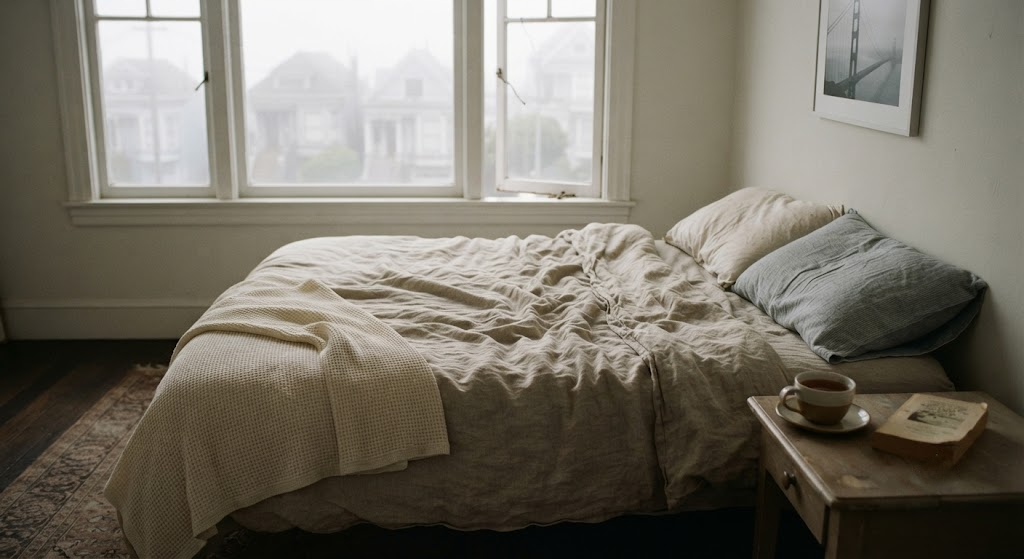
I've lived in San Francisco's Sunset district for over a decade, and I still can't predict what the bedroom will feel like at 3 a.m. Some nights the fog rolls in thick and the temperature drops ten degrees between midnight and dawn. Other nights it clears off and suddenly the room feels stuffy and warm. Tom runs hot. I run cold. Sophie kicks off her duvet and then wakes up shivering at 4 a.m. asking for an extra blanket.
Finding the best bedding for San Francisco fog — or any damp, temperate coastal climate — isn't about buying the most expensive sheets or the heaviest duvet. It's about choosing fabrics and layers that adapt. Here's what I've learned after years of trial and error in my own home and dozens of client bedrooms across the Bay Area.
Why Climate Dictates Your Bedding Choices
Most bedding advice online is written for people who live in places with seasons. You swap out your winter flannel for summer linen, pack away the heavy duvet, rotate your pillows. That works in New England. It doesn't work when your summer nights are 55 degrees and foggy and your winter days might hit 65 with full sun. In San Francisco, you can experience three microclimates before breakfast. Your bedding needs to handle all of them without requiring a complete bed remake every time the marine layer shifts.
The key variable isn't thread count. It's breathability and moisture management. Fog means humidity. Humidity means damp sheets that never quite dry out, mildew smells if you don't air things properly, and that clammy feeling of sliding into a bed that's cold but somehow also sticky. Good temperature-regulating bedding solves this by letting air circulate while trapping just enough warmth.
The Fabric Guide: What Works and What Doesn't
Linen: The Fog-Season MVP
Linen is my desert-island bedding fabric. It's made from flax fibers, which are hollow and naturally thermoregulating — they trap heat when it's cold and release it when it's warm. That means linen sheets feel cool and breathable during a warm spell but insulate beautifully when the temperature drops at 2 a.m. In San Francisco, where the thermostat swings 15 degrees overnight, that adaptability matters more than anything else.
Linen also wicks moisture better than cotton. On foggy nights when the air feels damp enough to drink, my linen sheets stay dry and comfortable while cotton percale would feel clammy by morning. The tradeoff is texture — linen isn't silky or smooth, and if you're expecting hotel-crisp sheets, you'll be disappointed. Linen is rumpled by nature. It wrinkles. It looks like you've been living in it, because you have. I've made peace with this. Tom took longer.
For breathable bedding for humid climates, linen outperforms everything else I've tried. I use a linen duvet cover year-round, swapping the insert — lightweight down alternative in summer, heavier down in winter — but keeping the cover the same. My current set is from Cultiver, which isn't cheap but has held up for four years of weekly washing. Parachute and Quince make solid alternatives at different price points.
Cotton Percale: The Crisp Alternative
If you can't stand linen's texture, cotton percale is your next best option. Percale refers to the weave — a one-over-one grid that creates a crisp, matte finish with excellent breathability. It's the fabric of classic hotel sheets, and it works well in damp climates because air moves freely through the loose weave.
The catch: percale wrinkles and can feel cool to the touch, which is either refreshing or alarming depending on your personal thermostat. I keep a set of percale sheets for the rare weeks when San Francisco gets actual heat — those September and October days when the fog retreats and the Sunset feels almost Mediterranean. For everyday use, I reach for linen. But if you sleep hot or live in a climate that's more humid than cool, percale is worth the investment.
Cotton Sateen: Proceed With Caution
Sateen is percale's smoother, shinier cousin — woven in a three-over-one pattern that creates a silky surface. It feels luxurious in a showroom. It also traps heat and moisture, which makes it a terrible choice for foggy climates. I specified sateen sheets for clients exactly twice, and both times got calls asking why the bed felt "damp." The tight weave doesn't breathe. In a dry climate, sateen can be cozy. In San Francisco, it's a recipe for waking up sticky.
Flannel: Yes, But Strategically
Flannel gets a bad rap in coastal climates because people associate it with heavy winter bedding. But lightweight flannel — the kind with a lower gram weight, not the thick L.L.Bean lodge blankets — can work beautifully for San Francisco winters. The brushed surface traps heat close to the body without adding weight. I swap our linen duvet insert for a lightweight flannel one in December and January, when even the Sunset fog feels cold instead of just cool. Sophie has flannel sheets on her bed from November through February because she runs cold and refuses to wear pajamas with sleeves. Choose your battles.
Avoid These If You Live Near Fog
Anything marketed as "cooling" that uses synthetic fabrics with chemical coatings — the phase-change materials and gel-infused foams that promise to regulate temperature. I've tested a few, and they work for about an hour before the coating wears off and you're left with regular polyester sheets that trap heat. Bamboo rayon (viscose) is also tricky — it's marketed as eco-friendly and breathable, but the manufacturing process is chemically intensive, and the fabric can pill and lose softness after repeated washing. If you want moisture-wicking bedding, stick with natural fibers: linen, percale cotton, or lightweight wool.
How I Layer My Own Bed for the Fog
After years of trial and error, here's exactly what's on my bed right now:
The Foundation: A Breathable Base
Fitted sheet in linen or cotton percale, depending on the season. Right now, in summer fog season, it's a linen fitted sheet from Cultiver in a warm off-white that hides the fact that Sophie sometimes climbs in with granola-bar hands. Under the fitted sheet, I use a wool mattress protector — not synthetic, not quilted polyester. Wool is naturally moisture-wicking and temperature-regulating, and it adds a thin layer of insulation without trapping humidity.
The Middle Layer: Adjustable Warmth
A lightweight down-alternative duvet insert inside a linen duvet cover. The insert is from Buffy — it's made from recycled fibers and breathes better than any down comforter I've owned. The linen cover adds weight and texture without heat. In winter, I swap the Buffy insert for a heavier down one from Feathered Friends, a Seattle company that understands damp coastal cold. The linen cover stays the same year-round.
The Top Layer: A Throw That Works
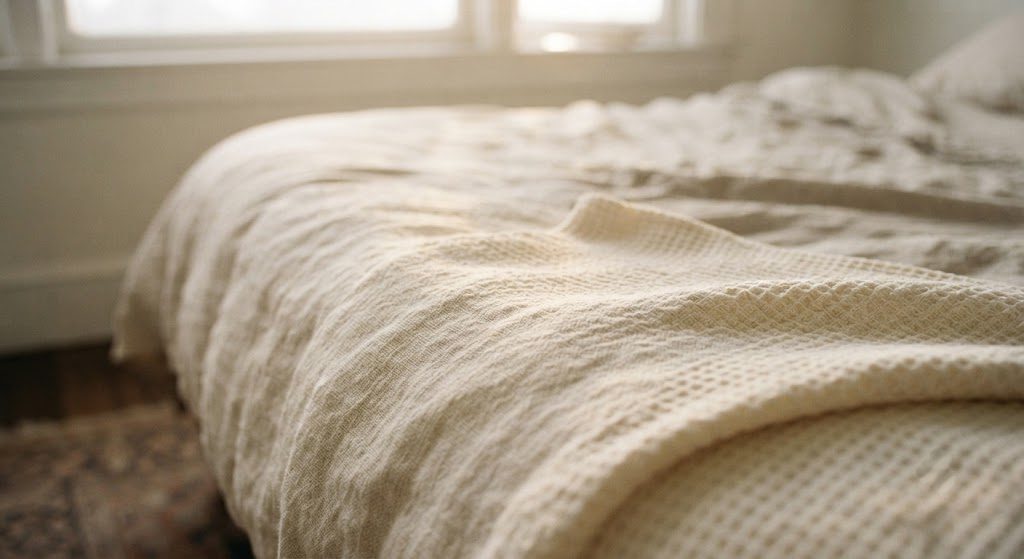
A light cotton blanket folded at the foot of the bed. It's from an Etsy seller who wove it by hand, and it's the layer Tom throws off and I pull on around 3 a.m. This is the secret to making a shared bed work when two people sleep at different temperatures: independent top layers. I have my cotton throw; Tom has nothing but the duvet and a stubborn refusal to admit he's cold. Sophie, when she migrates in at dawn, brings her own tiny quilt that my mother made.
Pillows: Don't Overthink This
I sleep on two pillows — one firm latex for support, one soft down for comfort. Tom uses a single memory foam pillow that he's had since before we met and refuses to replace. The pillowcases are linen, matching the duvet cover, because I like consistency. Sophie's pillows are cotton percale because she says linen "feels scratchy" and I've learned to pick my battles.
Real Product Recommendations at Different Price Points
I've tested or specified dozens of bedding brands over eight years of design work. Here's what I actually recommend, organized by budget and climate compatibility.
Under $100: Solid Starter Sets
Quince makes a linen sheet set that costs about half of what Cultiver charges, and the quality is genuinely good for the price. The fabric is slightly thinner and softer out of the package, which means it might not last as long, but if you're trying linen for the first time, this is where I'd start. Their percale set is also excellent — crisp, cool, and under $80 for a queen.
$100–$250: The Sweet Spot
Parachute's linen sheets sit in this range and are noticeably more substantial than Quince's. The fabric has more texture at first but softens beautifully after about five washes. I used Parachute linen for two years before upgrading to Cultiver, and honestly, the difference isn't massive. If you're outfitting a guest room or want to test whether linen works for your climate, Parachute is the smarter buy.
Cultiver is my personal pick for best bedding for damp climates — their linen is pre-washed to an almost suede-like softness that doesn't require a break-in period. A queen fitted sheet runs about $150, the duvet cover about $250. It's an investment, but mine have lasted four years and counting with no thinning or tearing.
Over $250: The Long-Term Investment
If you want bedding that will outlast your mattress, look at Bella Notte or Matteo. Both are made in small batches, use garment-dyed linen that gets softer forever, and cost more than most people's first sofa. I specified Bella Notte for two clients who wanted the kind of bed you sink into and never leave. One of them emailed me five years later to say the sheets were still perfect. That's the exception, not the rule, and you don't need to spend this much to get good bedding. But if you can and you want to, these brands deliver.
The Mistake Most People Make With Fog-Climate Bedding
Buying the heaviest duvet they can find and calling it a day. Heavy bedding traps moisture as well as heat, which means you wake up warm but damp — the worst of both worlds. The solution isn't more weight. It's better breathability plus strategic layering. A linen duvet cover with a lightweight insert does more for your sleep than a 15-pound comforter ever will.
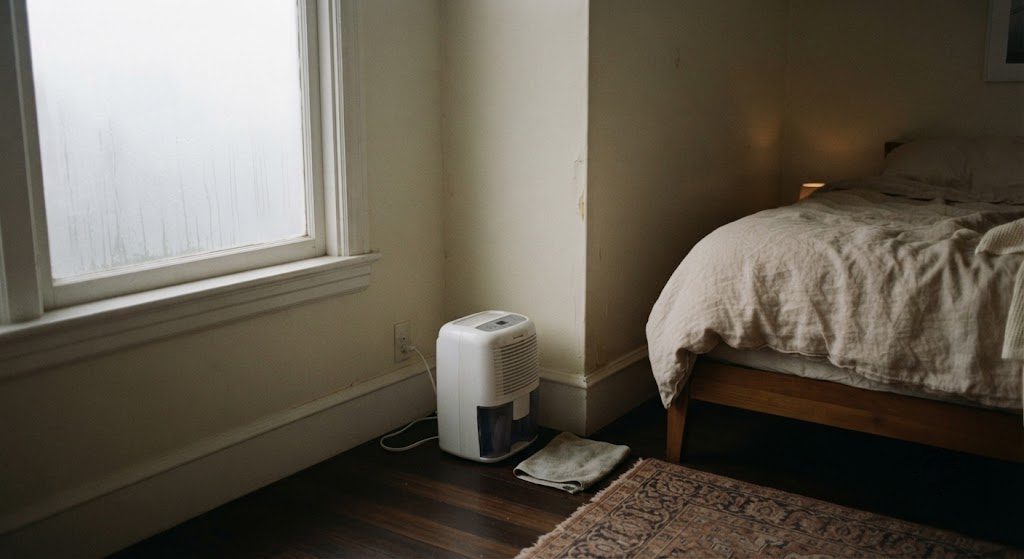
Also: wash your bedding more often than you think you need to. Fog means moisture, moisture means mildew, and mildew means your sheets smell like a basement even if you shower before bed. I wash ours every week, line-dry when the fog clears enough to use the backyard line, and run a dehumidifier in the bedroom during the wettest winter months. It's not glamorous, but neither is waking up in a clammy bed.
The Bottom Line
Your bedding needs to work as hard as your heating system — especially in a climate where the thermostat doesn't hold steady. Choose breathable natural fibers. Layer instead of buying one heavy piece. Accept that linen wrinkles and that's fine. Your bedroom doesn't have to look like a hotel. It just has to feel good when you climb into it, whether the fog is rolling in or burning off.