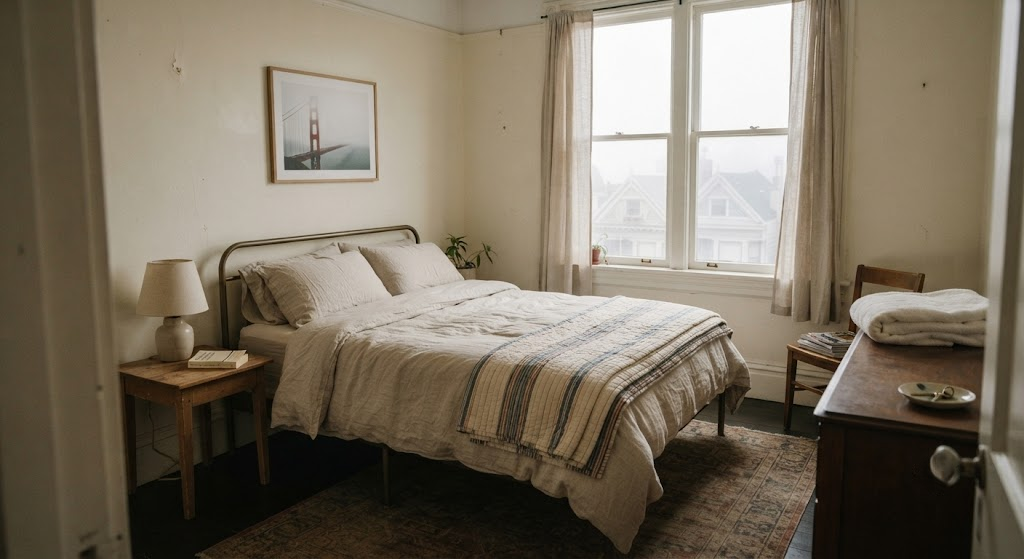
I’ve stayed in too many guest rooms that felt like storage closets with a bed shoved in. The nightstand has a lamp that doesn‘t work and a Bible from 1987. The closet is full of the host’s winter coats and old prom dresses. The sheets smell like they‘ve been in a linen closet since the Bush administration. You lie there at 2 a.m., listening to the house settle, wondering if it’s rude to check into a hotel in the morning.
When I was designing full-time, guest rooms were the most common afterthought. Clients would blow their budget on the primary suite and the kitchen, then throw whatever leftover furniture they had into the spare room and call it a guest bedroom. The result was a room nobody wanted to sleep in — including the people who lived there. A well-designed guest bedroom doesn‘t need to look like a boutique hotel. It needs to feel like someone actually thought about the person staying in it. Here’s how to build one that gets used, loved, and occasionally colonized by a 7-year-old with a blanket fort.
Why Most Guest Rooms Feel Cold (And Not in the Temperature Way)
There‘s a specific kind of neglect that only guest rooms suffer. It happens because the room has no daily occupant, so it doesn’t develop the patina of use that makes a space feel alive. The bed is perfectly made but the mattress is the one you replaced five years ago and didn‘t want to throw away. The dresser is the one from your college apartment that doesn’t match anything. The walls are the neutral beige you never got around to painting because “it‘s just the guest room.” The overall message is: this is the room where we put things we don’t care about.
Guests feel that. They feel it in the lumpy pillow and the empty closet with one wire hanger and the window that doesn‘t have curtains, only dusty blinds that let the streetlight in. The fix isn’t spending a lot of money. It‘s spending a little intentionality. My rule for guest room essentials is simple: if you wouldn’t sleep in it, neither should your mother-in-law.
What Every Guest Room Actually Needs
A Real Mattress, Not the Hand-Me-Down
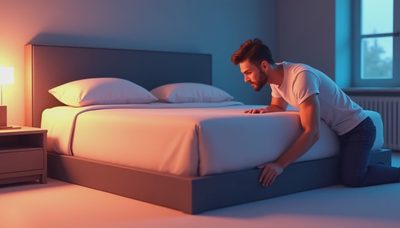
The single biggest upgrade you can make to a guest bedroom is replacing the mattress. I don‘t mean spending $3,000. I mean not using the 15-year-old queen that used to be yours and now has a visible body impression in the middle. A decent memory foam or hybrid mattress in a box costs $300–$600 and arrives at your door in a week. Your guests will notice. More importantly, they’ll sleep.
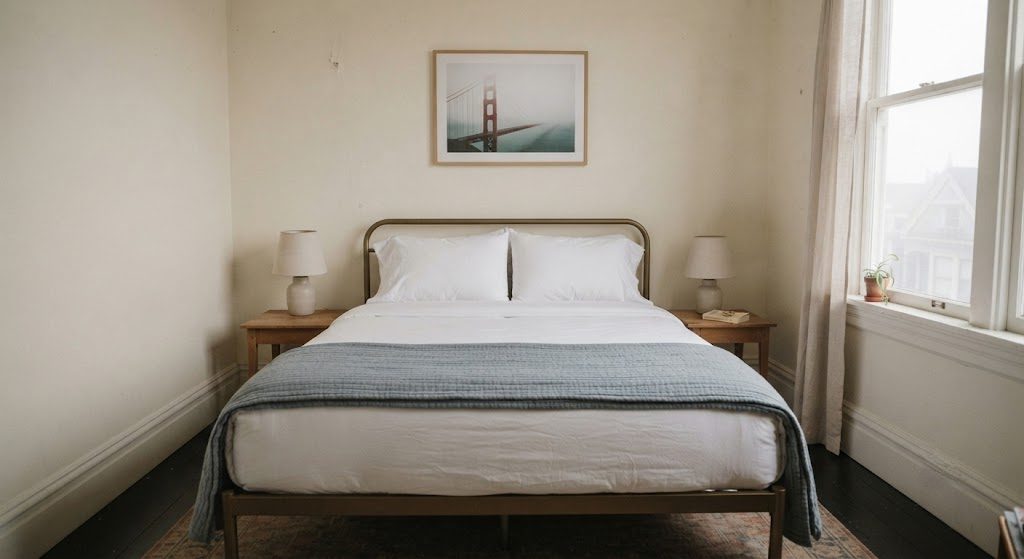
If your guest room doubles as a home office or a playroom, consider a Murphy bed or a quality pull-out sofa instead of a permanent bed that eats up floor space. The key is making sure the sleep surface is comfortable. Most pull-out sofas come with a thin foam mattress that‘s basically a torture device. Swap it for a mattress topper — a two-inch memory foam pad that lives in the closet when the sofa is upright, then goes on top when guests arrive. It’s a 30-second setup that transforms the experience.
Two Pillows Per Person, Minimum
One pillow is a hotel budget move. Two pillows — one firm, one soft — is what actual humans want. You don‘t know if your guest sleeps on their back or their side, if they like a cloud or a brick. Giving them options costs nothing if you steal a couple of pillows from your own linen closet. I keep four pillows in our guest room for a queen bed: two medium-firm down-alternative, two softer down. Sophie’s grandparents use all four. My sister uses one and throws the rest on the floor. People are different. The point is they get to choose.
A Nightstand With a Working Lamp and a Place to Charge
This is the thing guests never complain about but always appreciate. A nightstand within arm‘s reach of the bed. A lamp with a bulb that actually works and isn’t the color of a hospital hallway. An empty outlet or a power strip for charging phones. I keep a small woven basket on our guest nightstand that holds a spare iPhone charger, a two-port USB brick, and an extension cord for people who sleep with their phone on the bed. Total cost: $18. The basket also signals this is for you in a way that an empty outlet doesn‘t.
A Closet With Empty Hangers and Space
Nothing says “you‘re an inconvenience” like a guest closet stuffed with your off-season ski gear and the boxes of tax documents you should have shredded in 2019. Clear at least 12 inches of hanging space. Add six empty hangers — matching, not the wire kind from the dry cleaner. A small empty drawer or a luggage rack gives guests somewhere to unpack that isn’t the floor. If you don‘t have a closet in the room, a wall-mounted coat rack or a row of hooks on the back of the door does the job for a weekend stay.
A Door That Closes Completely
This sounds obvious until you stay in a guest room with sliding barn doors that don’t latch, or French doors with clear glass panes, or — and I‘ve seen this — a curtain instead of a door. Privacy is the baseline requirement for a guest bedroom. If the room doesn’t have a door that closes and locks, your guests will never fully relax. They‘ll hear you making coffee at 6 a.m. and feel obligated to get up and be social. A solid door with a working lock is not a luxury. It’s the minimum.
The Small Touches That Make a Big Difference
Fresh Towels, Visible and Obvious
Don‘t make guests search through a hallway linen closet at midnight trying to remember which shelf you said had the bath towels. Put two clean towels — one bath, one hand — on the foot of the bed or on the dresser, folded and visible. It’s a small gesture that says we were expecting you. Sophie calls it the “hotel thing,” and she‘s right. Hotels put towels on the bed for a reason: it eliminates the awkward “where are the towels?” conversation.
A Water Glass or a Small Carafe
Middle-of-the-night thirst is universal. A glass and a small carafe of water on the nightstand means your guest doesn’t have to navigate an unfamiliar kitchen in the dark. I use a small glass bottle with a cork stopper — it holds about 12 ounces, looks nice, and cost $6 at a thrift store. Refill it before guests arrive and remind them where the bathroom is. That‘s all the guest bedroom ideas you need for a comfortable first night.
A Note With the Wi-Fi Password
There is no modern hospitality without Wi-Fi. Write the network name and password on a small card and leave it on the nightstand or the dresser. Include your phone number if the guest doesn’t already have it. Fold it into the welcome message. “Wi-Fi: FogHouse, password: sophie2026. Text me if you need anything, I‘m upstairs.” Ten seconds of effort, infinite goodwill.
A Wastebasket and a Mirror
Two things guests are too polite to ask for: somewhere to throw away a tissue, and somewhere to check their appearance before leaving the room. A small wastebasket next to the nightstand or dresser. A mirror — full-length if you have wall space, a small one above the dresser if you don’t. These are the details that make a guest room feel complete.
When the Guest Room Does Double Duty
Most of us don‘t have the luxury of a dedicated guest suite. Our spare room is also an office, a playr
oom, a Peloton storage unit, and the place where unfolded laundry goes to die. Multi-use guest room design isn’t about hiding the other functions — it‘s about making the transition easy when someone comes to stay.
In our house, the guest room is also Sophie’s fort headquarters and the backup storage for off-season clothes. When Tom‘s parents visit, we spend 20 minutes clearing Sophie’s Lego sets off the bed, swapping the toy bins for a luggage rack, and putting fresh sheets on. The toys go in a basket in Sophie‘s room. The off-season clothes go back in our closet. The room transforms from play space to guest space because we planned for both.
If your guest room doubles as an office, invest in a desk that can double as a nightstand or a vanity. A small writing desk with a mirror above it works for laptop work during the day and guest grooming in the morning. Keep a small basket of office supplies that can move to a shelf when guests arrive. The room should feel like it’s theirs while they‘re in it, even if Monday through Friday it’s yours.
What I Did in My Own Guest Room
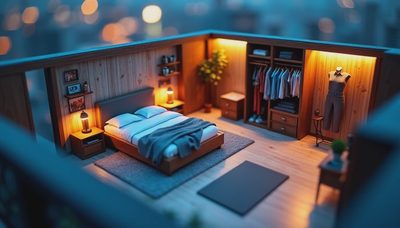
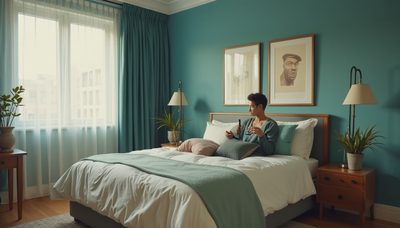
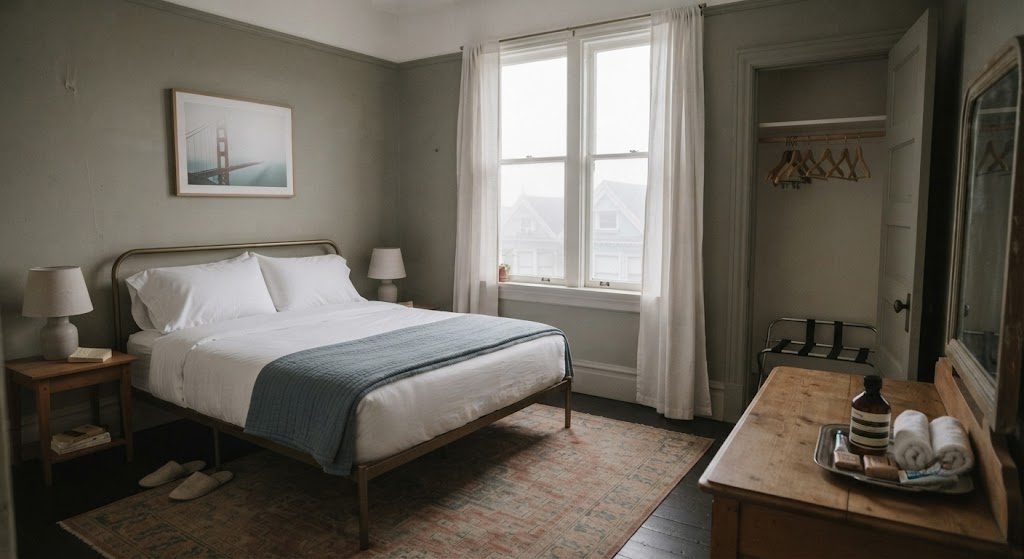
Our guest room is small — roughly 10 by 11 feet, typical San Francisco proportions. It has a queen bed, two nightstands with lamps, a dresser that doubles as a TV stand, and a closet that holds our luggage and Sophie‘s art supplies when guests aren’t visiting. The walls are painted a warm gray-green that changes with the fog light. I hung simple white cotton curtains that diffuse the morning sun without blocking it entirely.
The bed frame is the IKEA Malm in white — inexpensive, sturdy, and low-profile enough that the room doesn‘t feel cramped. The mattress is a Zinus memory foam that cost $350 and has received zero complaints from four sets of guests. The bedding is a cotton percale set in a soft blue-gray, layered with a lightweight quilt my mother-in-law made and a folded fleece blanket for cold nights.
The nightstand holds a small ceramic lamp with a warm bulb, a glass carafe from a thrift store, and a card with the Wi-Fi password. The dresser has a mirror above it, an empty outlet strip for charging, and a tray with a spare toothbrush, a travel-size toothpaste, and a small sewing kit. All things I already owned, repurposed.
Total spend on this room, excluding the mattress: under $200. It’s not a hotel. It‘s better — it’s a room that feels like someone actually wants you there.
The Payoff: A Room That Welcomes People
A good guest bedroom doesn‘t sit empty 360 days a year. It gets used. Sophie builds blanket forts in ours and reads picture books on the bed. Tom’s parents stay for a week at Christmas and don‘t complain about the mattress. My sister comes for a weekend and sleeps until 10 because the curtains actually block the morning light.
Your guest room doesn’t need a renovation. It needs a real mattress, two pillows per person, a working lamp, a place to charge a phone, and a closet with empty hangers. Everything else is optional. Start with the mattress — that‘s the thing guests will remember. Then add the small touches that cost almost nothing and communicate you are welcome here. Your guest bedroom doesn’t have to be perfect. It just has to feel like home for someone who‘s away from theirs.