

The first thing Sophie noticed when we changed our bedroom storage was not the new drawer layout or the soft-close hinges. It was the color. She walked in, looked at the warm white bedroom cabinets, and said, “It feels less shouty in here.” She was right. The room suddenly felt calmer without becoming bland, and Tom stopped leaving his laptop bag on the floor because the new wardrobe had an actual place for it.
That is the quiet strength of this finish. Warm white bedroom cabinets reflect light, soften hard architectural lines, and make storage look more like part of the room than a large piece of furniture. They can work in a Victorian flat, a new-build primary suite, or a child’s room that needs to handle clothes, books, and an impressive Lego collection. The key is choosing the right undertone, layout, and hardware before ordering anything.
Why warm white works better than stark white
Pure white cabinetry can look crisp in a showroom and slightly blue in a bedroom with north-facing windows. Warm white has a small amount of cream, beige, or gray in its undertone, which makes it easier to live with across changing daylight. In my San Francisco bedroom, morning light is cool and gray, while the bedside lamps cast a warmer glow at night. A bright optic white looked disconnected in both conditions. The warmer sample settled in.
Warm white bedroom cabinets also sit comfortably beside more colors than many homeowners expect. They pair with pale oak floors, walnut nightstands, muted green walls, dusty blue bedding, and terracotta accents. If your room already has several wood tones, this finish creates a visual pause rather than adding another competing grain.
Paint samples still matter. Place a cabinet door or large sample against the wall, floor, and trim, then look at it in the morning and after sunset. A finish that appears creamy next to bright white trim may look almost neutral beside medium oak. Satin or eggshell paint is usually more forgiving than high gloss because it hides small fingerprints and reflects less glare.

Choose the cabinet layout around your morning
Before browsing door styles, stand where you get dressed and notice what slows you down. Do you reach for socks, work clothes, or a child’s uniform first? The most useful storage puts daily items between waist and shoulder height, not in a deep top shelf that requires a step stool.
For a primary bedroom, I often combine tall hanging sections with a bank of drawers. A 24-inch-wide hanging bay can hold shirts and jackets, while a 30- to 36-inch section gives dresses or coats more breathing room. Drawers around 6 to 8 inches high are practical for folded T-shirts, pajamas, and workout clothes. Deep drawers can look generous on paper but become a messy second closet when clothes disappear at the back.
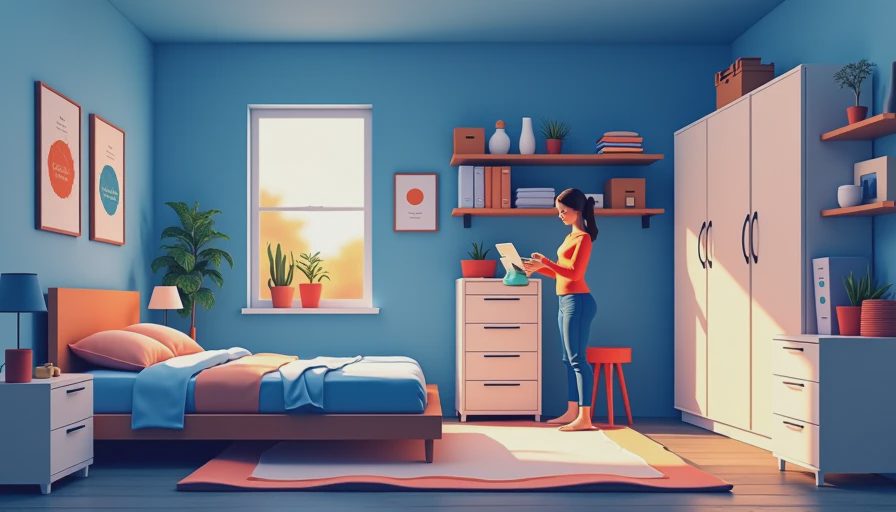
Warm white bedroom cabinets are especially effective on a full wall because the consistent color reduces visual interruption. In a small apartment, consider doors that reach close to the ceiling. The upper section can hold luggage, spare bedding, or seasonal clothing, while the lower section handles everyday use. Leave enough clearance for doors, baseboards, and bedside furniture before finalizing measurements.
If hinged doors would block a walkway, sliding doors are sensible, but they limit access to part of the interior at a time. Hinged doors show the entire cabinet at once and make shared storage easier to divide. Neither choice is automatically better; the room’s circulation should decide.
Get the color and hardware to cooperate
Warm white bedroom cabinets can look traditional, modern, or almost built-in depending on the details around them. Shaker doors with small round knobs suit a relaxed family bedroom. Flat-front doors with slim pulls feel cleaner in a city apartment. Slab fronts are easy to wipe down, which is a real advantage in a child’s room where fingerprints appear at adult eye level for some mysterious reason.
Hardware changes the perceived temperature of the room. Brushed brass adds a little glow and works well with cream walls or natural wood. Brushed nickel is quieter and practical if your faucets, lamps, and curtain rods already use silver tones. Matte black creates contrast, but use it deliberately; a black pull on every door can make a small wall feel busier than intended. For Sophie’s room, I chose simple aged-brass knobs because they were easy for small hands to grip and did not look childish.
Measure the pull size against the door. A tiny knob can disappear on a tall panel, while an oversized bar can make a narrow door feel commercial. Ordering one sample of each finish is inexpensive compared with replacing a full set of hardware.
Make storage work for two people or a growing child
Shared bedrooms expose weak storage plans quickly. One person ends up with the drawers, the other gets the awkward corner, and everyone calls the arrangement temporary for three years. Warm white bedroom cabinets give you a neutral shell, but the inside needs clear ownership. Divide a shared wardrobe by vertical zones, then give each person similar access to hanging space, shelves, and drawers.
For children, avoid designing only for the current age. Adjustable shelves and a low hanging rail can serve a preschooler now, then move upward as the child grows. Keep one lower drawer open for daily pajamas and one higher area for less frequent items. In our house, Sophie’s most-used clothes are not the prettiest ones; they are the dance leotards, leggings, and hoodies she can grab without help.
A guest room benefits from the same practical thinking. Leave several empty hangers, a luggage shelf, and two drawers clear. Guests do not need a magazine-perfect wardrobe, but they do appreciate not living out of a suitcase for a week. A cabinet wall can also conceal an extra blanket, compact vacuum, or spare pillow without turning the room into a storage closet.
Budget for the details that affect daily use
Cabinet costs vary widely, but the visible finish is only one part of the budget. Stock modular systems can begin around several hundred dollars for a small run, while semi-custom built-ins often reach several thousand once fillers, installation, trim, and hardware are included. A realistic middle path is a modular carcass with upgraded doors and carefully chosen handles.
Do not spend the entire budget on beautiful fronts and then skip interior accessories. A soft-close drawer, pull-out hamper, adjustable shoe shelf, or integrated lighting can save more frustration than a decorative crown molding detail. LED strip lighting with a door sensor is particularly useful in a dark wardrobe and can often be added without rewiring the whole room.
Warm white bedroom cabinets are also forgiving when you mix price points. Spend more on the doors that sit at eye level and use straightforward white interiors inside. Add a wood drawer insert only where it improves a daily routine, such as a shallow tray for watches, glasses, or hair accessories. The goal is not a showroom; it is a bedroom that resets easily at night.
A weekend plan for choosing yours
Start by measuring the wall in three places, since older homes are rarely perfectly straight. Record ceiling height, baseboard depth, outlet locations, window trim, and the swing of nearby doors. Then make a quick list of what the storage must hold: hanging clothes, folded items, shoes, luggage, bedding, or children’s gear.
Next, collect three large color samples and view them beside your floor and bedding. Take a photograph in daylight and another under the room’s lamps. Choose hardware after the cabinet finish, not before, because the same brass can look bright against one white and muted against another.
Finally, tape the proposed cabinet depth onto the floor with painter’s tape. Walk around it while carrying laundry and opening a drawer. This simple test caught a clearance problem in one client’s bedroom before installation and saved the family from a very expensive workaround. Your bedroom does not have to be perfect. It just has to be yours.
This weekend, measure one storage wall, tape its footprint on the floor, and bring home two warm white samples. That small exercise will tell you more than an hour of scrolling through bedroom galleries.