

At 9 p.m., a bedroom chair covered in clothes can feel like one more task waiting for you. The decluttering supplies I’d reach for first are refreshingly ordinary: a trash bag, a donation bag, a laundry basket, a few boxes, and a marker. You probably own most of them already. The trick is giving every item a destination before you start, rather than buying a collection of pretty containers for things you may not even keep.
For a longer-term setup, IKEA’s SKUBB line is worth considering for people who want soft-sided closet or drawer organizers. The Container Store’s Elfa line suits someone planning adjustable shelving, while Sterilite’s storage boxes are an option for households that prefer rigid containers. None is a prerequisite for clearing a room. Measure first, compare the available sizes, and buy only for what remains.
Gather the basics before opening a drawer
The most useful decluttering supplies help you make decisions and move things out. Set out one bag for trash, one for donations, and a laundry basket for anything that belongs elsewhere. Add a small box for items that need a decision from someone else, such as a partner’s spare cables or a child’s artwork. Label it and agree on a date to revisit it; otherwise, it becomes a new pile with better branding.
A second empty box can hold things you plan to keep in the bedroom but haven’t assigned a home yet. I like this better than putting them straight back into a drawer: seeing the group together makes it easier to tell whether you have six hand creams and nowhere sensible to put them.
Bring a marker and a few scraps of paper for labels. A tape measure earns its place too, but save the measuring for after the edit. You need the dimensions of the space and the actual amount you’re storing, not an optimistic estimate made in the storage aisle.

Give outgoing items a real exit
Donation bags are decluttering supplies only if they leave the room. Check what a local organization accepts before filling one, especially for bedding, pillows, children’s items, and electronics. Rules vary, and a well-meant donation that can’t be used still needs to be handled by someone.
For clothes, separate items that are clean and usable from worn-out textiles. Look for a textile recycling option where available rather than assuming a donation center can accept everything. Put a small bag for returns or repairs by the door only if you can name the next step: which store, which tailor, or which appointment.
Keep medications, batteries, and electronics out of the general donation pile. Check local disposal or take-back instructions for each. If an electronic device contains personal information, back it up and erase it according to the manufacturer’s instructions before handing it off.
Choose containers after you know what stays
Once you’ve cleared a shelf or drawer, sort what remains by how you use it. Everyday socks need an easy-to-reach drawer; extra guest sheets can live higher up. The best decluttering supplies for this stage are the ones that fit both the space and the person using it.
For drawers, start with small open boxes or dividers. Check the drawer’s inside width, depth, and height, including any hardware that might interfere. A divider that looks perfect from above is no help if it prevents the drawer from closing. Leave a little breathing room so you can put clean laundry away without compressing everything into a puzzle.
Under the bed, measure the clearance at its lowest point, not just beside the legs. Consider whether the container needs wheels or handles and whether it can be opened without pulling the whole thing out. A lidded box makes sense for spare linens; a shallow open tray may work better for shoes you reach for often. Avoid blocking access to anything you need to clean or inspect.
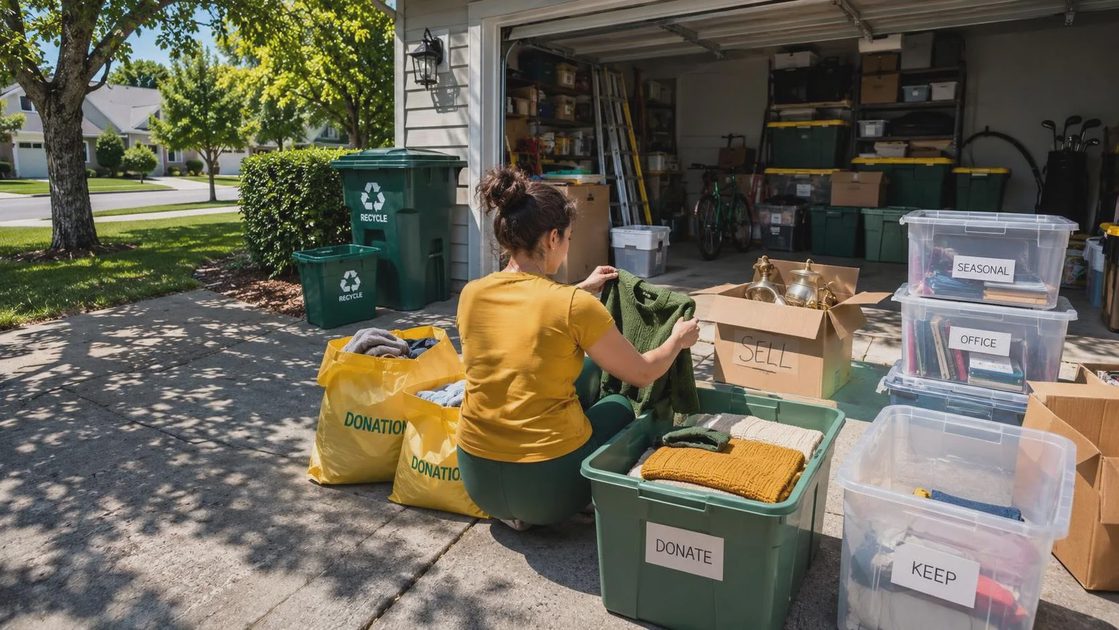
Clear containers help when you need to see the contents; opaque ones can make a busy open shelf feel quieter. Either way, a simple label on the front beats a beautiful box you have to open every morning. If you’re using cardboard for a trial run, keep it somewhere dry and replace it if it becomes damp or damaged.
Make the system work for the whole room
A bedroom usually needs a place for clothes that are neither clean enough for the drawer nor ready for the wash. A hook, a small basket, or a designated section of the closet can handle that in-between category. Give it a limit: when the hook is full, it’s time to decide what gets reworn and what goes in the hamper.
For a child’s room, put the everyday categories at a height the child can reach. A low open bin for building pieces and a separate folder or shallow box for drawings are easier to use than a stack of matching containers with fiddly lids. Invite your child to choose favorites before artwork goes into the folder; the goal is a manageable collection, not a surprise disappearance.
A shared bedroom needs shared rules, not identical habits. One person might prefer folded sweaters; another might actually use a hanging shelf. Keep each person’s belongings in an agreed area, and ask before discarding anything that isn’t yours. That little bit of negotiation prevents an organizing project from becoming an argument.
What to skip at the store
I’d leave specialty hangers, label makers, and elaborate closet systems off the initial list. They can solve specific problems, but they won’t tell you which clothes fit, which papers matter, or why a drawer is difficult to use. If you do buy organizers, check return policies and keep the packaging until you’ve tried the fit at home.
This weekend, take one drawer, gather your basic decluttering supplies, and set a 20-minute timer. Empty the drawer, sort its contents, and put back only what belongs there. Then take the outgoing bag to its next destination. Your bedroom doesn’t have to be perfect. It just has to be yours.