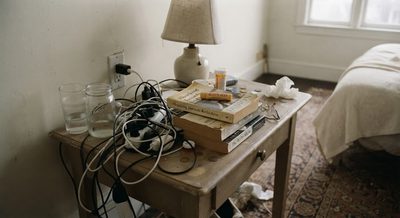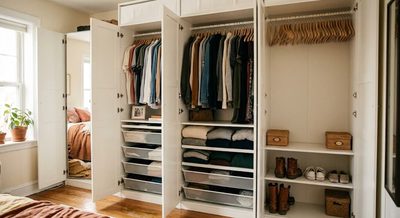
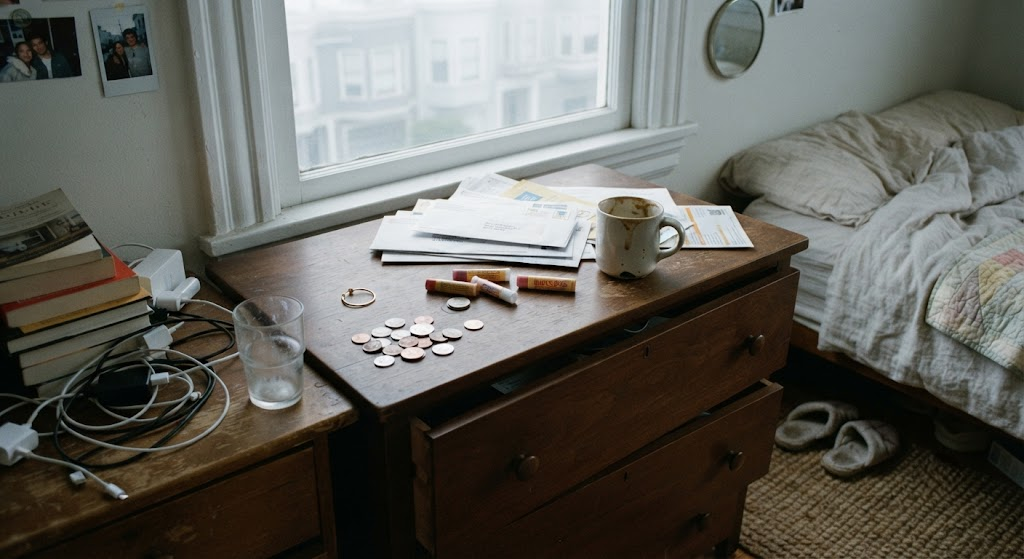
Flat surfaces are the enemy of a calm bedroom. Not because they're inherently bad — because they're too easy. A dresser top doesn't ask questions. It just sits there, accepting whatever you put on it: loose change, yesterday's mail, a single earring you've been looking for since March, three lip balms and somehow none of them are the one you actually use.
I've struggled with this in my own bedroom for years. Tom treats the dresser like a wallet-dumping station. Sophie treats every surface at eye level like a gallery for her rock collection. I treat the window sill like a plant hospital, which is generous considering most of the plants are dead. The fix isn't willpower. It's assigning every surface a specific job, then enforcing a hard limit on what lives there. Here's the bedroom flat surface organization system that finally worked in my own home.
The One Rule for Every Surface
Each flat surface gets one job. Not two. Not "mostly this but sometimes also that." One job. The nightstand supports sleep. The dresser supports getting dressed. The window sill supports nothing — it stays clear. When a surface doesn't have a defined role, it becomes a landfill for objects in transit, and objects in transit never leave.
The reason most bedroom decluttering tips fail is that they focus on clearing the mess rather than preventing it. Prevention requires structure. Structure requires rules. The rule is: if an object doesn't serve the surface's assigned job, it doesn't live there. Period.
The Dresser: Dressing Only
The dresser's job is getting dressed. The surface should hold only items directly related to that task. For me, that's a small woven tray for jewelry and a mirror. Nothing else. No mail. No coffee mugs. No random Lego minifigures Sophie abandoned mid-storyline.
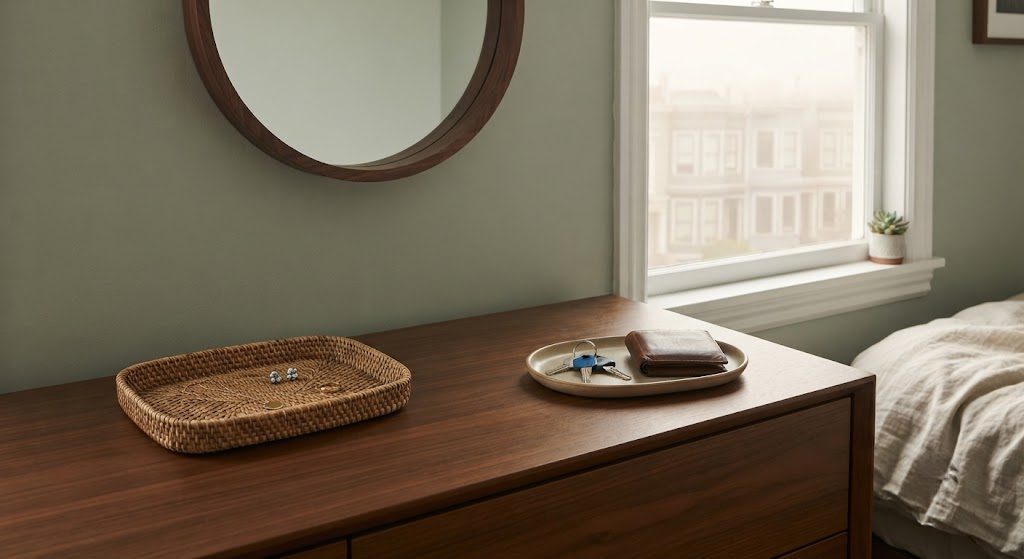
Tom's pocket debris — keys, wallet, AirPods — used to cover the dresser like moss. I added a second small tray specifically for his pocket things, placed on the side of the dresser closest to the door. That's his zone. The rest is mine. A dresser top organization system that doesn't account for both people in the bedroom won't survive the first weekday morning.
If your dresser is in a closet or a walk-in, the rules still apply. A closet dresser should hold only items related to getting dressed. No gift wrap supplies. No tax documents. No mysterious cables that belonged to a phone you owned in 2015.
The Nightstand: Sleep Support Only
I've written about the three-thing rule before — lamp, water, one personal item — but the principle extends beyond the objects themselves. A nightstand that holds sleep-supporting items feels intentional. A nightstand that holds the day's leftover clutter feels chaotic. The nightstand organization rule is simple: if you don't need it between 9 p.m. and 7 a.m., it goes somewhere else.
For me, that means a small ceramic lamp, a glass of water, and whatever book I'm currently reading. For Tom, it's a lamp, his phone, and a glass of water. Sophie gets a lamp, a water bottle, her current book, and one stuffed animal. The stuffed animal is non-negotiable, and I've made peace with it.
The Window Sill: Clear It
Window sills collect things because they're there. A dead leaf from a plant. A birthday card you meant to put away. A rock Sophie found and declared "special." The window sill's job is to hold the window, and occasionally a plant that's actually alive. That's it.
In our bedroom, the window sill stays clear. In Sophie's room, she has permission to display exactly three small objects on hers — currently a painted ceramic cat, a quartz crystal, and a tiny succulent in a terracotta pot. The limit forces curation. When she wants to display something new, something old has to leave. She's seven and she understands this system. Adults can too.
What About Everything Else?
The stuff that used to live on flat surfaces still exists. It just has better homes now. Mail goes to a small letter holder mounted inside the front door, not the bedroom. Loose change goes into a jar in the kitchen. Lip balms live in a small dish inside the bathroom drawer. The small bedroom storage ideas that work are the ones that intercept clutter before it reaches a flat surface. Catch it at the door. Give it a home that isn't the dresser.
How Long This Takes
Clearing every flat surface in our bedroom took about 45 minutes. Maintaining it takes about 90 seconds a day — I do a quick sweep every morning while Tom makes coffee. The dresser gets cleared before I leave the room. The nightstand gets reset after I make the bed. The window sill stays empty because there's nothing to put there. That's the whole system. Your bedroom surfaces should work for you, not against you. Assign the jobs. Enforce the limits. Move on with your morning.