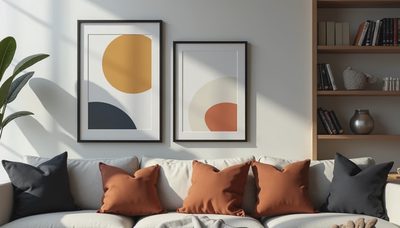
Last month, Sophie taped twelve drawings above her bed and announced that the wall was now a museum. Tom asked whether the museum had a closing time. I understood both reactions: bedroom walls need personality, but they also need breathing room. The right large wall art art can anchor a room, soften a blank wall, and make the bed feel intentionally placed instead of simply pushed against the biggest available surface.
After designing about 50 bedrooms, I have learned that the best artwork is not necessarily the most expensive piece in the room. It is the piece with the right scale, the right mood, and enough visual connection to the bedding, rug, or curtains. Here is how I choose it for real bedrooms, including rooms with children, small budgets, and the occasional Lego launcher.
Why large wall art art works above a bed
A bed is usually the largest object in a bedroom, so a small print above it can look hesitant. One 36-by-48-inch canvas or a pair of 24-by-36-inch prints gives the wall enough visual weight to balance the headboard. As a starting point, choose artwork that spans roughly two-thirds to three-quarters of the bed width. For a queen bed, that often means a finished width between 60 and 72 inches.
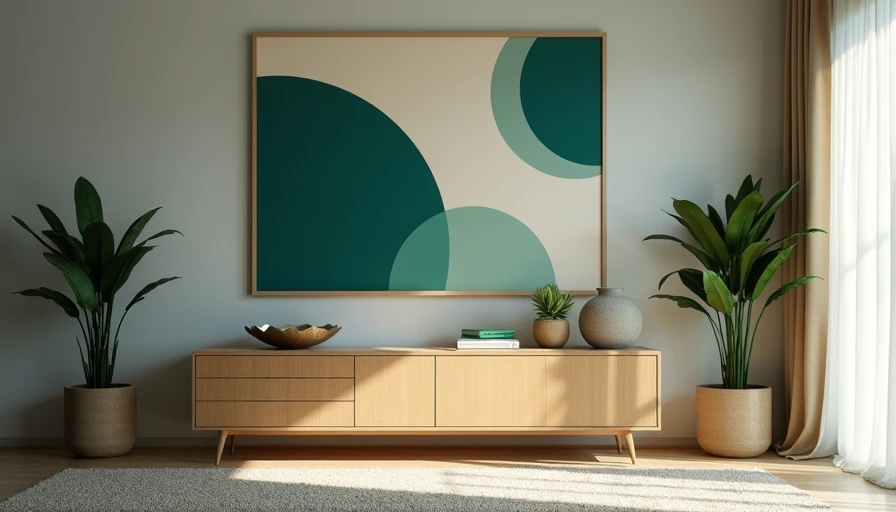
This is why large wall art art feels more finished than a collection of random small frames. The eye reads one strong shape before noticing the details. A muted landscape can make a primary bedroom feel quieter, while an abstract with rust, olive, or navy can pull together bedding that otherwise feels disconnected.
Placement matters just as much as size. Leave about 6 to 10 inches between the top of the headboard and the bottom of the frame. If there is no headboard, hang the artwork so its center sits approximately 57 to 60 inches from the floor, adjusting for your family’s height. In a room with low ceilings, choose a horizontal piece rather than a tall vertical canvas that makes the ceiling feel lower.
Choosing a mood, palette, and material
For a bedroom, I usually begin with the feeling rather than the color. Do you want the room to feel sleepy, warm, collected, or cheerful? Blue-gray photography and soft botanical prints are dependable choices for a restful primary suite. Terracotta, ocher, and cream work beautifully in a room with walnut furniture. For a child’s bedroom, saturated color can be fun, but I prefer artwork that can survive a change from dinosaurs to basketball without requiring a complete redesign.
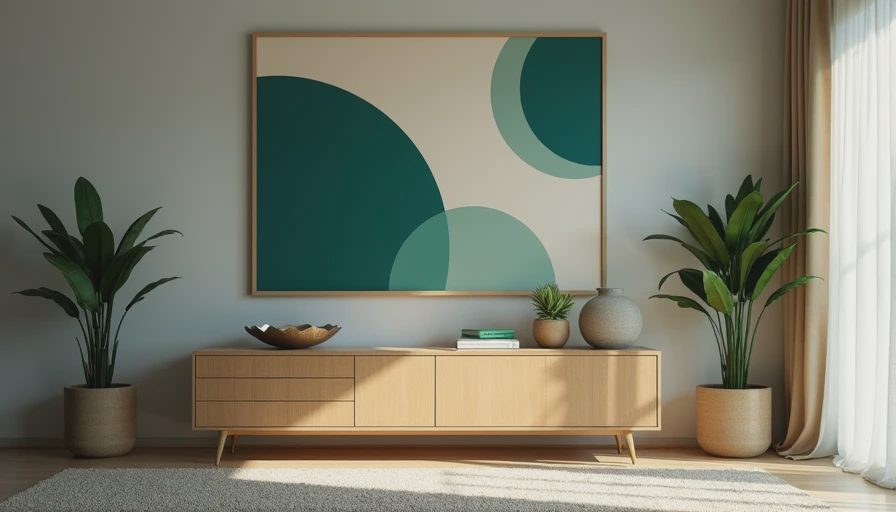
The keyword large wall art art may lead you toward oversized pieces, but oversized does not have to mean visually loud. A pale linen canvas, tonal plaster-style print, or black-and-white photograph can occupy a broad wall without dominating the room. Materials change the effect too. Canvas feels relaxed and forgiving. A framed print feels more finished. A wood panel adds warmth, while acrylic has a cleaner, more modern look but can reflect a lamp or window.
Here is what I did in my own room: I chose a 40-by-30-inch abstract canvas with a warm white background, then repeated its muted clay color in the lumbar pillow. The painting cost about $120 from a readily available home decor collection. A custom frame would have cost several hundred dollars, so I left the canvas unframed and spent the difference on a better bedside lamp.
How to size large wall art art in a small bedroom
Small rooms need art, but they do not need visual clutter. In our San Francisco Victorian flat, the bedroom wall opposite the bed is narrow, and a deep frame would have made the walkway feel cramped. A shallow 30-by-40-inch print gave us the impact we wanted while keeping the frame less than two inches deep.
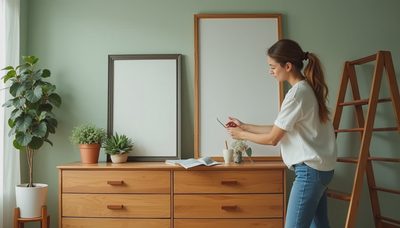
Measure the wall, then mark the proposed artwork with painter’s tape. Live with the outline for a full day, including at night when the lamps are on. This simple step catches mistakes that online shopping hides. A piece that feels generous in a product photo can look enormous beside a queen bed, especially when the room also has a dresser, mirror, and open closet door.
For an apartment bedroom, consider a diptych: two coordinated panels separated by 2 to 4 inches. It is easier to carry up stairs, and each panel can be moved if the furniture layout changes. Two 18-by-24-inch frames often create a more flexible arrangement than one 36-by-48-inch piece. Just keep the color family consistent so the wall reads as one composition.

Framing, hanging, and staying on budget
The frame should support the bedroom, not compete with the art. Natural oak suits linen bedding and woven baskets. Thin black metal works with modern furniture and white walls. For a traditional room, a simple walnut or painted wood frame brings more warmth than a shiny metallic finish. If you are buying a poster, reserve part of the budget for framing; an inexpensive print can look remarkably polished in a $60 to $150 ready-made frame.
Large wall art art does not require a gallery budget. Target, IKEA, Minted, Etsy, and local art fairs offer useful starting points, while Society6 and independent photographers provide more unusual subjects. Before ordering, check whether the listed dimensions include the frame, whether the piece arrives ready to hang, and whether the colors shown are likely to work with your room’s lighting. A $90 canvas that needs an additional $180 frame is not the same purchase as a $90 finished piece.
Use hardware rated well above the artwork’s weight. For drywall, a properly installed D-ring with a wall anchor is more dependable than a single tiny nail. Heavy mirrors or framed glass may need two hanging points and a stud-based installation. In a child’s room, avoid placing glass directly above the bed and secure tall furniture nearby to the wall.
Personal ideas that will not date quickly
The safest personal artwork is not necessarily a family portrait. A black-and-white photograph from a meaningful trip, a child’s drawing printed at a larger scale, or a pressed botanical can tell a story without making the room feel themed. Sophie’s rotating drawings are wonderful, but I keep them on a picture ledge rather than permanently taping them above the bed. That gives her ownership and lets the room evolve.
You can also create large wall art art from several modest pieces. Three $25 prints in matching 18-by-24-inch frames can cost less than one large original and give you a flexible arrangement. Keep the outer edges aligned, use equal spacing, and repeat one color from the room in each image. The result feels designed rather than accidental.
Before buying, photograph your wall, measure the bed, and note the colors already present. Then choose one focal piece and let the rest of the room stay calm around it. Your bedroom does not have to be perfect. It just has to be yours. This weekend, tape a paper outline above the bed and live with it before you spend a dollar.