
Last month, Sophie taped three of her drawings above our living room sofa and announced that the wall finally looked “less boring.” She was right about the boring part, if not the tape. Choosing wall art for living room spaces can feel surprisingly difficult because the piece has to work with the sofa, rug, lighting, and the everyday mess of real life. It should add personality without making the room feel like a furniture showroom.
After eight years designing homes, I have learned that the best art is not necessarily the most expensive. A $45 framed print from Juniper Print Shop can look more intentional than a $900 canvas chosen in a panic. The difference usually comes down to scale, placement, and whether the colors connect to something already in the room.
Start with the wall, not the artwork
Before shopping, measure the wall space you actually want to fill. For art above a sofa, the finished arrangement should usually be about two-thirds to three-quarters of the sofa's width. A 72-inch sofa can handle a single piece around 48 to 54 inches wide, or a group of smaller works with a similar total width.
Hang the center of the arrangement roughly 57 to 60 inches from the floor, adjusting slightly if your household is tall or the ceiling is unusually high. Above furniture, leave about 6 to 10 inches between the top of the sofa and the bottom of the frame. Too much empty space makes the art look disconnected; too little makes the sofa and frame feel crowded.
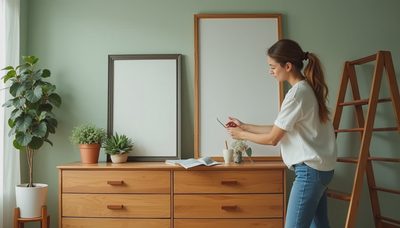
Here is what I did in my own room: I cut paper templates the size of three frames and attached them with painter's tape. We lived with the arrangement for two days before drilling. That small step prevented a crooked gallery wall and showed me that one large horizontal print would feel calmer than the three-piece layout I had originally planned.

Choose a style that suits daily life
The most successful wall art for living room designs usually includes one clear point of view rather than several unrelated trends. Abstract art works well when you want movement without a literal subject. Botanical prints soften a room with leather or wood furniture. Black-and-white photography can give a colorful space some visual breathing room.
For a relaxed family room, consider a large textile, a framed map, or a pair of vintage-style botanical prints. In a more modern apartment, try one oversized abstract canvas with broad areas of cream, charcoal, rust, or muted blue. If your room already has patterned curtains or a busy rug, select art with quieter shapes. The wall should contribute to the composition, not compete with every other surface.
I like to pull one secondary color from the room rather than match the sofa exactly. A faded terracotta line in the artwork can connect to a throw pillow without turning the entire space orange. That approach also makes future changes easier. When Sophie insisted on hot pink cushions for a month, the artwork still worked because it was not locked to one accent color.
Make the budget work harder
You can find appealing wall art for living room projects at nearly every price point. Target and IKEA are useful for inexpensive frames and simple posters, while Etsy offers independent illustrators and downloadable files that you can print locally. Society6, Minted, and Artfully Walls are helpful when you want more unusual images or coordinated sets. For a polished look on a modest budget, spend more on the frame and less on the print.
A 24-by-36-inch downloadable print might cost $10 to $30, while local printing on heavyweight matte paper can add $25 to $60. A ready-made frame from Michaels or IKEA may bring the total under $120. By contrast, a custom frame for the same size can easily cost $200 to $400. Custom framing is worth considering for an original painting, an heirloom, or an unusual size, but it is not required for every room.
When comparing prices, include shipping, matting, acrylic or glass, and hanging hardware. A supposedly cheap canvas can become expensive after delivery, while a standard-size print lets you use a frame you already own. I keep a small box of D-rings, picture wire, and wall anchors because waiting for hardware is how half-finished decorating projects become permanent.
Build a gallery wall without the chaos
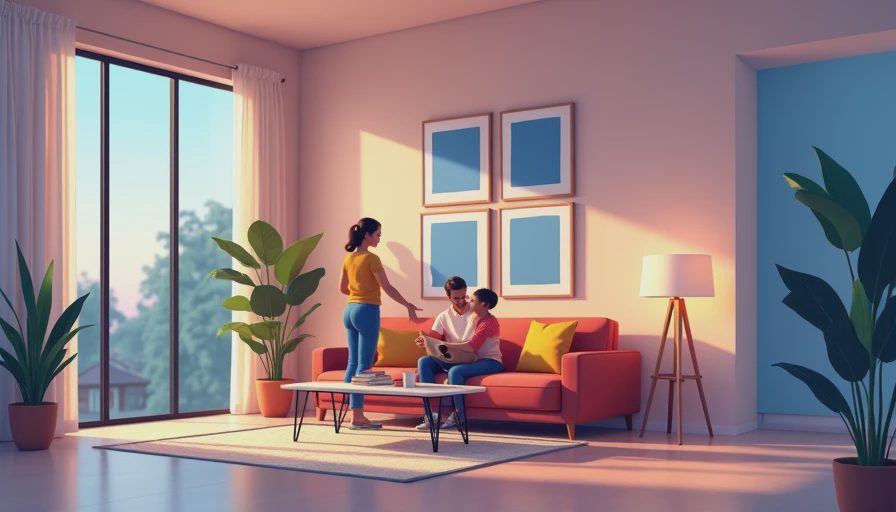
Gallery walls look collected when they have a few repeating rules. Use the same frame color, a shared mat color, or a consistent subject. You can mix frame styles, but repeat at least one element so the arrangement feels deliberate. A practical starting point is six to nine pieces in two or three sizes, with gaps of 2 to 4 inches between frames.
Lay everything on the floor first. Start with the largest piece, then place medium works around it and fill the gaps with smaller ones. Photograph the layout from standing height before transferring it to the wall. Number the backs of the frames and make a quick paper template if the arrangement is large.
For narrow walls, stack two or three vertical pieces. Over a wide sofa, a horizontal trio often feels balanced. Do not force a gallery wall into a space that wants one strong piece. In my client work, the most expensive mistake was often buying eight small prints for a wall that needed one generous canvas.
Avoid common placement mistakes
Hanging art too high is the mistake I see most often. People align the top of the frame with a nearby doorway or window instead of relating it to the sofa. The result makes the furniture look stranded below. Another issue is choosing art that is too small. A tiny 11-by-14-inch frame above a deep sectional can disappear completely.
Lighting matters too. Direct afternoon sun can fade certain prints, and glare from a window can make glass frustrating. Use UV-filtering acrylic for valuable paper art, or place more delicate pieces on a wall away from strong sunlight. Picture lights and adjustable sconces add warmth, but even a nearby floor lamp can make the work visible after dinner.
If you rent, use appropriately rated adhesive hanging strips for lighter frames and removable hooks where suitable. For anything heavy, locate a stud or use a wall anchor rated above the item's weight. The goal is not just a pretty photograph; it is art that stays safely on the wall when someone bumps the sofa.
A simple weekend plan
For wall art for living room refreshes, begin with one wall and one budget. Measure the sofa, photograph the room in daylight, and note three colors already present. Then save five possibilities in different sizes instead of buying the first attractive image. Compare each option from across the room, not just on your phone.
This weekend, cut paper templates for your favorite two layouts and tape them up before ordering anything. Live with them through breakfast, homework, and evening lighting. If the arrangement still feels right, buy the art and hardware together. Your home does not need a perfect showroom wall. It needs a choice that makes you happy when you walk through the door.