I spent years talking clients out of wallpaper. This might surprise you, given that I’m about to spend an entire article convincing you to try it, but hear me out. In my early design years, wallpaper meant one of two things: the peel-and-border stuff that peeled off in humid bathrooms, or the heavy Victorian prints that required a professional installer and a second mortgage. Neither felt like a good bet for a bedroom. Clients would ask about wallpaper, and I‘d gently steer them toward paint. Paint was safe. Paint was forgiving. Paint didn’t make people cry when they changed their mind six months later.
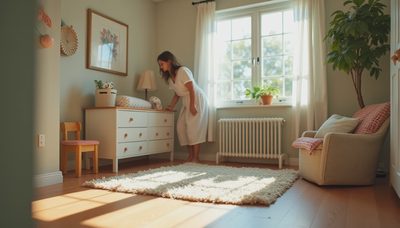
Then Sophie was born, and I wallpapered her accent wall in a pattern of tiny woodland animals, and everything I thought I knew about wallpaper turned out to be wrong. Since then, I‘ve wallpapered our primary bedroom ceiling, the back of a built-in bookshelf, and one very controversial wall in our guest room that my mother-in-law pretends to like. Here’s what I‘ve learned about bedroom wallpaper — where to put it, how to choose it, and why the rental-friendly options are actually good now.
Why Wallpaper Is Worth the Risk
Paint is great. I love paint. But wallpaper does something paint can’t: it adds texture, depth, and personality in a single weekend. A painted accent wall says “I considered blue.” A wallpapered accent wall says “I made a choice.” In a bedroom, where the design should reflect the person sleeping there, that distinction matters.
The objections I hear most often: wallpaper is permanent, wallpaper is expensive, wallpaper goes out of style. These used to be true. They aren‘t anymore. The peel-and-stick wallpaper options available now — and I mean the good ones, not the contact paper disasters of the early 2000s — remove cleanly without damaging paint. The price range is wide enough that you can paper a single accent wall for under $100. And as for going out of style: a well-chosen pattern in a bedroom lasts longer than any trend because it’s personal, not trendy. Sophie‘s woodland animals are still going strong at age seven, and she shows no signs of outgrowing them. When she does, we’ll peel them off in an afternoon and try something new.
Where to Put Wallpaper in a Bedroom
The question isn‘t “should I wallpaper?” It’s “where?” Wallpaper doesn‘t need to cover every wall to transform a room. In fact, the best wallpaper ideas for bedroom spaces I’ve done or seen use wallpaper selectively — one surface, maximum two — to create impact without overwhelm.
The Accent Wall Behind the Bed
This is the classic move for a reason. The wall behind the headboard is the natural focal point of any bedroom. It‘s the first thing you see when you walk in, and the last thing you see before you close your eyes. Wallpaper on this wall frames the bed, anchors the room, and gives you the biggest design payoff for the least square footage.
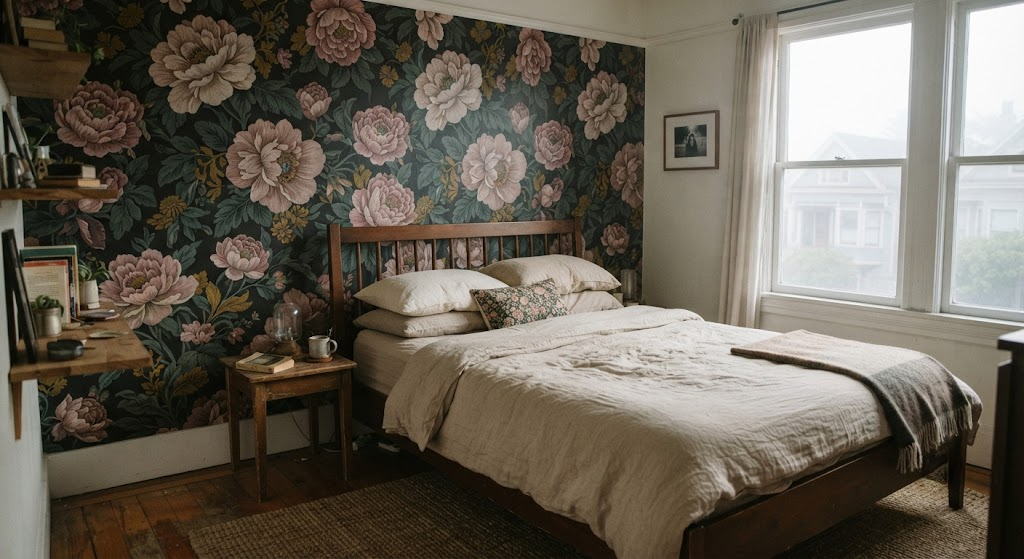
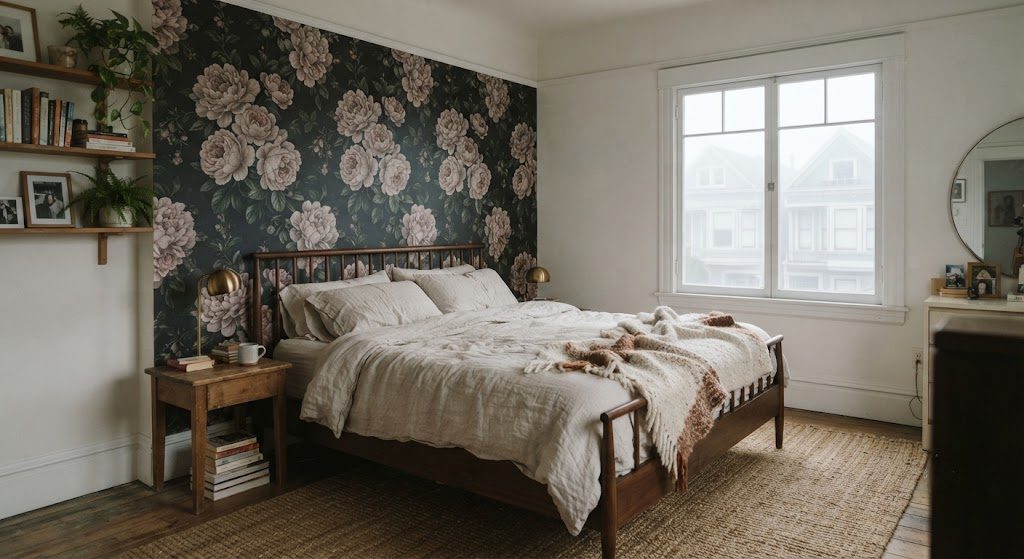
The key is choosing a pattern that works with your bedding, not against it. If your duvet is patterned, go subtle on the wallpaper — a tone-on-tone stripe, a small-scale geometric, a linen-textured solid that reads as neutral from a distance. If your bedding is solid, the wallpaper can go bolder: a large-scale floral, a moody botanical, a graphic print that makes the room feel intentional. I’ve done both. Our primary bedroom has a dark floral wallpaper behind the bed, and the bedding is oatmeal linen with one textured throw. The pattern does the work; the bedding supports it.
For master bedroom wallpaper, an accent wall behind the bed is the safest place to experiment. If you hate it in six months, you‘ve only committed to one wall. Peel it off. Paint it. Move on.
The Ceiling
Wallpapering a ceiling sounds like a Victorian fever dream, but it’s actually the most underrated move in bedroom design. A patterned ceiling draws the eye up, makes a small room feel taller, and creates a cocoon-like feeling that‘s perfect for a sleep space. I wallpapered our bedroom ceiling in a subtle metallic grasscloth two years ago, and it’s still the thing guests comment on first.
For bedroom ceiling wallpaper, stick to patterns that don‘t demand attention — small repeats, tonal colors, subtle shimmer. You want the effect to register as “this room feels special” rather than “there is wallpaper on the ceiling.” Peel-and-stick options make this surprisingly doable for a DIY project, though I recommend two people and a lot of patience. Tom and I did ours over a weekend, and our marriage survived. Barely.
The Inside of a Closet or Alcove
This is the wallpaper equivalent of a secret tattoo — no one sees it unless you show them, but you know it‘s there, and it makes you smile every time you open the door. I’ve done this in Sophie‘s closet with a colorful polka dot print, and in our own walk-in with a dark floral remnant left over from another project. Total cost for the closet: $22. The payoff: disproportionate joy every time I reach for a sweater.
A wallpapered closet interior is also the best place to test a pattern you’re nervous about. If it feels like too much on a full wall, scale it down to a closet or the back of a bookshelf. You‘ll know within a week whether the pattern makes you happy or gives you a headache, and you’ll have spent very little money finding out.
A Single Strip or Panel
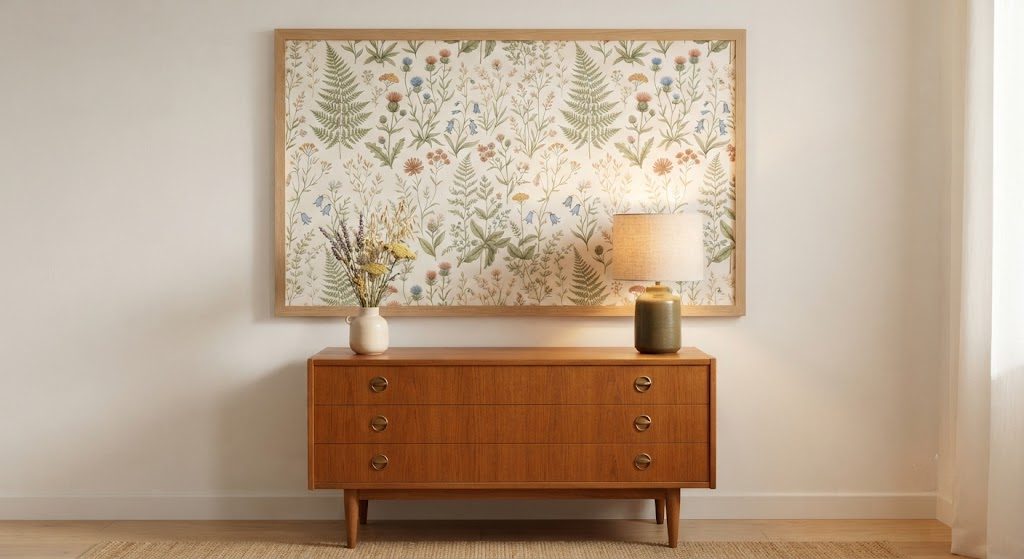
Not ready to commit to a full wall? Frame a single panel of wallpaper with trim or molding to create the effect of a large piece of art. This works beautifully behind a dresser, above a reading chair, or in place of a headboard if your bed sits against a blank wall. It‘s also the cheapest possible way to try bedroom wall decor with wallpaper — a single roll, a few pieces of trim, and an hour of work.
Rental-Friendly Wallpaper: What Actually Works
I get more questions about rental wallpaper than any other design topic. Renters want the impact of wallpaper without losing their security deposit. The good news: peel-and-stick technology has come far enough that removable wallpaper genuinely works now. The less-good news: not all brands are created equal, and installation matters more than you think.
What to Look For
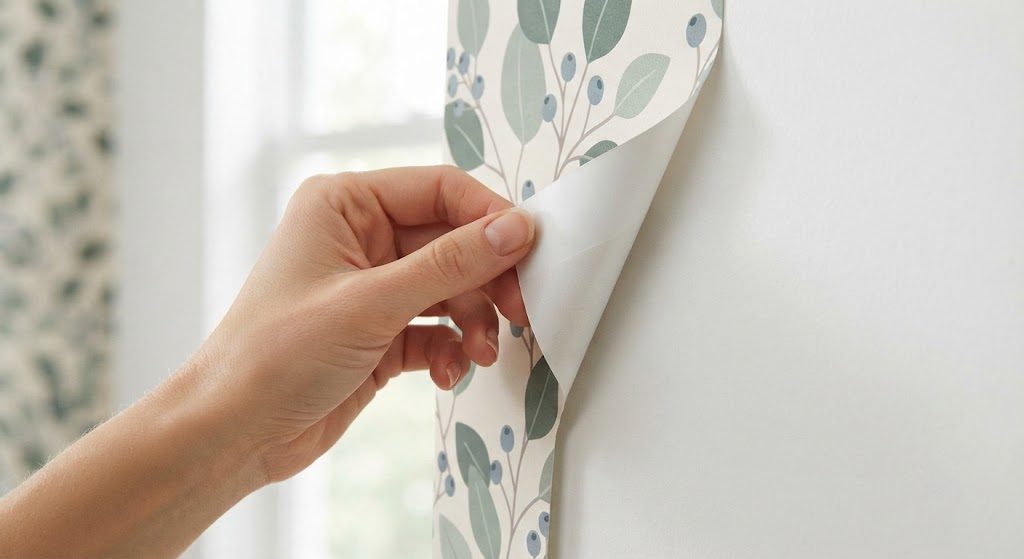
Choose wallpaper specifically labeled as “removable” or “peel-and-stick.” Don‘t assume anything with adhesive backing will come off cleanly — some of the cheaper options on Amazon will absolutely take the paint with them. Brands I’ve used and trust: Chasing Paper (fabric-based, removes perfectly), Tempaper (good patterns, decent adhesion), and Spoonflower (custom designs on peel-and-stick, though removal varies by wall surface). Expect to spend $30–$60 for a single accent wall‘s worth.
Installation Tips That Save Your Walls
Clean the wall thoroughly before applying. Any dust, grease, or texture will prevent proper adhesion and make removal harder later. Use a squeegee or a credit card wrapped in a soft cloth to smooth bubbles as you go. Don’t stretch the paper — peel-and-stick shrinks back slightly after application, and if you‘ve pulled it tight, it’ll gap at the seams.
When it‘s time to remove, go slow. Heat the paper gently with a hair dryer to soften the adhesive, then peel at a 45-degree angle. If the paint starts to lift, stop, heat more, and try again. I’ve removed peel-and-stick from four different walls in our house without damage. Patience is the only trick.
If You‘re Not Allowed to Stick Anything
Some leases prohibit even removable wallpaper. In that case, consider a non-adhesive option: a large tapestry or a piece of fabric stretched over a lightweight wooden frame and hung like art. It won’t give you the seamless look of wallpaper, but it‘ll add pattern and softness to a blank wall without risking your deposit. I did this in my first apartment and it worked beautifully — a vintage floral sheet from a thrift store, stapled to a frame made from $8 worth of lumber. Total cost: $14.
How to Choose a Pattern You Won’t Hate in a Year
This is the question that keeps people up at night. What if I love it in the store and hate it on my wall? What if it‘s too bold? What if I’m not a “pattern person”?
Start With Your Bedding
If you have patterned bedding you love, pick one color from it and find a wallpaper in that same hue — ideally a tone-on-tone or a subtle texture. The wallpaper complements the bedding without competing. If your bedding is solid, you have a blank canvas. Choose a pattern that reflects something you genuinely like: botanicals if you love plants, geometrics if you prefer clean lines, a mural if you want the wall to feel like a window into somewhere else.
Order Samples First
Never — and I mean never — buy wallpaper based on a screen image. Colors render differently on every monitor, and the scale of a pattern is impossible to judge from a product photo. Order samples. Tape them to the wall. Live with them for at least 48 hours, looking at them in morning light, evening light, and the weird middle-of-the-night light when you get up for water. Patterns that looked charming at 2 p.m. can feel aggressive at midnight.
Trust Your Reaction
If a pattern makes you smile every time you see the sample, buy it. If you‘re trying to talk yourself into liking it, don’t. Wallpaper is personal. It should feel like you, not like a design blog from 2018. Sophie picked her woodland animals because she liked the foxes. I picked our bedroom floral because it reminded me of the garden my grandmother had. Neither pattern is trendy. Both make us happy. That‘s the whole point of bedroom wallpaper ideas — they should reflect the person who sleeps in the room.
The Wallpaper I’ve Used in My Own Home
Here‘s exactly what’s on my walls, in case you want to copy it or learn from my mistakes.
Our primary bedroom: a dark floral peel-and-stick from Chasing Paper on the wall behind the bed. The pattern is large-scale, moody, and balanced by neutral linen bedding and white walls on the other three sides. I installed it myself in about three hours, and it‘s been up for two years with no peeling at the seams.
Sophie’s room: a woodland animal print from Tempaper on one wall, applied when she was three. The animals are small-scale and whimsical without being babyish. She still loves it at seven. When she outgrows it, we‘ll remove it and let her pick something new.
Our ceiling: a metallic grasscloth peel-and-stick from a brand I’ve since forgotten. Installation was awful — Tom and I argued about alignment for 45 minutes — but the result is beautiful. It catches the fog light and makes the room feel taller. Worth the marital strain.
Guest room closet interior: a remnant of a dark floral print I had left over. It cost nothing, took 20 minutes, and makes me irrationally happy every time I put away extra pillows.
Wallpaper Is Not the Enemy
The design industry spent years telling people wallpaper was fussy, expensive, and dated. It can be. It can also be the single best decision you make in a bedroom — the thing that takes it from “nice” to “mine.” Start small. An accent wall. A closet interior. A framed panel. Use peel-and-stick so you‘re not committing forever. Order samples before you buy.
Your bedroom doesn’t have to be perfect. It just has to be yours — and if yours has a wallpapered ceiling or a floral accent wall behind the bed, I fully support that decision.