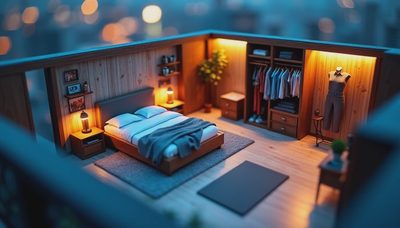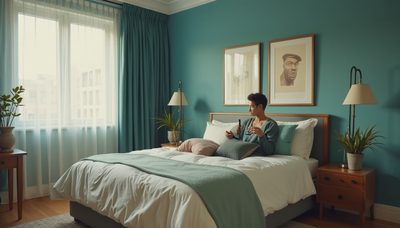

Last month, Sophie stood in her bedroom doorway holding two curtain samples: hot pink and an even hotter pink. She was seven, but her argument was surprisingly adult. “I want the room to show who I am,” she said. That is the heart of young adult room design, too. The goal is not to create a miniature luxury hotel or a room that looks borrowed from a catalog. It is to make a personal, practical space that can handle changing tastes, schoolwork, hobbies, sleep, friends, and the occasional pile of laundry.
A young adult room should feel more independent without requiring a full renovation every two years. Start with a flexible foundation: a comfortable bed, useful storage, layered lighting, and enough open floor space to move around. Then add personality through items that are easy to replace, such as art, bedding, curtains, and desk accessories.
Start With the Layout, Not the Decor
Here is what I did in my own room after realizing I was stepping around a laundry basket every morning: I measured the usable floor area, marked the door swing, and placed the largest pieces first. That ten-minute exercise solved a problem that a new rug never could.
For young adult room design, place the bed where it does not block a window, radiator, closet door, or main walking path. In a small room, a twin XL or full-size bed can preserve valuable circulation space. In a larger bedroom, a queen bed may work, but leave at least 24 inches for comfortable movement beside the bed whenever possible. A bed with drawers underneath, such as the IKEA MALM or a simple platform frame from Wayfair, can replace a bulky dresser.
Create three clear zones: sleeping, getting ready, and working or relaxing. The desk does not need to be large. A 42-inch writing desk with a wall-mounted shelf can support a laptop, notebooks, and a small lamp without taking over the room. If the bedroom is also a homework space, avoid placing the desk directly beside the bed. Separating work from sleep makes the room feel calmer at night.

Choose a Grown-Up Foundation
The best young adult room design projects usually begin with quiet, durable basics. Paint in warm white, muted sage, soft blue-gray, or a gentle clay tone gives the room character without locking it into one trend. Sherwin-Williams Agreeable Gray and Benjamin Moore Pale Oak are familiar options, but always test a sample because northern light and warm bulbs can change a color dramatically.
A simple upholstered headboard can make a room feel finished for less than a complete furniture set. Look for one in oatmeal, charcoal, navy, or soft green, with prices often ranging from $150 to $400 depending on size. If that is not in the budget, mount two large euro pillows against the wall and use a washable quilt to create a layered bed.
Bedding is where comfort matters most. I like a washable cotton quilt, two standard pillows for sleeping, and one or two larger pillows for sitting up. Target, The Company Store, and Quince offer practical bedding at different price points. Avoid buying an entire matching set unless every piece genuinely works; coordinated textures usually look more personal than identical patterns.
For young adult room design, keep permanent purchases neutral and let changeable pieces carry the fun. A vivid throw blanket, framed concert poster, colorful lamp, or patterned Roman shade can express a strong point of view without forcing a future repaint.
Build Storage Around Daily Habits
A beautiful room with nowhere to put things will feel messy within a week. Before buying containers, watch what actually happens. Does clothing land on a chair because the hamper is too far away? Do chargers disappear under the bed? Are shoes forming a small mountain near the door? Solve those specific habits instead of organizing an imaginary person.
Use a hamper with a lid or a narrow rolling model that fits beside the closet. Add a three-drawer unit for socks, workout clothes, or accessories. The Container Store Elfa components can be customized, while a basic cube shelf from IKEA can provide open storage for books, baskets, and folded sweaters for considerably less. Under-bed bags from Amazon or fabric bins from Target are useful for seasonal clothing, but label them clearly so storage does not become a hiding place.
Closet lighting is another overlooked improvement. A rechargeable motion-sensor light can cost $15 to $30 and makes dark corners usable. Add slim velvet hangers, one shelf divider, and a small hook rail for tomorrow’s outfit. These modest changes often make getting dressed faster than buying another dresser.
When designing a young adult room design plan, leave about 15 percent of storage empty. That space is not wasted; it gives the room somewhere to absorb a new hobby, a move back home, or a semester’s worth of extra clothes.
Use Lighting to Change the Mood
One ceiling fixture cannot do every job. A useful bedroom needs ambient light for general visibility, task light for reading or studying, and softer accent light for winding down. A plug-in wall sconce beside the bed saves nightstand space, while a simple desk lamp with an adjustable arm directs light onto paper without creating glare on a screen.
For a budget-friendly setup, try a flush-mount ceiling fixture under $100, a bedside lamp around $35 to $80, and a warm LED bulb in the 2700K range. If a young adult likes to read late, a swing-arm lamp such as the IKEA RANARP can provide focused light at a reasonable price. Use dimmers where possible, particularly in shared homes where one person may be sleeping while another is getting ready.
Do not overlook daylight. Keep the area in front of the window relatively open, and use curtains that can fully close at night. If the room faces a street or a bright neighboring building, lined curtains can improve sleep without making the space gloomy during the day.
Add Personality Without Creating Clutter
Personality should arrive in layers. Start with one large piece, such as a gallery wall, oversized mirror, textile wall hanging, or framed map. Then add smaller objects that have meaning: a favorite photograph, a ceramic dish, a record, or a collection displayed on one shelf. Repetition creates order; three frames in related colors usually look more intentional than ten unrelated items scattered across every wall.
A pegboard above the desk can hold headphones, notes, and small plants. A cork strip works well for postcards and changing inspiration. If the room needs a mirror, choose a full-length style mounted securely on the wall or placed where it reflects daylight. These choices make young adult room design feel personal rather than staged.
I learned this with Sophie’s wall of drawings. At first, every new picture went up wherever there was space. The result was visually loud and impossible to dust. We added a narrow picture ledge instead. Now she can rotate her favorites, and the wall still feels like hers.
A Weekend Plan That Actually Works
Do not try to complete the whole room in one shopping trip. Begin by taking measurements and photographing each wall. Make a short list of what is broken, what is missing, and what simply feels tired. Set a budget in three levels: essentials, useful upgrades, and personality pieces. A realistic refresh might cost $250 for paint, lighting, and storage basics, while a larger update with a bed, mattress, desk, and window treatments can reach $1,500 or more.
On Saturday, remove anything that does not belong in the room and test the furniture layout with painter’s tape. On Sunday, install one storage solution, improve one light source, and style the bed. Wait a week before buying decorative extras. You will see what the room actually needs once daily life resumes.
If you are starting your own young adult room design project this weekend, measure the room, clear one problem corner, and choose one change that improves tomorrow morning. Your bedroom does not have to be perfect. It just has to be yours.