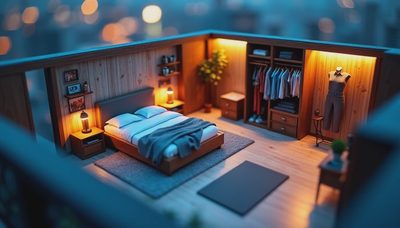
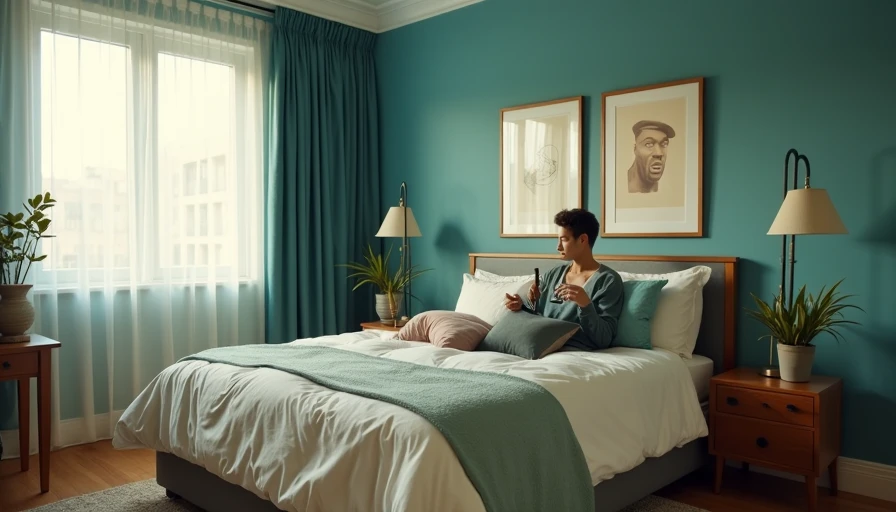
The first young man bedroom design I ever created for my own family looked excellent in a photo and worked terribly at bedtime. There was a handsome desk, a dramatic charcoal wall, and nowhere sensible to put a hoodie. By the third night, clothes covered the chair, chargers crossed the floor, and the room felt unfinished. A good bedroom needs more than a look. It needs to support sleep, getting dressed, studying, relaxing, and the inevitable pile of things that never quite make it into a drawer.
Start With How the Room Is Actually Used
Before choosing a paint color or ordering a platform bed, watch the room for a normal week. Does the occupant read in bed, play games, work on a laptop, collect sneakers, or need a quiet place for schoolwork? Young man bedroom design should begin with those habits rather than an age-based theme. A room for a college student who studies at home needs a different layout from a room for a teenager who mainly sleeps and changes clothes there.
Measure the room, including door swings, windows, outlets, radiators, and closet doors. Draw the largest practical furniture on paper. Leave at least 30 inches for the main walking route when possible, and avoid pushing every piece against a wall simply because the room is small. Sometimes moving a bed 10 inches can create enough space for a narrow nightstand or a laundry basket that actually gets used.
I did this in our San Francisco bedroom after realizing Tom was using a stack of books as a nightstand. We moved the bed slightly off center, added a 20-inch-wide table, and gained a calmer path to the closet. The improvement cost less than $150 and made the room feel intentional.
Choose a Palette With Personality, Not a Theme
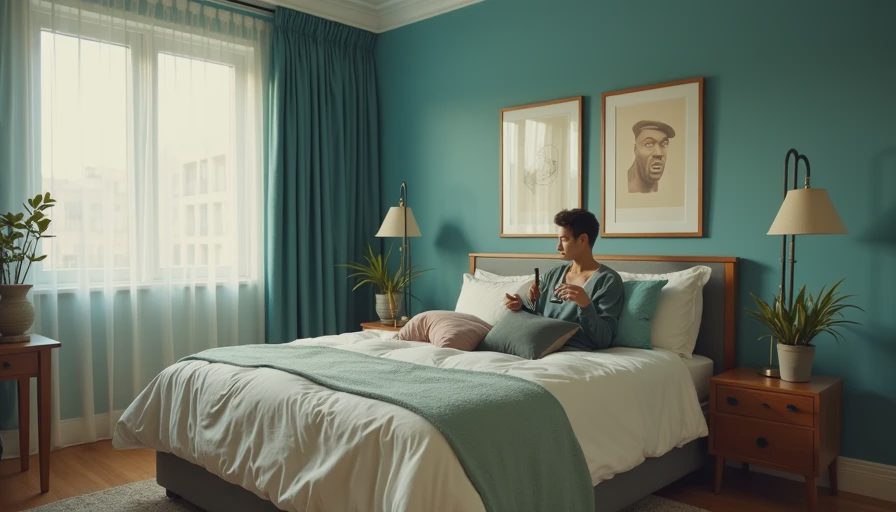
The safest young man bedroom design palette is not necessarily gray, navy, or black. Those colors can be beautiful, but an entire room of dark finishes often feels heavy, especially in a north-facing room or an apartment with small windows. Start with one anchor color and balance it with warm neutrals. Olive green with cream, deep blue with camel, rust with soft white, or muted terracotta with walnut can all feel personal without looking like a showroom set.
Paint is the easiest place to experiment. A gallon of Benjamin Moore or Sherwin-Williams paint commonly costs around $45 to $75, while a sample pot lets you test the color under morning and evening light. If the room is small, consider painting the wall behind the bed and keeping the other walls lighter. This creates a focal point without making the whole space feel enclosed.
Bring in personality through changeable pieces: a vintage-style map, framed concert poster, black-and-white photography, a woven throw, or bedding in a contrasting color. I would rather see three meaningful objects than twelve generic signs purchased to fill empty walls. Sophie once insisted on hot pink curtains, and she was right about one thing: a strong accent can make a room feel like its occupant lives there.
Make Storage Easy Enough to Maintain
The best young man bedroom design includes storage at the point where mess happens. If shoes land beside the door, place a low rack there. If clean clothes live on a chair, add five sturdy hooks or a slim valet stand. If a collection is always visible, give it a shelf with clear boundaries instead of pretending it will disappear into a drawer.
A six-drawer IKEA MALM dresser offers a practical starting point at a relatively accessible price, while a secondhand solid-wood dresser can provide better construction for roughly $100 to $300. Add drawer dividers for socks, chargers, and smaller accessories. For a closet, use a double-hang rod for shirts and folded pants, with one upper shelf for seasonal items. Simple fabric bins from The Container Store or Target can handle sports gear without requiring a costly custom system.
Under-bed storage is especially useful in an apartment. Choose containers with lids and wheels so blankets, winter shoes, or memorabilia can be pulled out without lifting the mattress. Measure the clearance first. The week our closet organization system collapsed, the problem was not a lack of storage; it was buying containers that were two inches too tall.
Plan Lighting in Layers
Overhead lighting alone makes almost every bedroom feel unfinished. A strong young man bedroom design uses at least three types of light: general illumination, task light, and a softer evening source. A flush-mount ceiling fixture handles getting dressed and cleaning. A reading lamp beside the bed supports books or late-night scrolling without lighting the entire room. A small table lamp, LED strip inside a closet, or wall sconce adds warmth.
For a rental, plug-in sconces from brands such as Schoolhouse, IKEA, or Amazon can provide the look of a wired fixture without opening the wall. A good bedside lamp often costs $35 to $120. Look for a shade that covers the bulb from the pillow, and choose a warm-white bulb around 2700K rather than a harsh blue-white bulb.
Keep charging organized. A nightstand with a rear cable opening, a compact USB-C power strip, and one designated charging spot prevent the familiar nest of cords. If gaming equipment is part of the room, place the desk near an outlet and use adhesive cable clips or a fabric cable sleeve. Good lighting should make the room easier to use, not simply more photogenic.
Build a Better Sleep Zone
A bed is usually the largest object in the room, so its height and proportions matter. In a small bedroom, a low-profile frame keeps sight lines open. In a larger room, a headboard adds comfort and visual weight. Choose the largest mattress that still leaves a clear walking path; a queen often works well, but a full-size bed can preserve valuable floor space for a desk or exercise area.
Bedding does not need to be expensive to look considered. Start with crisp cotton sheets from Target, Quince, or IKEA, then add one washable quilt and two standard pillows. A duvet in cream, slate, forest green, or muted blue can anchor the scheme without creating a juvenile effect. Washability matters more than decorative perfection, particularly for a room where snacks, pets, or muddy shoes occasionally appear.
Use blackout curtains if early sunlight interrupts sleep, but combine them with a lighter layer so the room does not feel sealed off during the day. If the window is narrow, mount the curtain rod several inches above and beyond the frame. That small adjustment can make the window appear larger and bring more daylight into the room.
Add a Desk Without Taking Over
For homework, creative work, or gaming, choose a desk that fits the task and the available wall. A 42-inch desk is enough for a laptop and notebook; a 60-inch surface gives more room for a monitor, speakers, and paperwork. A simple wood-top desk with black legs often costs $150 to $400 and can move into a first apartment later.
Keep the chair comfortable but visually quiet. An adjustable task chair is usually a better investment than a decorative chair that looks good but encourages slouching. Wall-mounted shelves can hold books and equipment without consuming floor space. Place a corkboard, pegboard, or magnetic rail above the desk for schedules and inspiration, but limit the display to a defined area so the entire wall does not become visual noise.
This is where young man bedroom design should allow for the next few years. Avoid furniture that only works for one hobby or school stage. A desk can become a work-from-home station, a dresser can hold apartment linens, and a neutral rug can move to a living room later.
A Weekend Plan for the Refresh
A realistic young man bedroom design update does not require replacing everything. On Saturday morning, remove everything that does not belong, measure the furniture, and photograph the room from each corner. Next, choose one wall color, one bedding direction, and one storage problem to solve first. Buy the lamp or laundry hamper before decorative accessories. Function will reveal what the room still needs.
By Sunday, hang art at eye level, route cords, put a basket where clothes actually land, and test the lighting after dark. Leave some empty wall and shelf space. A bedroom should have room for life to change, whether that means new books, a different hobby, or a move into a first apartment.
Your bedroom does not have to be perfect. It just has to be yours. This weekend, clear one surface, measure one wall, and fix the single daily annoyance you notice most.