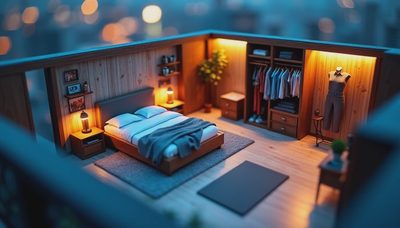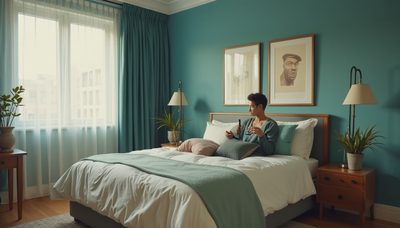

The best young adult bedroom is not a showroom with one lonely plant and perfectly folded bedding. It is a room that handles late-night studying, work calls, laundry, changing tastes, and the occasional bowl of cereal at midnight. When I designed my daughter's room, I learned that the room has to support real life before it can look polished. A young adult bedroom should feel independent, comfortable, and personal without requiring a complete renovation every two years.
Start With a Layout That Supports Independence
Before buying decor, measure the room and draw the furniture on paper. Mark the door swing, windows, outlets, heat registers, and closet opening. A full-size bed usually needs about 30 inches of walking space on at least one accessible side, while a queen can make a smaller room feel crowded. In an apartment bedroom, I would choose a full bed with drawers underneath before squeezing in a queen and losing every usable pathway.
Place the bed where it feels anchored, usually against the longest uninterrupted wall. Then create three useful zones: sleep, dressing, and work or relaxation. A narrow desk measuring 36 to 48 inches wide can fit beside a window, and a wall-mounted shelf can replace a bulky bookcase. In a young adult bedroom, that separation matters. It is easier to wind down when the laptop is not sitting on the pillow and easier to get dressed when the hamper is near the closet.
Here is what I did in my own room after realizing that the bed blocked the dresser drawers: I moved the dresser to the opposite wall, reduced the nightstand from 24 inches to 18 inches, and gained a clear path from the door. The room did not become larger, but it became much less irritating.

Choose a Color Palette That Can Evolve
A young adult bedroom does not need to be beige to look mature. Start with two quiet base colors, such as warm white and soft gray-green, then add personality through art, bedding, or a painted nightstand. This approach lets someone replace a $35 duvet cover or a few posters without repainting the entire room.
I like Benjamin Moore Swiss Coffee or Sherwin-Williams Alabaster for walls when a room needs more light, but a muted blue, clay, olive, or charcoal can be excellent in a sunny space. Sample the paint beside the window and under the room's evening light. The color that looks calm at 10 AM can look surprisingly purple under a warm LED bulb.
For a young adult bedroom with a strong personal style, use one confident accent rather than five competing ones. That might be a rust-colored quilt, a cobalt desk chair, or a gallery wall with mismatched frames. If hot pink curtains are the non-negotiable choice, as they were during one memorable phase in my daughter's room, balance them with simple white bedding and natural wood. Personality works best when it has somewhere quiet to land.
Build a Lighting Plan, Not a Single Ceiling Fixture
One overhead light cannot make a young adult bedroom comfortable. Use at least three layers: general light, task light, and low evening light. A flush-mount ceiling fixture handles cleaning and getting dressed, a desk lamp supports reading or studying, and a bedside lamp prevents the harsh screen-lit feeling that makes bedtime less inviting.
For a bedside lamp, the $35 to $70 range offers plenty of good options from retailers such as Target, IKEA, and HomeGoods. I prefer a lamp with a fabric shade and a warm LED bulb around 2700K. The shade should sit roughly at shoulder height when someone is sitting in bed, so the light does not shine directly into the eyes. A dimmable plug-in sconce is another smart choice when the nightstand is tiny.
Do not forget the closet. A rechargeable motion-sensor light can cost under $25 and makes dark corners usable. In a young adult bedroom, that small improvement often saves more morning frustration than a decorative pendant. Put charging cables in a small tray rather than letting them form a tangled nest beside the bed.

Make Storage Easy Enough to Maintain
Storage fails when it asks people to perform a daily folding ceremony. Use open access for items used constantly and closed storage for visual clutter. A six-drawer dresser is useful for folded clothing, while a slim rolling cart can hold hair tools, school supplies, or skincare without taking over the desk.
Under-bed bins should be no more than 6 to 8 inches high if they need to slide easily beneath a standard bed frame. Choose clear bins for seasonal clothing and opaque fabric boxes for less attractive items. Label both ends because containers have a way of turning around. If the closet is narrow, add a second hanging rod for shirts and jackets, then reserve the top shelf for luggage or spare bedding.
I once installed a modular closet system that looked wonderfully organized for about three weeks. The lesson was not that closet systems are bad; it was that every category needs a realistic home. Leave some empty space. A young adult bedroom needs storage for the next version of its occupant, not only the clothes they own today.
Add Comfort Without Creating Clutter
Comfort comes from texture and proportion more than from expensive furniture. Layer cotton percale sheets with a quilt, a washable throw, and two sleeping pillows plus one decorative pillow. A 5-by-7-foot rug can define a small bed area, while an 8-by-10-foot rug usually gives a larger bed enough visual weight. Place at least two-thirds of the rug under the bed so it does not look like a postage stamp.
A young adult bedroom also benefits from one proper chair. It can be a compact reading chair, a folding lounge chair, or a well-padded desk chair that does double duty. The chair should not become a permanent laundry pile, so put a hook or basket nearby for clothing that is not ready for the hamper but is not clean enough for the closet.
For renters, removable picture ledges, peel-and-stick hooks, and tension rods can create function without permanent holes. Test adhesive products on an inconspicuous area first. Curtains hung close to the ceiling can make a room feel taller, and blackout panels are especially helpful for anyone working irregular hours.
Spend First on What You Touch Every Day
If the budget is $500, I would spend roughly $200 to $300 on bedding or a mattress upgrade, $60 to $100 on lighting, and the rest on storage or art. A supportive mattress matters more than a trendy headboard. Brands such as Casper, Tuft & Needle, and Saatva offer different mattress constructions and price ranges, but comfort is personal, so use trial periods and read the terms before ordering.
For a young adult bedroom makeover under $1,000, look for a solid wood or metal bed frame, a secondhand dresser with good drawer movement, and new textiles. Paint can change the atmosphere for about $50 to $100 in supplies, while a pair of matching lamps under $120 can make a room feel intentionally designed. Spend less on decorative objects that have no job and more on the things used every morning and night.
The finishing touch should be something with a story: concert art, a framed photograph, a thrifted mirror, or a collection of postcards. That detail keeps a young adult bedroom from looking like a staged rental listing.
A Weekend Plan for the Refresh
Start Saturday by measuring the room, removing anything broken, and making three piles: keep, relocate, and donate. Do not buy storage before seeing what remains. In the afternoon, test paint samples and sketch two furniture layouts. On Sunday, install the easiest upgrade first, such as a lamp, curtain rod, or wall shelf, then make the bed with freshly washed linens.
Take a photograph from the doorway before and after. The camera will reveal awkward gaps, crowded corners, and visual clutter that is easy to miss while standing in the room. Make one more adjustment based on that image rather than adding another accessory.
Your bedroom does not have to be perfect. It just has to be yours. This weekend, measure the space, clear one surface, and improve the light beside the bed; those three small actions can make a young adult bedroom feel noticeably more grown-up by Sunday night.