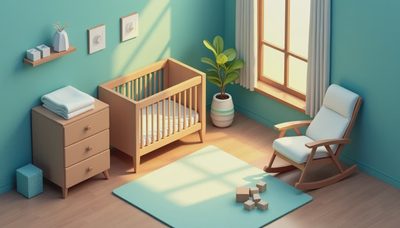

I used to design bedrooms for a living — 50 or so projects over eight years. The most expensive mistake I watched clients make? Choosing furniture before thinking about the room design layout. A $3,000 sofa can't fix a room that's arranged wrong. When my daughter Sophie was born, our own bedroom became a staging ground for every layout mistake I'd ever seen. We had a king bed, a giant dresser, and no plan. The room design layout was so bad that I'd trip over the laundry basket just to get to my closet.
Let's talk about what a room design layout really is and how you can fix yours this weekend without a designer.
Why Your Current Room Design Layout Isn't Working
Most bedrooms aren't designed. They're assembled. You brought the dresser from your old apartment, bought a bed that fit the wall, and placed the nightstands wherever they landed. Sound familiar? A bad room design layout usually has three telltale signs:
- You have to walk sideways to get past the foot of the bed.
- The closet door bangs into the dresser every morning.
- There's no surface near the bed for your phone, glasses, and water glass.
I've walked into dozens of rooms like this. The fix isn't more furniture. It's a better room design layout that starts with your real habits.

The 5 Questions to Ask Before You Move Furniture
Before you touch anything, answer these five questions. They'll shape every decision you make.
- What's the main job of this room? Sleep, dressing, or both?
- Where does light come in? A room design layout that fights the window is a losing battle. Place the bed so morning light doesn't hit you in the face.
- What do you actually do in here? Reading, watching TV, folding laundry? Each activity needs its own zone.
- How do you get dressed? If you're like me, you need a clear path from bed to closet to mirror.
- Where's the clutter coming from? If there's no designated landing spot, it ends up on the floor.
Answer those honestly, and your room design layout becomes obvious. For our bedroom, the answer to question 4 changed everything: I'm a "get dressed in the morning without waking Tom" person, so the bed had to shift to avoid the sunny window.
A Layout That Actually Works: A Real Bedroom
Here's the layout I used in our own Victorian flat. Our room is 12 by 14 feet — nothing fancy. The bed goes on the wall opposite the door, centered. That instantly opens up a walking lane on both sides. The dresser goes against the wall opposite the window, where morning light won't damage the wood. Nightstands are only as big as they need to be — 18 inches wide on my side, 14 on Tom's.
I'm not suggesting you copy that exactly. But the principle holds: a good layout creates a clear path from door to bed, plus a zone for dressing and a zone for storage. In a small room, that might mean skipping the bench at the foot of the bed. In a big room, it might mean adding a reading chair in the corner.
One thing I always do: measure the room before I buy anything. Use painter's tape to outline furniture on the floor before committing. It costs $5 and saves you a $200 return shipping fee.
The Layout on a Budget (Yes, It's Possible)
You don't need an $80K master suite to get a layout that works. I've seen a $1,200 bedroom in a rental apartment feel bigger than a $20,000 one, just because the furniture placement was right. Here are my go-to finds under $300:
- A bed frame with built-in storage from IKEA (the Brimnes line, about $400 for a queen — okay, slightly over, but it replaces a dresser).
- Two matching nightstands from Target's project62 line, around $120 each.
- A floor lamp from West Elm on sale, under $100 — because a good layout is only as good as its lighting plan.
- A clear plastic under-bed bin from The Container Store, $25, for off-season sweaters.
The layout can also fix your lighting. Instead of relying on one overhead fixture, add a floor lamp in the corner and a small task lamp on the nightstand. That one change makes the room feel less like a hospital and more like a hotel.
The 30-Minute Weekend Layout Check
You can improve your bedroom's layout this weekend without moving heavy furniture. Here's the order I'd do things:
- Clear the floor. Take everything off surfaces and put it in a laundry basket.
- Stand in the doorway. Look at the room, not at the stuff. What's actually in the way?
- Move the bed first. It's the heaviest piece, so once it's right, everything else gets easier.
- Create three zones: sleep, dress, and store. You don't need a separate room for each zone — just a corner or a wall.
- Position the dresser so you can open all drawers without hitting the bed.
- Put a small tray on your nightstand so your glasses, phone, and water have a home.
- Add a rug if the floor feels bare. It anchors the sleep zone and softens your morning steps.
One more tip from my own room: our closet organization system collapsed last year, right after Sophie hung all her drawings on the walls. I took a breath, bought two stackable bins from The Container Store, and rebuilt it in a weekend. That's the reality of a good room layout plan. It doesn't have to be perfect. It just has to be yours.