
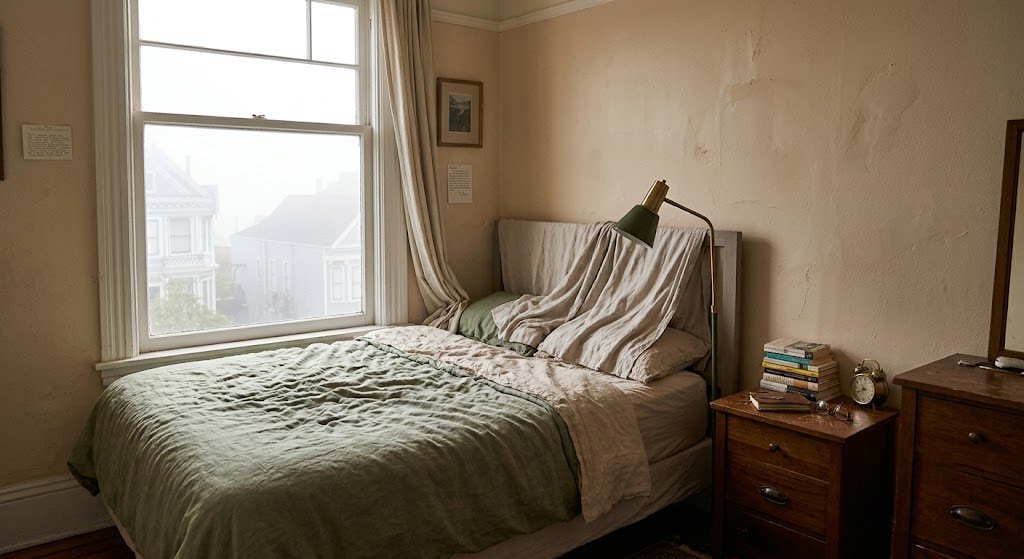
I've walked into hundreds of bedrooms — master suites, kids' rooms, guest rooms that double as home gyms — and there's one mistake that shows up almost everywhere. The bed is on the wrong wall. Not because someone made a bad decision on purpose. Usually it's the spot that made sense on moving day, and then nobody ever moved it again. But that one decision ripples through the entire room, dictating how you sleep, how you move, and how the space feels every single morning.
If you've ever felt like your bedroom is off but couldn't name why, there's a good chance it's a bedroom layout mistake. Here's how to find it, fix it, and finally stop fighting your own floor plan.
Why the Bed Always Ends Up on the Wrong Wall
When you move into a new space, you're tired. You're staring at boxes. The mattress needs to go somewhere, so you shove it against the longest wall, or under the window, or wherever the previous owner had theirs. Then life happens. A year passes. You add a nightstand that doesn't quite fit, a lamp with a cord stretched tight, and a pile of books on the floor because you can't reach the dresser from your side of the bed.
In my own Sunset district home, I did exactly this. Our primary bedroom has a large window facing the street, and I automatically placed the headboard against the opposite wall. It looked fine on paper. In reality, the bed blocked the natural path from the door to the closet, and Tom had to do a weird shuffle every night just to get to his side. Sophie's room was worse — I'd wedged her bed into a corner to "maximize play space," which meant changing her sheets involved actual acrobatics and a few swear words.
The Simple Rule Most People Miss
Here's what I learned during eight years of fixing other people's bedrooms: the bed needs to sit on the most grounded wall in the room. In design terms, it's the wall that gives you a clear view of the door without being directly in line with it. You don't need feng shui training to understand why this works — it's a very human instinct to feel safer when you can see who's entering, but you're not right in the doorway's path.
For most rooms, that means the wall opposite the door, or a side wall that's far enough from the entrance. Avoid placing the headboard under a window if you can help it — drafts, noise, and light leaks will mess with your sleep, especially in a city like San Francisco where fog creeps through every gap. Also avoid the wall that shares a plumbing stack, unless you enjoy falling asleep to the sound of someone flushing.
How to Spot the Mistake in Your Own Room
Stand in your doorway and look at your bed. Ask yourself these three questions:
Can both people get into bed without crawling or shimmying? You need at least 24 inches of clearance on each side. Less than that, and someone is always climbing over a partner, a dog, or a nightstand.
Does the bed block the natural path through the room? Walk from the door to the closet, the bathroom, the dresser. If you have to detour around the mattress, the flow is broken.
Is the headboard under a window? If yes, do you actually enjoy it — or do you tolerate cold air, street noise, and curtains that never hang right?
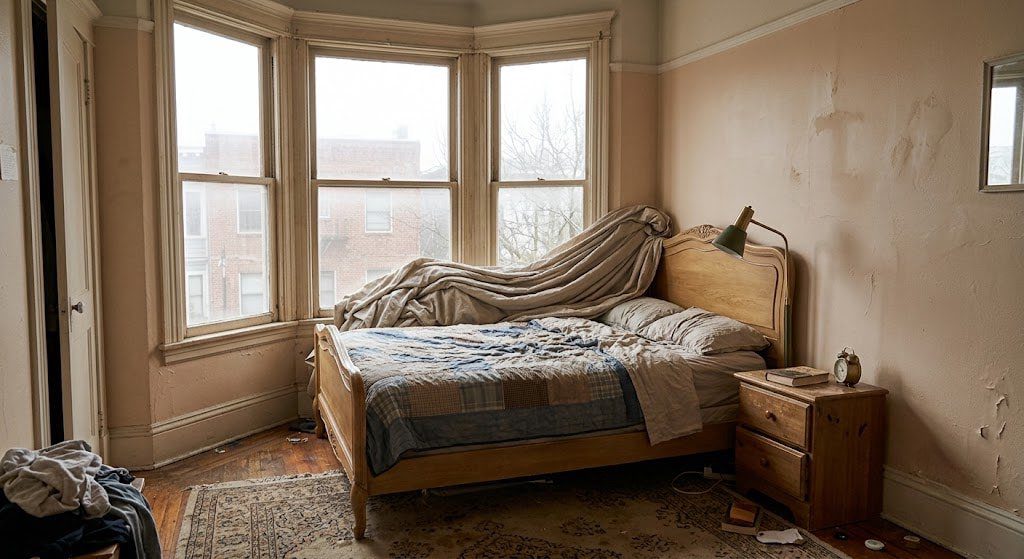
If you answered yes to any of the problem scenarios, you've got a layout issue. The good news: it's usually fixable in under an hour, with zero dollars spent.
How to Fix a Bedroom Layout Without Renovating
Start by identifying the best wall for the headboard — the one that's most solid, uninterrupted, and gives you a clear sightline to the door. Move the bed there, even if it seems awkward at first. Our brains need a few nights to adjust to a new sleep position, so don't judge it until you've woken up in it at least twice.
In Sophie's room, pulling her bed just six inches away from the window completely changed how the space felt. Suddenly she had room to open her dresser drawers without bumping into the mattress, and I could make her bed without risking a pulled muscle. For small bedroom layout challenges — apartments, older homes, that one weirdly-shaped room with three doors — sometimes the only workable option is to float the bed at an angle in the corner, or use a daybed configuration along one wall. Those aren't design sins; they're practical solutions for real spaces.
If you're dealing with a master bedroom layout that's genuinely tricky — multiple doors, a radiator in the wrong spot, no obvious headboard wall — try a quick sketch on paper. Measure your room, cut out little furniture shapes to scale, and slide them around. I still do this for my own projects, and it costs nothing but ten minutes.
The Payoff: A Room That Finally Feels Right
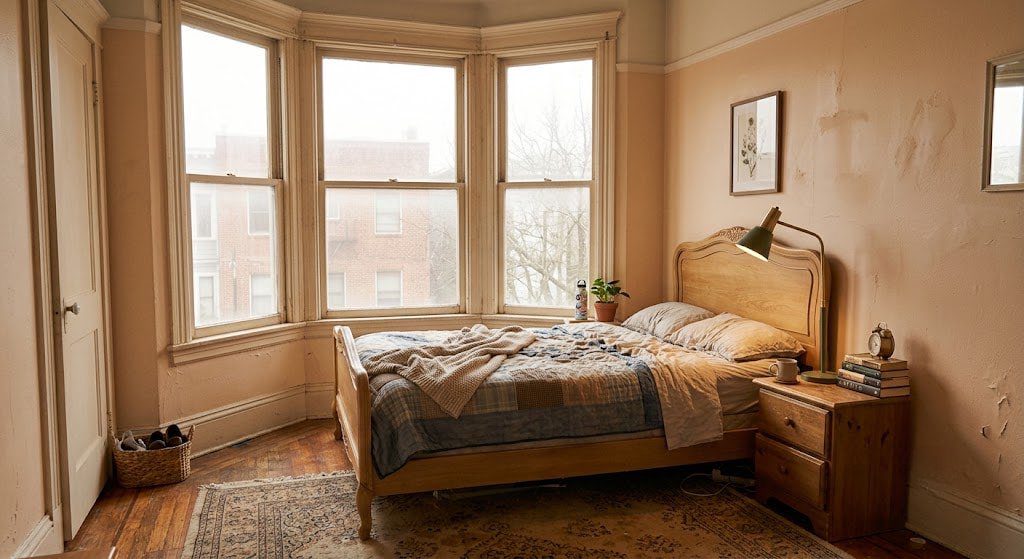
After I fixed our bedroom layout, the first thing I noticed was how much calmer the room felt when I walked in. No more obstacle course. No more climbing over Tom to get to my reading lamp. The second thing: we both slept better. Nothing had changed except where the bed sat, but that small shift affected light, sound, and that subconscious sense of safety that determines whether you truly relax at night.
Your bedroom doesn't need a full renovation to transform. Sometimes the best fix is simply moving the bed to the right wall. It's the weekend project that keeps paying you back every single night.