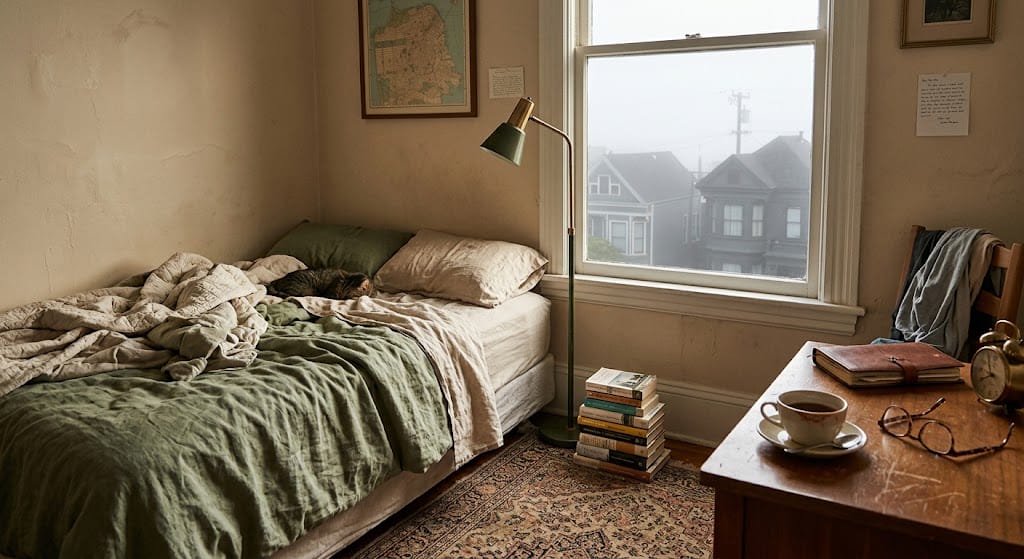
I spent eight years designing other people's bedrooms before I looked at my own and thought: this isn't working. The bed was against the wrong wall, the nightstand buried in Sophie's stray Lego pieces and half-empty water bottles, a crooked lampshade I'd stopped noticing two years ago. This is the room where I end every day — where Sophie sneaks in at dawn to ask if otters sleep holding hands, where Tom finishes Slack threads with one earbud in. And yet for years, it was the most neglected room in our house.
Maybe you know the feeling. The living room gets the good rug, the kitchen gets the upgrade, but the bedroom just gets whatever's left. When I share bedroom design ideas 2026, I don't mean trend reports. I mean practical fixes for real bedrooms that survive Lego empires and late-night laptop glows.
Why We All Neglect the Bedroom
No one sees it except the people who live with you. So it falls to last place. But you spend roughly a third of your life in that room. A well-designed bedroom isn't about looking perfect — it's about functioning so well that you sleep deeper, wake easier, and feel a quiet sense of calm the moment you walk in. You don't need a full master bedroom renovation to get there. Most of the time, the right layout change or lighting swap does more than a gut job ever would.
A 4-Step Framework That Actually Works
When I still took on clients, I started every project with these four steps. They don't require a contractor, just a free weekend and a little honesty about how you actually live.
Step 1: Fix the layout first
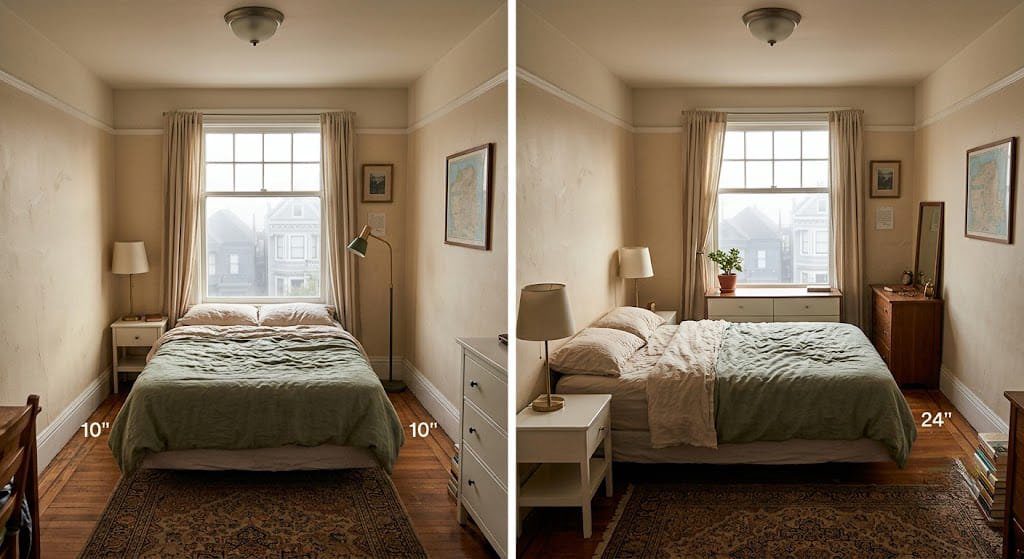
The bedroom layout mistake I see in 80% of homes: the bed is on the wrong wall — shoved under a drafty window, squeezed between two doors, or blocking the closet. The headboard belongs on the most grounded wall, the one that lets you see the door without being directly in line with it. In Sophie's room, I'd pushed her bed against the wall "to save space" and ended up having to climb across the mattress just to change sheets. We moved it six inches away from the window, and suddenly the whole room breathed differently. Even in a small bedroom layout, that small shift can change everything.
Step 2: Give every surface a job
Horizontal spaces attract chaos. I live by the three-thing rule on nightstands: lamp, water, one personal item (book, photo, or a phone charger kept out of reach). Dresser tops get a single tray for pocket things — keys, hand cream. Drawers get dividers, not prayers. The $6 bamboo ones I bought years ago still hold up better than the custom closet system I once specified for a client.
Step 3: Layer your lighting
A single overhead light makes a bedroom feel like a waiting room. I think in three layers: ambient (a ceiling light on a dimmer or a soft floor lamp), task (a swing-arm sconce or adjustable bedside lamp for reading), and accent (a tiny glow behind a plant or a piece of art). You can steal this bedroom lighting idea for under $150, starting with just one lamp you truly love.
Step 4: Claim the room as yours
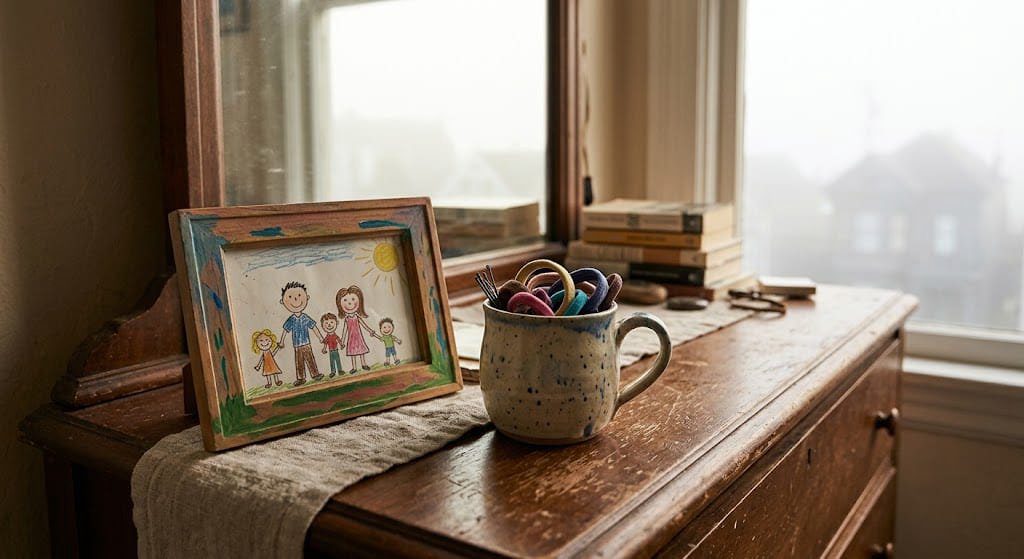
This is the part no hotel can replicate. On my dresser right now: a chipped ceramic mug Tom brought home that holds my hair ties, a framed drawing Sophie did of a purple octopus in a tutu, and a window cracked open to let in the fog sound. Your bedroom doesn't have to be perfect. It just has to be yours.
One Start This Weekend
Pick one step — I'd suggest the layout check. Move the bed, stand back, notice how the room feels when you walk in. A real-life bedroom makeover doesn't need a before-and-after photoshoot. It just needs to start working for the people who sleep there.