Last month, Sophie taped six drawings above her bed and announced that her bedroom was now a gallery. Tom called it clutter. I called it a strong beginning. Wall art decor has a way of making a bedroom feel inhabited, and the best arrangements do more than fill a blank wall. They soften a room, reinforce its color palette, and give you something pleasant to see when you wake up. The trick is choosing pieces that work with real furniture, changing tastes, and the occasional Lego projectile.
Start with the wall, not the artwork
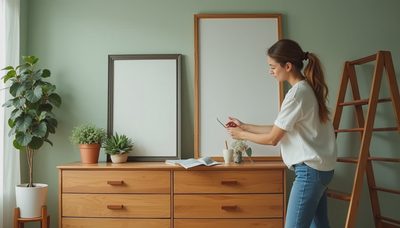
Before shopping, measure the wall and the furniture beneath it. Above a queen bed, I usually look for artwork or a grouping that spans roughly two-thirds to three-quarters of the headboard width. A single 24-by-36-inch print can work beautifully, while three 16-by-20-inch frames create a more collected feeling. Above a six-drawer dresser, keep the arrangement visually connected to the furniture rather than letting it float near the ceiling.
Here's what I did in my own room: I taped kraft-paper rectangles to the wall before buying frames. That ten-minute test showed that my first idea was too narrow and made the bed look oversized. A paper template also helps you avoid expensive mistakes on plaster or older drywall, especially in an apartment where every unnecessary hole feels personal.
The height matters just as much as the width. For art above a headboard, leave about six to ten inches between the bottom of the frame and the furniture. If the ceiling is low, a vertical piece can draw the eye upward. If the room already has tall curtains, a horizontal landscape may create better balance. Wall art decor should support the room's proportions instead of competing with them.
Choose a mood you can live with
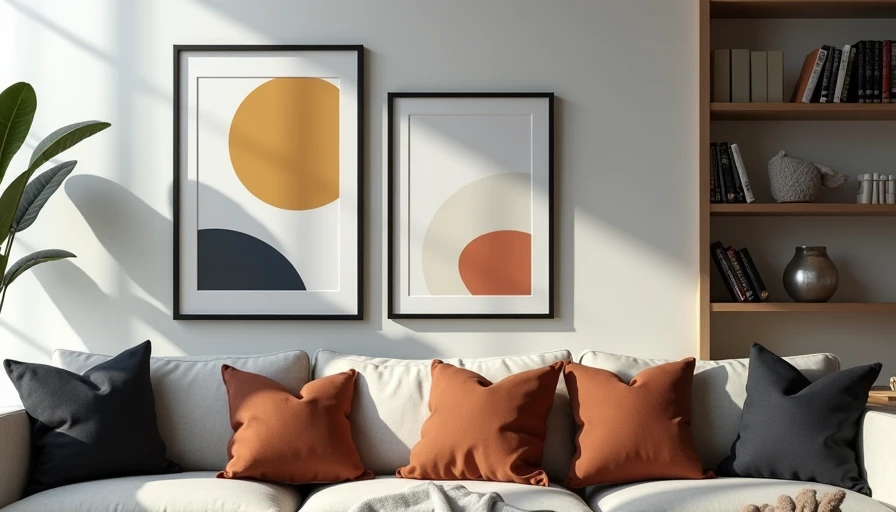
A bedroom is not the place where I want every object shouting for attention. For a restful primary suite, try muted landscape photography, botanical prints, abstract shapes, or a textile wall hanging in colors already present in the bedding. A $35 framed print from Society6, an IKEA Ribba frame, or a vintage map from a local market can look intentional when the colors repeat elsewhere.
For a kid's room, the rules can loosen. Sophie chose hot pink curtains, a bright yellow lamp, and enough artwork to make the walls look busy from the hallway. Rather than fight her, I limited the palette to three strong colors and used inexpensive poster frames. That gave her room to change the display without turning every new interest into a $100 purchase. Wall art decor should be flexible when the person living with it is seven and changes favorite colors every Tuesday.
In a guest room, quieter pieces usually work better. A pair of small black-and-white photographs above the nightstand or one calm abstract print above the bed creates a finished look without making visitors feel as if they have entered a showroom. For a home office that doubles as a bedroom, consider art that looks appropriate in both settings: architectural prints, simple line drawings, or framed fabric samples are useful choices.
Build a gallery wall without the chaos
Gallery walls look effortless after they are installed, but the planning happens on the floor. Gather the frames, remove their paper inserts, and arrange them on a rug or large sheet of cardboard. Start with the largest piece, then place medium and small frames around it. Keep the outside edges irregular if you want a relaxed arrangement, or align the top and bottom edges for a more tailored result.
A two- to four-inch gap between frames is a reliable starting point. Matching frames create calm even when the artwork varies. Mixed wood, brass, and black frames can also work, but repeat at least one material so the collection feels connected. When selecting wall art decor for a gallery wall, vary scale more than subject matter. Five tiny prints often look busier than three well-sized pieces.
For safety, use picture-hanging hooks rated for the frame's weight rather than relying on a small nail. In a child's room, secure heavier frames properly and avoid placing glass directly above a bed. Lightweight canvas, acrylic glazing, or framed fabric gives you attractive options with less risk. A level and a pencil are useful; confidence is not a measuring tool, despite what Tom says.
Make small bedrooms feel larger
In a compact bedroom, art can create depth without taking up floor space. A large landscape with a visible horizon makes a narrow wall feel less closed in. A mirror can reflect light, but it does not have to be the only focal point. Try a slim vertical print beside a dresser, or place two matching pieces on either side of the bed to make the furniture feel wider.
Renters can use removable picture-hanging strips for lightweight frames, provided the wall finish and product instructions are compatible. For heavier work, lean framed art on a deep dresser or picture ledge instead of drilling. I like the IKEA Mosslanda ledge for children's rooms because drawings can rotate easily, and a ledge generally costs less than replacing a gallery wall every school term.
Wall art decor also helps define zones in a room that does double duty. One print above a small desk can signal work, while softer artwork near the bed reinforces rest. Keep the desk display simple enough that it does not become another storage surface for receipts, hair ties, and yesterday's coffee cup.

Shop smart at three price levels
You do not need a designer budget for a finished wall. Under $50, look at downloadable art, thrifted frames, postcards, children's drawings, and fabric remnants stretched over inexpensive canvases. A $15 print can look considerably more polished in a $30 frame with a wide white mat. The frame often contributes as much visual weight as the image.
Between $50 and $200, consider a framed photograph, a small original from a local artist, or a coordinated set from Minted, Etsy, or Juniper Print Shop. Check the final dimensions, frame material, and shipping cost before ordering. A print listed at $45 can become a $120 project after custom framing.
At the higher end, spend on one meaningful piece rather than filling every wall. A textile from a trip, an original painting, or a photograph with personal significance gives the room character that matching catalog art cannot. Wall art decor works best when it tells you something about the people who sleep there, not just the store where it came from.
The weekend plan
This weekend, choose one bedroom wall and photograph it in daylight. Measure the available width, note the colors already in the room, and make a paper template for the arrangement you are considering. Then shop your home before opening a browser: a child's drawing, an unused frame, or a photograph in a drawer may be exactly what the room needs.
If you buy something new, give it a proper home before buying a second piece. Hang the first frame, step back from the doorway, and notice whether it improves the room's balance at the time you actually use the room. Your bedroom doesn't have to be perfect. It just has to be yours.