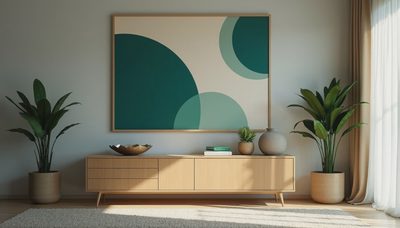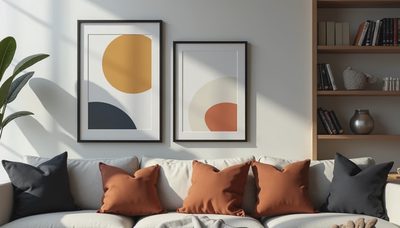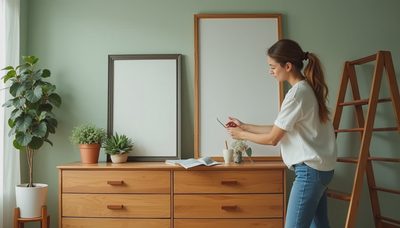
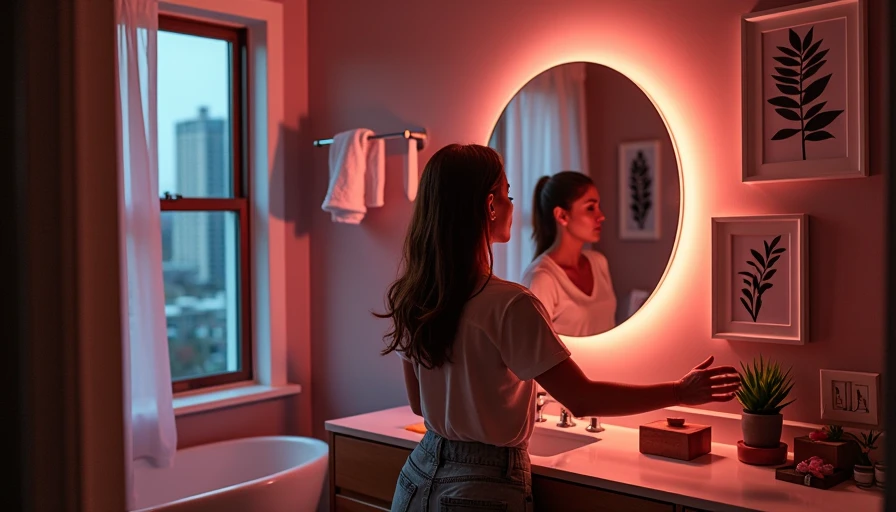
Last month, Sophie taped a watercolor of a purple bathtub above our bathroom towel bar and announced that the room finally had personality. She was not entirely wrong. The bathroom had been clean, functional, and completely forgettable. Good bathroom wall decor does more than fill an empty patch of drywall; it makes a practical room feel considered without creating another surface to dust.
As a former interior designer, I approach a bathroom wall the way I approach a bedroom: first for function, then for mood. Steam, splashes, narrow walls, and awkward mirrors all matter. The best choices are attractive enough for guests but sturdy enough for real family life. You do not need a $3,000 renovation. A $35 print, a properly placed shelf, and better lighting can change the room in one Saturday.
Start With the Wall, Not the Shopping Cart
Before buying bathroom wall decor, notice what the room is already doing. Is the largest blank area above the toilet, beside the vanity, or opposite the shower? Does that wall receive direct splash, or only ordinary humidity? A paper poster works in a powder room with good ventilation but is a poor choice beside a steamy tub.
I measure the wall, mirror, and nearby fixtures with painter's tape. This takes ten minutes and prevents the most common decorating mistake: choosing pieces that are too small. Over a 36-inch vanity, one artwork measuring 24 to 30 inches wide usually feels intentional. Over a toilet, a vertical piece between 20 and 30 inches tall often fits better than a wide horizontal print.
Leave breathing room around towel hooks, medicine cabinets, and light switches. Art should not compete with the mirror or make a person reach around it for a towel. If you rent, removable picture-hanging strips can handle lightweight frames, while a leaning piece on a narrow shelf avoids holes entirely.
Choose Materials That Can Handle Moisture
The prettiest bathroom wall decor can fail if its materials are wrong. In a full bathroom, look for sealed wood, powder-coated metal, acrylic, ceramic, porcelain, glass, or prints placed behind glass with a sealed backing. Canvas can work outside the splash zone, but uncoated fabric near a shower may eventually curl or develop a musty smell.
Acrylic frames are especially useful for kids' bathrooms because they are lightweight and less likely to shatter. Framed botanical prints, small abstract paintings, and vintage-style architectural drawings all bring color without requiring a theme. For a coastal feeling, I prefer one blue-green print and a natural wood frame over a collection of seashell signs. The room feels calmer and less like a vacation rental aisle.
For a tight budget, look at IKEA, Target, Etsy, and local thrift stores, then upgrade the frame if the art is ordinary. A $12 print in a $25 oak-look frame can appear more finished than a $60 preframed piece with a thin plastic border. Seal unfinished wood with a clear water-based finish before hanging it in a humid room.
Make the Mirror Part of the Design
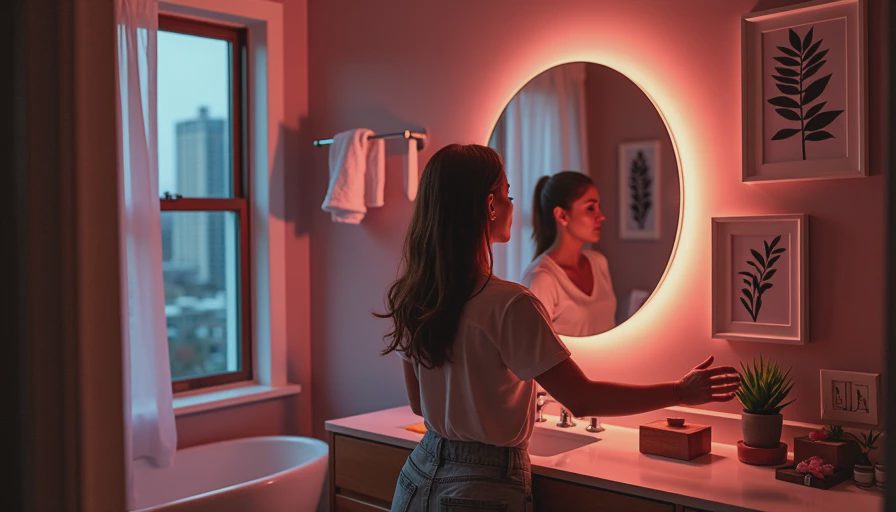
Many bathrooms have one large mirror and then a blank wall that feels disconnected from it. Instead of adding random bathroom wall decor, repeat one element from the mirror or vanity. A black metal mirror can relate to a black picture frame, a brass faucet can connect to a brass sconce, and warm oak cabinetry can be echoed by a small wood shelf.
In my own bathroom, I replaced a builder-grade frameless mirror with a simple thin oak frame and added one 18-inch ceramic plate on the side wall. That small relationship made the entire vanity area feel designed. The plate cost $28 at a neighborhood shop; the mirror frame kit was about $70. No demolition, no plumber, and no week of living around a renovation.
If your mirror is already decorative, keep the surrounding walls quiet. One large piece is usually stronger than five small pieces competing for attention. If the mirror is plain, a pair of narrow prints can give it balance, especially in a double vanity where symmetry already exists.
Add Storage That Earns Its Wall Space
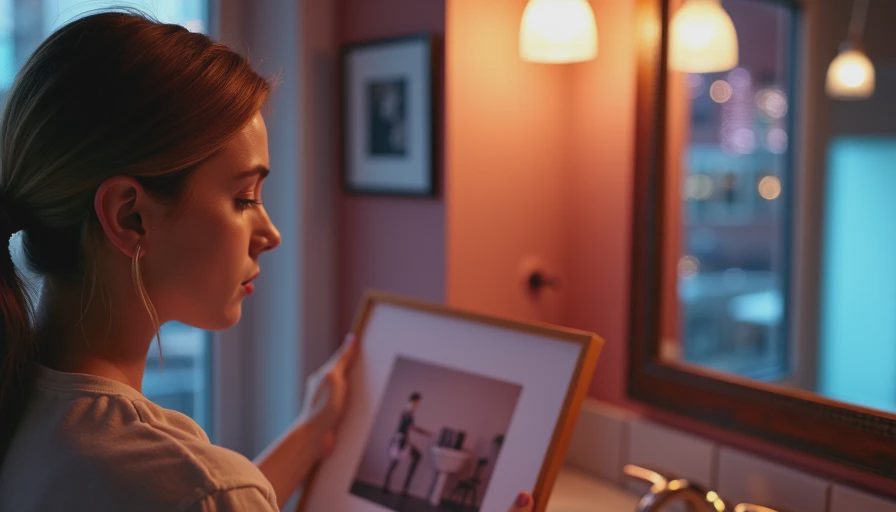
The most useful bathroom wall decor often does a job. A shallow shelf can hold a small plant, a candle, extra hand towels, or a pretty jar of cotton rounds. A rail with hooks can organize washcloths in a family bathroom. A recessed medicine cabinet provides far more value than decorative shelving when counter space is scarce.
Keep shelves shallow, ideally around four to six inches, so elbows and shoulders do not catch them in a narrow walkway. Use baskets or lidded containers for visual calm. In Sophie's bathroom, one $18 bamboo shelf holds her hair ties and bath crayons in two small bins. The wall looks finished, and the counter is no longer a storage zone.
Avoid placing open shelves directly above the toilet if they encourage clutter. A useful rule is to display only what you would be happy to wipe down. Three folded towels and a small framed print look intentional; twelve bottles and a tangled hairbrush do not. Decorative storage succeeds when it reduces daily friction rather than adding another styling assignment.
Match the Scale to the Room
Small bathrooms need fewer, larger gestures. A 16-by-20-inch print can give a powder room a focal point, while a full gallery wall may make the same room feel busy. In a larger primary bath, two coordinated pieces can fill the space above a freestanding tub, but keep them high enough to avoid splash and low enough to relate to the tub.
For gallery walls, use a common thread: the same frame color, a limited palette, or a subject such as leaves, line drawings, or family photographs. I like three pieces in varied sizes more than a rigid grid because the arrangement feels collected. Make paper templates first and tape them to the wall. Stand in the doorway, sit on the toilet, and check the view from the vanity before making holes.
Color matters more than people expect. A muted terracotta print warms a white bathroom, while sage, navy, or dusty blue can make cool tile feel intentional. Repeat the accent color in a hand towel or bath mat, but do not match every accessory. Rooms need a little visual breathing room.
A Weekend Plan for Better Bathroom Walls
Start Saturday by removing anything damaged, undersized, or unrelated to the room. Clean the wall, patch old holes, and photograph the space in daylight. Then choose one focal point, one practical improvement, and one small finishing detail. For example, that might be a $45 framed print, a $30 towel rail, and a $12 trailing plant in a ceramic pot.
Before hanging bathroom wall decor, confirm the wall is dry and identify pipes or electrical wiring before drilling. Keep art away from direct shower spray, use appropriate anchors for the wall type, and leave ventilation paths clear around fans and vents. If a frame begins to fog or warp, move it farther from the shower rather than hoping the problem disappears.
This weekend, measure the largest blank wall in your bathroom and tape out one proposed frame or shelf. Take a photo from the doorway before shopping. That single step will tell you whether the room needs more art, better scale, or simply less clutter. Your bathroom does not have to be perfect. It just has to feel like yours.