I bought the wrong bunk bed the first time. It was tall, cheap, and wobbled when Sophie climbed to the top. Changing the sheets on the upper bunk required acrobatics and mild profanity. I donated it after six months and swore I'd never buy another one.
Two years later, Sophie asked for bunk beds again — this time so she could have "sleepover space" for her best friend Maya. I gave in, but I did it differently. Here's what I learned about bunk beds for small rooms, and how the right one actually made Sophie's bedroom more functional instead of less.
The First Mistake: Going Too Tall
Our first bunk bed was nearly six feet tall. In a San Francisco bedroom with standard eight-foot ceilings, that left Sophie with about two feet of headroom on top. She couldn't sit up without hitting the ceiling. She bumped her head twice in the first week and stopped wanting to sleep up there entirely.
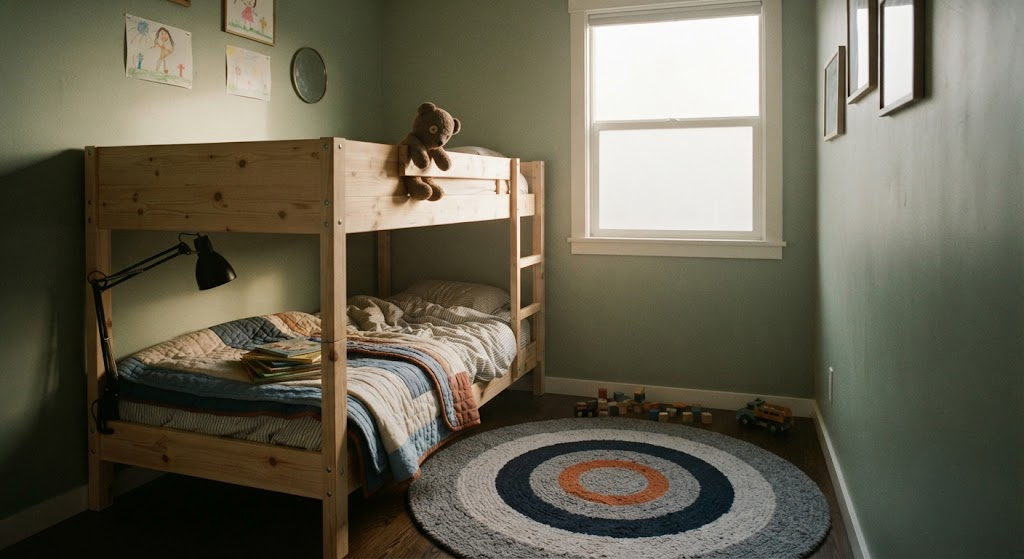
The right height for a kids bunk bed in a room with normal ceilings is 54–60 inches total, leaving at least 30 inches between the top mattress and the ceiling. That's enough for a child to sit up comfortably. For rooms with low ceilings — common in older San Francisco apartments — consider a low-profile bunk where the bottom mattress sits close to the floor. Sophie calls hers a "secret cave" now, which is a significant upgrade from "the bed that attacks me."
What to Look For
A sturdy ladder with wide, flat rungs. Our first bunk had narrow round rungs that hurt Sophie's bare feet and felt unstable. The replacement has angled steps with a handhold at the top. She climbs up and down without calling for help, which matters at 6 a.m. when she wants water and I don't want to get up.
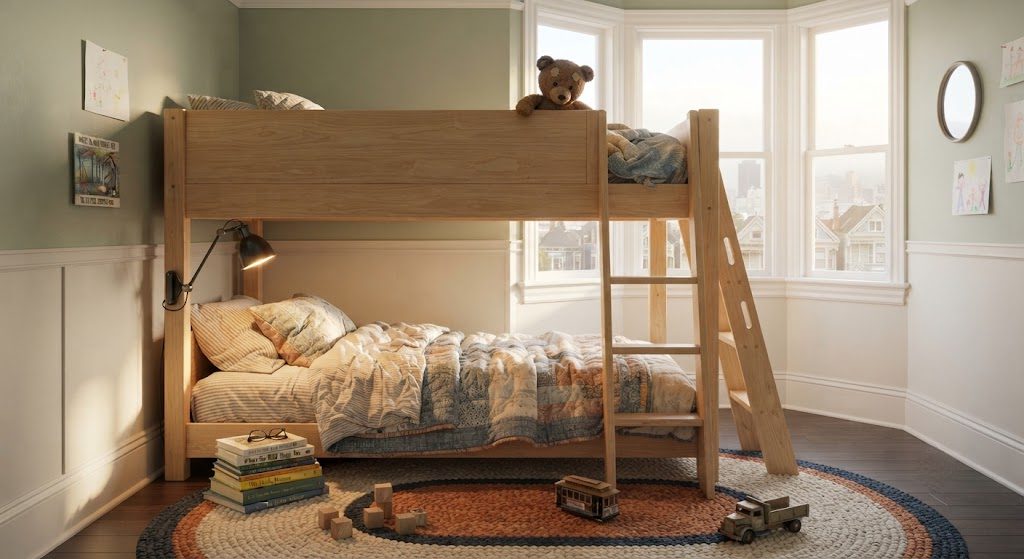
Guardrails on all four sides of the top bunk. Most bunks come with partial rails. Look for full perimeter protection. Sophie rolls around in her sleep, and the extra rail on the foot end has caught her more than once.
Weight capacity that accounts for growth. A bunk rated for 160 pounds works for a seven-year-old who weighs 50 pounds. It won't work for a twelve-year-old who weighs 90 pounds and still wants sleepovers. Buy for the child you'll have in five years, not the one standing in front of you.
Bunk Beds for Small Rooms
A space-saving bunk bed frees up floor space that a second bed would otherwise occupy. In Sophie's 10-by-11-foot room, the bunk gave her back about 20 square feet of play area — enough for a LEGO table and a clear path to the dresser. If you're working with a small kids room with bunk beds, consider a design with built-in storage drawers under the bottom bunk. Ours has two deep drawers that hold off-season clothes and extra blankets. That's storage we'd otherwise lose to a second bed frame.
Would I Buy One Again?
Yes, now that I know what to look for. Low profile, angled ladder, full guardrails, storage underneath. Sophie's room works better with the bunk than it did with a single bed and a trundle. Maya sleeps over twice a month, and they argue about who gets the top bunk every time. Some things never change.