
Sophie was seven when she informed me that the hot pink curtains in her bedroom were “blocking the window from doing its job.” She was not entirely wrong. The curtains looked cheerful, but the casement window opened inward and bumped into the fabric every morning. Choosing window treatments for casement windows takes a little more thought than ordering the widest curtains you can find, especially in a bedroom where you need darkness, privacy, fresh air, and an uncluttered wall.
Casement windows are hinged on one side and open outward, usually with a crank handle inside the frame. That movement is the design detail that controls everything. A shade mounted too close to the glass can interfere with the crank. Curtains can catch on the handle or prevent the sash from opening fully. The right treatment leaves room for operation while still making the bedroom feel soft and finished.
Start with the window hardware
Before shopping, open the window completely and measure the handle’s full path. Note whether the crank folds flat, sticks out several inches, or sits near the bottom corner. Measure the inside width and height of the frame, then measure the wall space above and beside it. Take a quick photo with the window open; it is surprisingly useful when comparing products online.
For a clean, practical installation, I usually begin with an inside-mounted roller shade or cellular shade. It keeps the fabric within the frame and leaves the surrounding wall available for art or a headboard. A low-profile cellular shade from brands such as Bali or Levolor often costs roughly $60 to $180 per window, depending on size and fabric. Blackout versions are especially useful for a bedroom facing a streetlight or an early summer sunrise.
Inside mounting is not always possible. Older homes often have shallow frames, uneven plaster, or trim that leaves too little depth for a shade. In that situation, an outside-mounted shade can work beautifully, but mount it high enough that the fabric clears the open sash and the crank remains accessible. Leave at least a little visual breathing room around the hardware rather than forcing a treatment into a narrow recess.

The best options for sleeping and airflow
When clients ask me about window treatments for casement windows, I sort the choices by how they use the room. If darkness is the priority, a blackout roller shade is the most straightforward solution. Look for a cassette or clean top rail, side channels if light leakage bothers you, and a chain or cordless control that will not hang beside a child’s bed. A $100 to $250 custom-size shade can look considerably more polished than a standard ready-made option.
Cellular shades are my favorite middle ground for many bedrooms. Their honeycomb construction adds modest insulation, which is helpful around drafty frames, and the fabric folds into a compact stack. A light-filtering version brings in a gentle morning glow; a blackout version gives a guest room the flexibility to function as a sleeping space for someone with a different schedule. Top-down, bottom-up models are worth considering when privacy matters but you still want daylight above eye level.
Roman shades bring more softness and pattern. They are lovely in a primary bedroom with a simple wall color, but choose the fold style carefully. A relaxed Roman shade needs enough clearance to lift without pressing against the crank, while a flat Roman shade has a tidier profile. For a 36-inch-wide window, expect approximately $150 to $500 for a made-to-measure shade before installation. That is a broad range, but fabric, lining, and labor make a real difference.
When curtains make sense
Curtains are not automatically wrong for casement windows. They simply need to sit outside the window’s operating zone. Mount a rod several inches above the frame and extend it beyond both sides so the panels can stack clear of the sash. This approach works best when the window is wide, the wall has enough room, and you want the vertical softness of full-length fabric.
For window treatments for casement windows, choose a rod with smooth rings or a simple traverse system if you open the panels daily. A basic 1-inch metal rod from Target or IKEA may cost $25 to $60, while a sturdier wood or brass rod can run $80 to $200. The important thing is not the price; it is whether the panels can move completely away from the handle.
Use lined curtains when you need significant light control. Unlined linen looks relaxed but will glow at sunrise and offer limited privacy after dark. A cotton-linen blend with blackout lining gives a softer appearance without sacrificing sleep. In a small bedroom, hang the panels close to the ceiling and let them reach the floor. That makes the window feel taller and prevents the room from looking busy around a projecting frame.
Layering without creating a daily annoyance
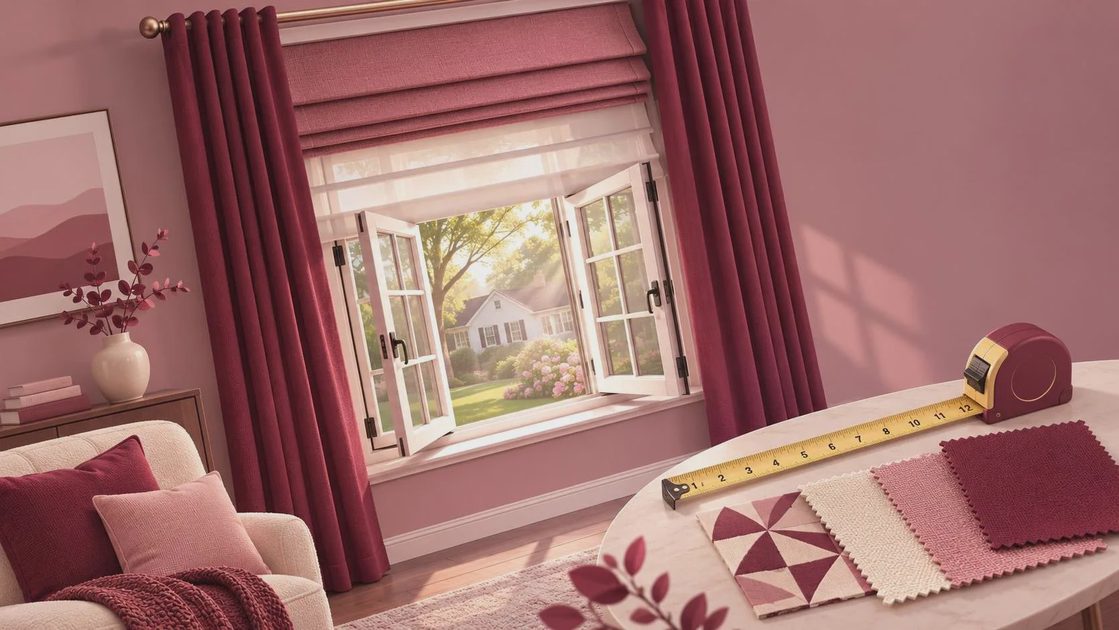
Layering can solve several problems at once. Pair a blackout roller shade with stationary linen side panels, or combine a light-filtering cellular shade with curtains that close at night. The shade handles glare and privacy while the fabric supplies color and texture. This is one of the most useful window treatments for casement windows because the movable part stays compact, and the decorative layer does not need to be opened every time you want fresh air.
Avoid placing a bulky valance, deep cornice, or wide upholstered treatment directly over the crank side. It may look impressive in a photograph but become irritating when you are trying to air out the room or clean the glass. In my own bedroom, I used a simple woven shade inside the frame and narrow linen panels outside it. Tom can open the window with one hand, and I can still make the room feel finished when the bed is unmade.
Think about the bed position, too. If the headboard sits beneath the window, choose a shallow shade that will not collide with pillows. If the window is beside the bed, avoid long cords and projecting knobs near shoulder height. A cordless shade or motorized option is especially sensible in a child’s bedroom, where control cords can become a safety concern.
Color, fabric, and privacy decisions
The bedroom usually benefits from a treatment that is one step quieter than the bedding. If your duvet has a strong pattern, try a solid shade in warm white, flax, or soft gray. If the bedding is plain, a small-scale stripe or botanical print can make the window a focal point without turning the room into a theme. In a San Francisco bedroom with foggy morning light, I prefer warm ivory or muted oatmeal because cool white can make the whole room feel blue.
Privacy needs change by floor and location. A second-floor bedroom may only need light-filtering fabric, while a street-level room often needs full privacy at night. Sheer curtains alone are not reliable after sunset when the room is lit. Pair them with a lined shade or use privacy fabric that remains opaque from outside.
For window treatments for casement windows in a child’s room, favor durable fabrics and washable finishes. Sophie’s curtains have survived marker dust, a spilled cup of cocoa, and one ambitious attempt to build a blanket fort from the curtain rod. A $40 machine-washable panel is sometimes a wiser choice than delicate fabric that requires professional cleaning.
A practical weekend measuring plan
Start by checking the window operation, then record inside measurements at the top, middle, and bottom. If they differ, use the narrowest width for an inside mount. Measure the depth available behind the frame and write down the handle’s projection. Decide whether you need blackout, light filtering, or privacy fabric before browsing colors. Otherwise, it is easy to fall for a beautiful shade that cannot do the basic job.
Next, mark the proposed mounting location with painter’s tape. Open the window, rotate the crank, and walk past it as you would at bedtime. This five-minute test catches many expensive mistakes. If you are using curtains, tape the rod width and check that the panels will stack away from the opening. If you are using a shade, confirm that the bottom rail will not hit the handle.
My usual recommendation is simple: choose an inside-mounted cellular or roller shade for function, then add side panels only when the room needs softness. The result is calmer than a complicated treatment and far more usable than fabric that fights the window every morning. Order samples, view them in daylight and lamplight, and make the final choice based on how you actually sleep.
This weekend, measure one casement window, photograph it open, and tape out your preferred shade or curtain position. Your bedroom does not have to be perfect. It just has to be yours.