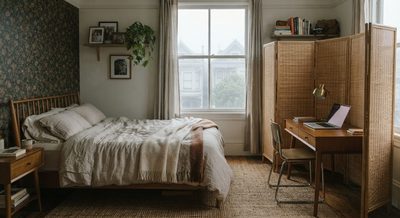

Sophie once chose hot pink curtains for the narrow window in her bedroom, and I briefly considered letting her have them. The window was only 28 inches wide, tucked beside a dresser, and difficult to dress without making the room feel busier. The right window coverings for small windows should solve a practical problem first: privacy, morning light, drafts, or awkward proportions. Then they can add the softness and personality that make a bedroom feel like yours.
After designing dozens of bedrooms, I have learned that tiny windows are rarely the problem. The problem is treating them like miniature versions of standard windows. A full-length curtain panel can swallow a small wall, while a bulky blind can make the opening look even narrower. Start by measuring the glass, the frame, and the space around it before shopping.
Start With What the Window Needs to Do
In a bedroom, privacy and light control usually matter more than decoration. A small street-facing window may need a blackout roller shade, especially if headlights sweep across the room at night. A high bathroom-adjacent window may only need privacy film or a light-filtering cellular shade. A basement bedroom may benefit from an insulating shade that reduces drafts around older frames.
For window coverings for small windows, write down three priorities before looking at colors: how much light should enter, whether the room needs privacy during the day, and how often the covering will be opened. If you rarely touch the window, a cordless shade is simple. If you want fresh air every morning, choose a treatment that lifts easily and does not collide with a lamp or headboard.
Measure width in three places and use the narrowest number for an inside mount. Measure height from the top of the frame to the sill, then check whether the mounting hardware will interfere with locks. Older homes often have slightly uneven trim, so do not assume the frame is perfectly square. A $10 steel tape measure can prevent a $100 ordering mistake.

The Best Styles for Narrow or Short Windows
Roller shades are my first recommendation when the goal is clean, quiet, and compact. A white or warm-gray fabric roller shade sits close to the glass and leaves the sill available for a small plant, alarm clock, or stack of books. Brands such as Select Blinds and IKEA offer budget-friendly options, while custom fabric shades can cost $150 to $400 depending on dimensions and lining.
Cellular shades are especially useful in older apartments and drafty bedrooms. Their honeycomb construction adds a small layer of insulation without projecting far into the room. A top-down, bottom-up version can protect privacy while still letting daylight in above eye level. That feature usually costs more, but it is valuable for a low window facing a sidewalk.
Roman shades bring softness to a room with very little visual clutter. Choose a flat-fold style rather than a heavily gathered design if the window is narrow. A 1-inch pattern can look charming; a large floral print may appear chopped off when the shade is raised. For a child’s room, use a cordless design and keep furniture away from operating cords.
When Blinds Make Sense
Wood or faux-wood blinds provide excellent control over glare and privacy. A 1-inch slat generally suits a small window better than a 2-inch slat because it feels lighter and allows more usable adjustment. Faux wood is practical in humid rooms and often costs $40 to $120 per window. Real wood offers warmer texture but needs more care.
Mini blinds are the least expensive option, sometimes under $30, but they can look temporary. I use them when the budget is tight, then add a tailored fabric valance only if the room needs more softness. Avoid mounting a long blind above the frame simply to make the window appear taller; the extra stack can crowd the ceiling and look accidental.
Should You Use Curtains?
Curtains can work beautifully, but the scale has to be intentional. For window coverings for small windows, I prefer one stationary panel on each side when the window sits on a wider wall. Mount the rod two to four inches below the ceiling or just above the trim, and extend it beyond the frame so the fabric does not cover the glass when open. This makes the window feel more generous without changing its actual size.
Do not use short cafe curtains in a bedroom unless you specifically want a cottage effect. They can leave the upper room exposed to morning light and make the wall feel divided. If the window is beside a bed, use panels that end just above the floor rather than stopping at the sill. Floor-length fabric creates a vertical line and prevents the small opening from becoming the room’s main visual feature.
For a realistic budget, expect $60 to $150 for ready-made panels, a rod, and rings. Custom work can easily reach $500 or more, but a local seamstress may shorten standard panels for far less. I have used Target panels with a better-quality rod and achieved a polished result without buying an entire custom treatment.

Color, Fabric, and Bedroom Mood
Light colors are not the only answer. A deep olive, navy, or clay shade can make a small window feel like a deliberate architectural detail. The trick is repeating that color once or twice elsewhere, perhaps in a lumbar pillow, throw, or framed print. Matching the wall color creates a quieter effect and helps an awkward window recede.
Lining matters more than many shoppers expect. Unlined linen looks relaxed but offers limited privacy and light control. Cotton canvas filters light and feels casual. Blackout lining is useful for a child who naps or a partner who sleeps late, although it can make the fabric look stiffer. If the room already has heavy furniture, choose a lighter woven shade to keep the composition balanced.
In my own bedroom, I used a warm-white Roman shade with a subtle weave over a narrow window near the closet. It disappears from across the room, but the texture keeps the wall from looking blank. That was a better choice than the dramatic patterned fabric I initially loved in the sample book.
Common Mistakes to Avoid
The first mistake is buying by advertised size instead of measuring the opening. Standard widths may not fit older windows, and a shade that is even a quarter-inch too wide can fail as an inside mount. The second is ignoring the hardware. A deep handle or crank may require an outside mount or a small spacer bracket.
Another common mistake is placing a tall dresser directly beneath a treatment that needs to lift. Leave enough clearance for the shade to operate. If a radiator sits under the window, avoid pooling curtains that block heat and collect dust. In a child’s room, keep cords and chains inaccessible and follow the manufacturer’s safety instructions.
Finally, do not force the same solution onto every window in the house. Window coverings for small windows in a guest room might prioritize style, while a nursery needs safe operation and blackout performance. Function should lead; matching finishes can come second.
My Simple Shopping Plan
Start this weekend by photographing each bedroom window in daylight. Record the exact frame width, height, sill depth, and distance to nearby furniture. Then decide whether you need privacy, darkness, insulation, or simply a finished look. Choose one sample shade or fabric and tape it beside the window for a full day. Morning light can make a beige look yellow, while evening lamps can turn gray fabric blue.
For most bedrooms, I would begin with a cordless cellular or roller shade, then add curtains only when the wall needs softness or height. Window coverings for small windows should make daily life easier, not create another fussy item to clean and adjust. Your bedroom does not have to be perfect. It just has to be yours.
This weekend, measure one window, test its morning light, and order a single sample before committing to the whole room.