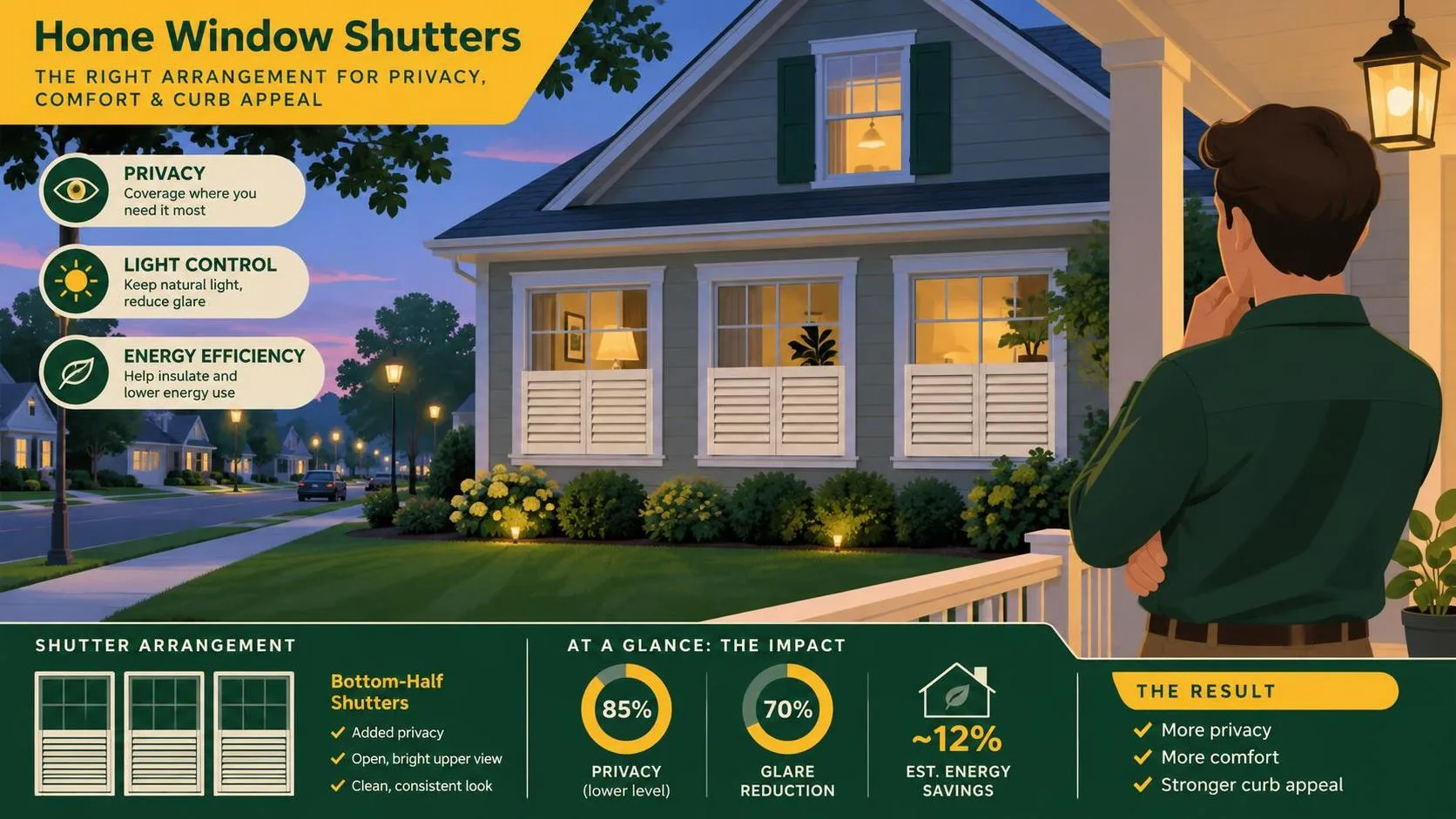
On a foggy San Francisco morning, I want the bedroom to feel open without giving the neighbors a view of the bed. Bottom half window shutters, also called café-style shutters, can do exactly that: cover the lower portion of a window for daytime privacy while leaving the upper glass open to natural light. The catch is that uncovered glass lets in streetlights and early sun, too. For a bedroom, I would pair them with a separate shade or curtain if darkness matters to your sleep.
Where café shutters work best
These shutters are especially useful on a street-facing bedroom window, a ground-floor guest room, or any window where someone can see in from a sidewalk. Closed louvers can screen the lower glass, while the open upper section keeps the room from feeling boxed in. They are also a nice solution when a bed sits beneath a window and long curtains would bunch behind the headboard.
The upper glass is still exposed, though. If a neighboring building looks down into your room, someone upstairs may be able to see through that uncovered section. Stand outside, or ask someone you trust to help check the view from relevant angles, before deciding how high the panels should reach. Privacy depends on the window, the observer’s position, and how the louvers are tilted.
I like to align the top of the shutters with a natural horizontal feature, such as a meeting rail or a strong line in the window frame. That tends to look calmer than stopping at an arbitrary midpoint. But privacy comes first: a beautiful alignment is not much comfort if it leaves the bed in full view.
Plan for sleep, not just daytime privacy
Bottom half window shutters are not blackout window coverings. Even with their louvers closed, light can enter through small gaps around the slats and frame. More importantly, the uncovered top half remains open to light all night.
For a dark room, consider a room-darkening roller shade over the full window, with enough clearance for the shutter panels and their operating hardware. A shade mounted outside the window recess can help cover the upper glass and reduce light around the edges, although it will not necessarily eliminate it. Check the shade’s projection and operating path before ordering either treatment.
Curtains are another option. Mount the rod high enough and wide enough for the panels to clear the shutter frame when open. Lined curtains can soften the room and cover the entire window at bedtime; gaps at the top, sides, and center can still admit light. If a radiator sits beneath the window, plan curtain length and placement around it and follow its safety instructions.
For a child’s room, choose cordless window coverings or other designs that avoid accessible dangling cords, and follow the manufacturer’s child-safety and installation instructions. It is a small detail until it is the most important detail in the room.
Choose a material that suits the window
Wood, composite, and vinyl are common shutter materials. Wood can be a good fit when you want a painted or stained finish and a more traditional furniture-like look. It is worth asking about the finish and the manufacturer’s recommendations for moisture and direct sun, particularly on a window that gets condensation.
Composite shutters offer another route to a painted look. Their construction varies by manufacturer, so ask what the material is made of, how heavy the finished panels will be, and whether it is recommended for your window’s dimensions. Vinyl can be a practical option where easy cleaning and moisture resistance matter, but panel sizes and finish options also vary.
Do not choose on material name alone. Ask for a sample if possible, and look at it next to your existing trim in daylight and under your bedroom lamps. Two whites that look identical on a website can disagree loudly once they are in the same room.
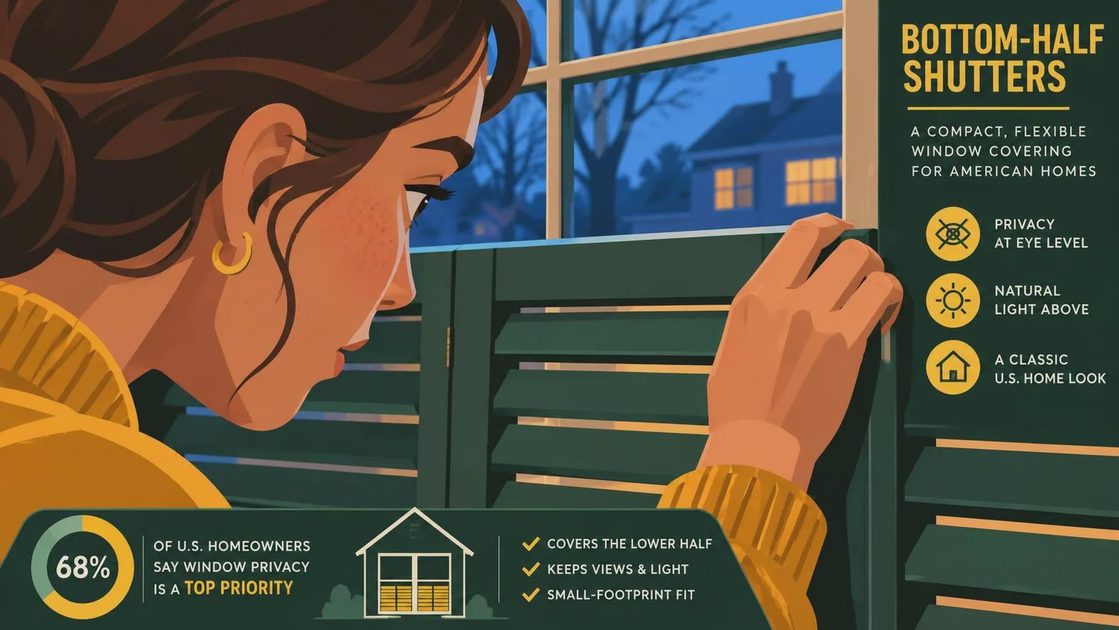
For louvers, wider slats create fewer horizontal lines and can offer a more open view when tilted. Narrower slats give a busier, more traditional appearance and may suit smaller or older windows. Ask to see the actual louver size against your window dimensions rather than relying on a close-up product photo.
Measure and check the hardware before ordering
Start by deciding whether the shutters will sit inside the window recess or mount on the surrounding trim or wall. An inside mount can look neat and integrated, but it needs sufficient depth and a reasonably suitable opening. An outside mount may work better when the recess is shallow or the frame is uneven, though it will cover more of the surrounding trim.
Measure the width and height in several places, and note the smallest and largest readings. Older windows can be out of square, and the difference matters when a rigid frame has to fit. Also measure recess depth and note any handles, cranks, locks, or trim that project into the space. Do not make your own deductions for clearance unless the shutter maker’s instructions tell you to; each mounting system has its own requirements.
Think through how the panels will open. Hinged panels need room to swing, so a nightstand, lamp, bed frame, or deep window sill can get in the way. Check that you can still operate the window, reach its lock, and meet any applicable emergency escape requirements. A shutter should never prevent a bedroom window from functioning as a required escape opening; ask a qualified installer or local building official if you are unsure.
Custom shutters can be a significant expense, especially with professional measuring and installation. For a less expensive approach, compare a ready-made café curtain with a tension rod or a simple privacy shade. Neither gives you the same solid-panel look, but both can provide lower-window privacy without committing to custom millwork. If you rent, confirm what mounting holes are allowed before ordering.
This weekend, tape a horizontal line across the window at your proposed shutter height, then check it from the bed and from outside in daylight and after dark. You will learn more from that little experiment than from an hour of scrolling through perfect rooms. Your bedroom doesn’t have to be perfect. It just has to be yours.