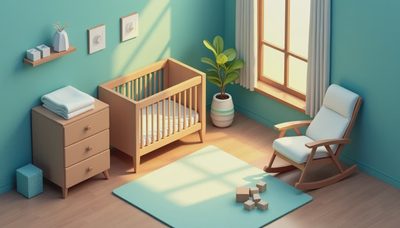

The first time I bought nursery furniture, I made the classic designer mistake: I started with the prettiest piece instead of the one I would touch ten times a day. In my own home, that meant a rocker I loved and a dresser that looked fine online but fought me every time I opened the drawers. When Sophie was little, I learned fast that a room for a baby still has to function for laundry, midnight feedings, diaper changes, and the random stack of burp cloths that seems to multiply overnight. Good nursery furniture is not about building a tiny showroom. It is about making the room calmer at 2 a.m. and easier to grow into by year two.
Start with the pieces you will actually use
The first rule for nursery furniture is to buy for the daily routine, not the registry photo. For most families, that means a crib, a dresser that can double as a changing station, and one comfortable chair. I like a solid crib from Babyletto, Stokke, or IKEA because the price range is broad, usually about $200 to $700, and the silhouettes are straightforward. If you want a more polished look, Crate & Kids and Pottery Barn Kids both have sturdier finishes and matching dressers, but you do not need a full set to make the room feel finished. A dresser in the $250 to $600 range with deep drawers will outperform a cute but shallow cabinet every time. For the chair, test the seat depth if you can. A glider in the $300 to $900 range sounds indulgent until you spend 40 minutes there with a fussy baby and a phone in one hand.
Measure the room before you fall in love with a set
A lot of bad room planning starts with a beautiful product page. Before you order anything, measure the wall where the crib will sit, the swing of the door, and the distance from the crib to the nearest outlet or window cord. I like to leave at least 3 feet of clear walking space where possible so you can move around without side-stepping a hamper. In older apartments, especially, a changing table that is six inches too deep can block a closet door and turn every diaper into a small obstacle course. This is where nursery furniture choices get smarter than shopping by style alone. If the room is narrow, skip matching pieces that eat up the floor and choose one substantial dresser plus a smaller chair. If the room is square, you can often fit a bigger glider and still keep a clean path to the crib.

Choose finishes that survive spills, sunscreen, and sticky hands
Here is what I did in my own room after the first spill: I stopped treating every surface like a future heirloom. Good nursery furniture should be easy to wipe down, stable enough that it does not wobble when a toddler pulls up, and finished in a way that hides the usual suspects: lotion, toothpaste, and the mystery smudge that appears on every drawer front. Solid wood is nice, but a well-made MDF piece with a durable finish can be a smarter buy if the drawers glide well and the hardware feels solid. I have had good luck with matte white, light oak, and warm gray because they work with almost any bedding and do not show every scuff. If you want a natural look, check the edges and corners before you buy. A cheap laminate can chip fast, while a better sealed surface holds up for years. Add felt pads under the chair legs and use a washable rug, because no finish is magical.
Plan for the second and third year now, not later
The smartest nursery furniture buys are the ones that still make sense when the crib is gone. A convertible crib is helpful if you want to stretch the budget, but even a standard crib can work if you know you will replace it later. What matters more is whether the dresser can stay in the room, whether the chair is comfortable for story time, and whether the storage can shift from diapers to books and pajamas. I like low shelves for board books, lidded bins for extra blankets, and a nightlight that does not blast the whole room awake. In Sophie’s room, the biggest improvement came when I stopped cramming everything into one closet and let the dresser do real work. Once the layout was simpler, the room felt bigger even though nothing had changed on paper. That is the trick with good design: the right pieces make the room feel quieter, which matters more than matching logos on the drawers.

Build a budget that keeps the room calm, not crowded
If you are shopping nursery furniture on a realistic budget, start with the crib and dresser and buy the chair second. A practical starter plan might look like this: $250 to $500 for a crib, $300 to $600 for a dresser, $250 to $700 for a glider or chair, and another $100 to $200 for storage baskets, a washable rug, and drawer organizers. If you shop secondhand, look for solid construction, smooth drawer action, and a tight finish, but skip anything with a recalled model number or damage that affects stability. I would rather see a family buy one strong dresser and one good chair than a whole room of bargain pieces that wobble, chip, or never quite line up. The room feels more expensive when the proportions are right, not when every item came from the same catalog.
When you are ready to buy, make a short list, measure twice, and choose pieces that can survive a messy Tuesday as well as a photo on grandparents’ phones. If you want nursery furniture that actually earns its keep, focus on the crib, the dresser, and the chair first, then add the extras after the room is working. Your bedroom doesn’t have to be perfect. It just has to be yours. This weekend, clear the room, sketch the layout on paper, and measure the wall where the crib will go before you click add to cart.